Chinese


2026 4-Layer Shaking Table for Tin Tungsten Processing: Advantages, Price & Field Case
Why the 4-Layer Shaking Table is a Game-Changer for Tin & Tungsten
If you’ve been in the mineral processing game for a while, you know the struggle. Tin and tungsten are heavy, but they love to hide in fine particles. Traditional single-layer tables? They work, but they’re slow. You end up with a yard full of equipment and a headache from managing multiple units.
Enter the 2026 4-Layer Shaking Table — a serious upgrade for any gravity separation plant. This machine is not just a bigger version of the old design. It’s a complete rethinking of how to handle high-throughput, fine-gravity separation without sacrificing recovery.
In this article, I’ll break down the real advantages, what you should expect to pay, and a field case that shows this machine in action. Whether you’re a mine owner, a plant manager, or a junior engineer trying to justify a capital purchase, this is for you.
Device Overview: What Is a 4-Layer Shaking Table?
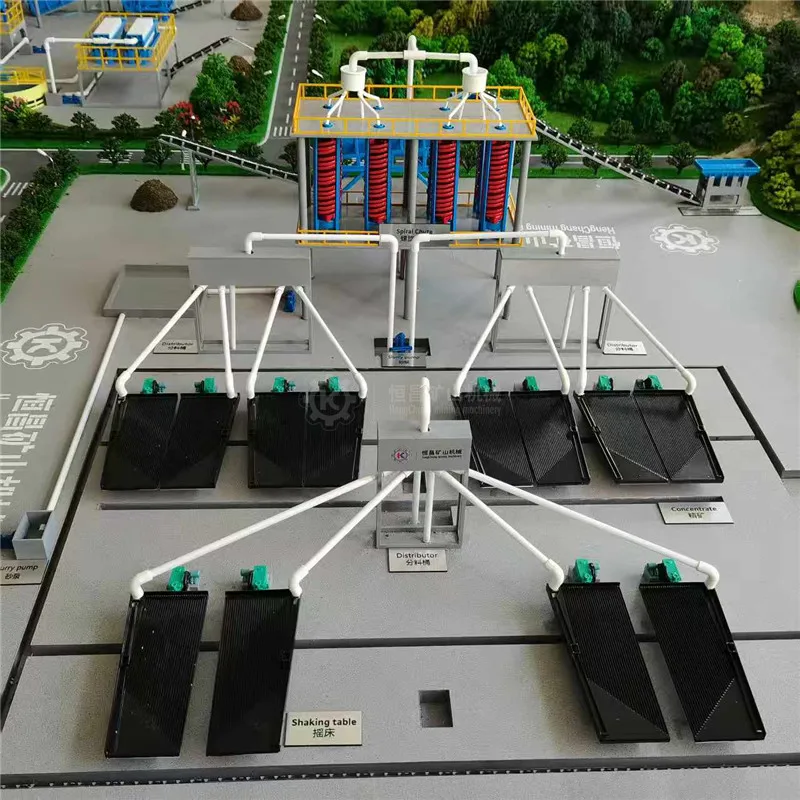
A shaking table is a gravity concentrator that separates materials based on density. The 4-layer version stacks four decks on one frame, driven by a single motor and eccentric mechanism. Each layer operates independently but simultaneously.
[Jiangxi Hengchang Mining Machinery] has been refining this design for years. Their 2026 model focuses on three things: stability under heavy load, ease of adjustment, and consistent recovery across all four layers.
The deck material is fiberglass-reinforced resin with a rubber coating on the riffle area. This gives better wear resistance and a smoother surface for fine particle movement.
Working Principle: How It Separates Tin and Tungsten
The principle is simple: density difference. Tin (cassiterite) has a specific gravity of about 6.8-7.1; tungsten (scheelite or wolframite) is around 7.0-7.5. Gangue minerals like quartz (2.65) are much lighter.
Here’s how the table does its magic:
Feed slurry enters the feed trough at about 25-30% solids.The head motion (eccentric drive) creates a reciprocating stroke — typically 12-18 mm at 280-320 strokes per minute.
Wash water flows across the deck from the high side.
Heavy minerals (tin/tungsten) hug the deck, moving toward the concentrate end.
Lighter gangue particles wash away to the tailings side.
The 4-layer design means you get four streams of concentrate simultaneously. Each layer can be individually adjusted for stroke length, water flow, and tilt angle.
Structural Features That Matter
1. Separate Deck Adjustment
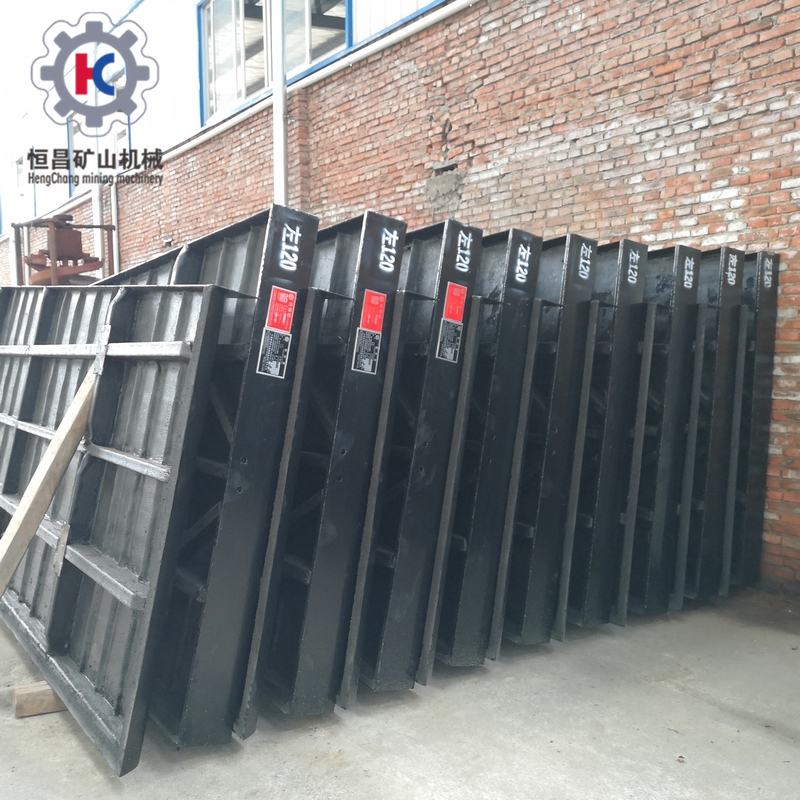
On older multi-layer tables, you had to stop the whole machine to change one deck’s tilt. The 2026 model uses independent screw jacks — adjust each layer in seconds without stopping production.
2. Reinforced Eccentric Drive
The drive unit uses a double-row spherical roller bearing instead of bushings. This reduces maintenance frequency from weekly to monthly. In dusty tungsten plants, this is a lifesaver.
3. Split Wash Water System
Each deck has its own adjustable water manifold. This is critical for tungsten where wash water needs to be fine-tuned to prevent fine scheelite loss.
4. Vibration-Reducing Frame
The steel frame uses diagonal bracing and rubber isolation pads. The result? The machine doesn’t “walk” across the floor, even at full capacity.
Which Ores Can It Process?
The 4-layer shaking table is not a one-trick pony. It works well with:
Tin (cassiterite): Especially fine tin below 2mm. The multi-layer design recovers particles down to 74 microns.Tungsten (scheelite & wolframite): Excellent for pre-concentration before flotation. The clean waste discharge reduces reagent costs downstream.
Tantalum-niobium: Heavy fine sands — the 4-layer recovers more than a spiral concentrator.
Gold (fine): Works with alluvial gold and tailings reprocessing.
Zircon, rutile, ilmenite: Common in beach sand plants.
Not suitable for: Iron ore (too magnetic) or coal (too light density difference).
Selection Advantages Over Other Equipment
Let’s compare with common alternatives:
| Feature | 4-Layer Shaking Table | Spiral Concentrator | Jig Machine |
|---|---|---|---|
| Throughput per unit | 1.5-3 TPH | 2-4 TPH per start | 5-10 TPH |
| Fine recovery (74μm) | Excellent | Poor | Moderate |
| Water consumption | 4-6 m³/h | 3-4 m³/h | 6-10 m³/h |
| Power consumption | 1.5 kW | 0 kW | 3-7 kW |
| Adjustment flexibility | Very high | Low | Moderate |
Verdict: If you’re processing fine tin or tungsten where every gram counts, the 4-layer table wins. It may have lower throughput per square meter than a jig, but the recovery rate is 8-12% higher in fine fractions.
Key Parameters
Jiangxi Hengchang 2026 4-Layer Shaking Table typical specs:
Model: HC-T4-2100×1050 (each deck)Feeding size: 0.074 – 2 mm
Capacity: 1.5 – 3.0 TPH (depending on material density)
Stroke length: 12 – 22 mm (adjustable)
Stroke frequency: 250 – 350 min⁻¹
Wash water: 4 – 6 m³/h
Motor power: 1.5 kW
Weight: 3,200 kg
Dimensions: 5.2m × 2.6m × 1.8m (L×W×H)
These numbers come straight from factory tests using actual tin ore from Yunnan and tungsten ore from Jiangxi.
Daily Operation and Maintenance
Startup:
Check oil level in the eccentric box (SAE 90 gear oil).Ensure all four deck tilt adjustments are at zero.
Start the drive motor, let it run for 2 minutes unloaded.
Slowly open feed and water valves.
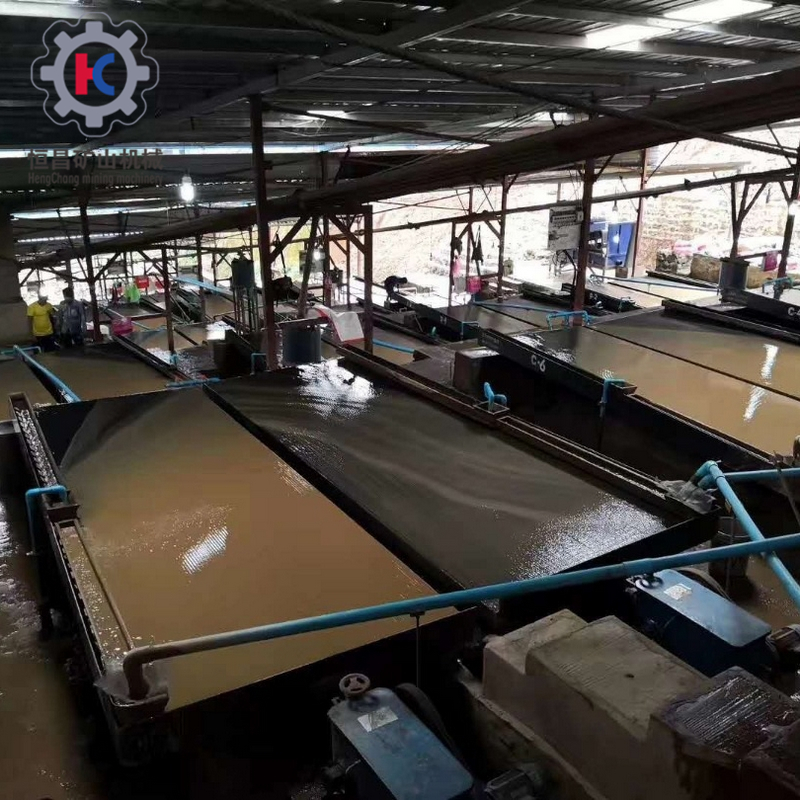
During operation:
Watch the water line: The wash water should form a clear boundary 1/3 from the feed side.Listen for knocking: Any rhythmic knocking means a loose bearing in the eccentric.
Check concentrate bands: They should be 2-4 cm wide on each deck.
Shutdown:
Stop feed first, let the table run for 2-3 minutes to clear.Close wash water last.
Spray down the decks with high-pressure water to prevent tin/tungsten crust formation.
Weekly maintenance:
Grease the head motion pivot points (every 40 operating hours).Check rubber lining on riffles — replace if worn through.
Tighten all bolts on the eccentric housing.
Field Case: Tungsten Plant in Hunan Province
This is a real case from a mid-size tungsten operation in Chenzhou, Hunan. They were processing gravity tailings from a jig plant — material was 80% passing 0.5mm, with WO₃ grade around 0.3%.
Before: They used 12 single-layer tables (6 workers per shift). Recovery was 62% on fine tungsten.
After: They installed 3 units of the 4-layer shaking table from Jiangxi Hengchang. Total footprint dropped by 60%. Two workers per shift now manage the entire gravity circuit.
Results:
Recovery increased to 74% — that’s a 12% gain.Concentrate grade went from 18% WO₃ to 22% WO₃.
Payback period: 8 months (based on saved labor and increased tungsten output).
The key insight? The independent deck adjustment allowed them to optimize the top two decks for coarser feed (0.5-1mm) and bottom two for fine feed (0.074-0.2mm). This two-stage approach is impossible with single-layer tables.
Price Range in 2026
Let’s talk money. Prices vary by region and configuration, but here’s a realistic range for a 4-layer shaking table from Jiangxi Hengchang:
Basic model (standard rubber riffles, manual adjustment): $28,000 – $35,000 USD (FOB China port)Premium model (ceramic tile riffles, automatic adjustment, 304 stainless steel wash water system): $38,000 – $48,000 USD
Complete system (with feed distributor, pump, and control panel): $52,000 – $65,000 USD
Don’t fall for the cheap Chinese knockoffs selling for $15,000. They use thin steel, undersized bearings, and plastic riffles that wear out in 3 months. A real Jiangxi Hengchang machine has a 2-year warranty on the drive unit.
Shipping cost: Expect $2,000 – $4,000 to most Asian or African ports. For South America or Europe, add another $1,500.
Application Scenarios Summary
Here’s where the 4-layer shaking table shines:
New tin/tungsten plants with space constraints — replace 4 single-layer tables with one 4-layer unit.Tailings reprocessing — treat old stockpiles where the material is already fine.
Mobile plants — the compact footprint (5m×2.6m) fits in a standard container.
Upgrading existing gravity circuits — add it as a scavenger stage for fine losses.
Final Thoughts
The 2026 4-layer shaking table is not a revolution — it’s an evolution of a century-old technology. But the incremental improvements in deck design, independent adjustment, and drive reliability make it a smart investment for any tin or tungsten operation.
If you’re doing a gravity separation process selection, this machine should be on your shortlist. Compare it against spirals and jigs using your actual ore sample. Don’t just trust the numbers on spec sheets — run a pilot test.
And if you’re talking to equipment suppliers, ask specifically about Jiangxi Hengchang experience with tin/tungsten. They’ve been at this since 2003, and their field service engineers can actually tune a table for your ore — not just sell you a box.
Got questions about your specific application? drop a comment below — I’ll help you think through the process selection.