






 Chinese


Spiral Chute or Shaking Table? Why Gravity Circuits Need Both, Not One
Spiral Chute or Shaking Table? Why Gravity Circuits Need Both, Not One
Industry Insight – Few questions reveal more about a processor’s maturity than how they answer: “Which is better, a spiral chute or a shaking table?” The naive answer is to pick a winner. The engineering answer is that the two devices sit at different points on the same gravity-separation curve—throughput versus precision—and trying to make one do the other’s job is where plants lose margin.
Both rely on specific gravity differences, need no reagents, and handle heavy mineral sands well. Beyond that, their profiles diverge sharply.
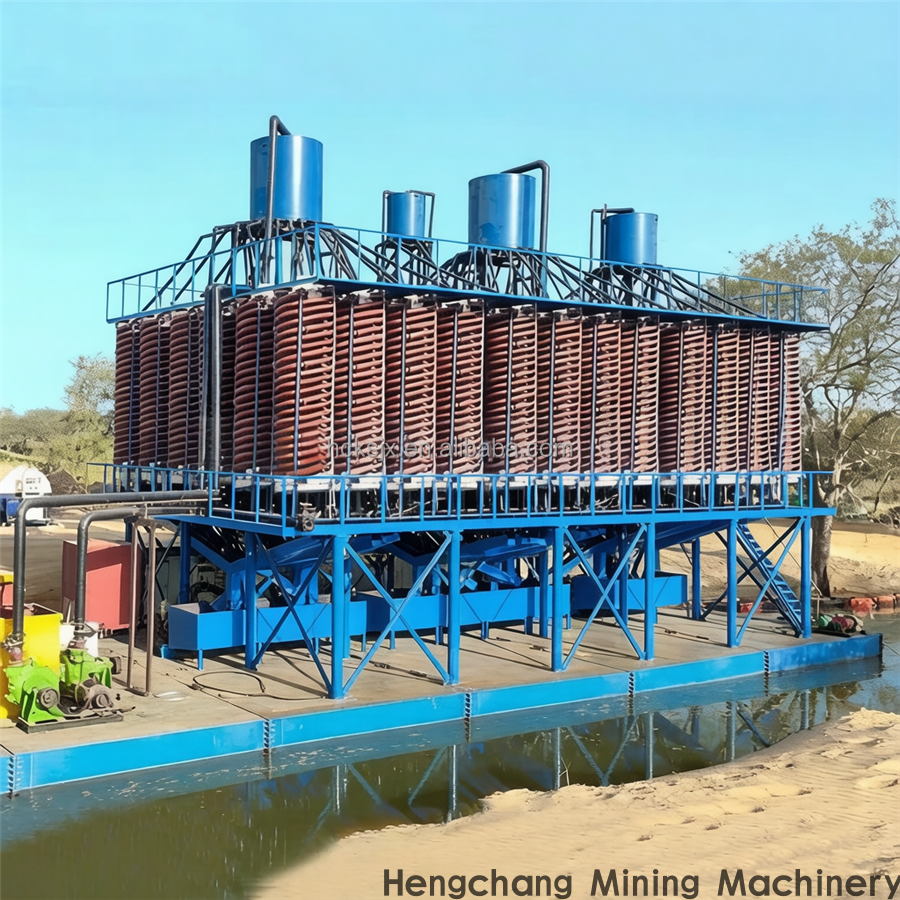
Spiral Chute: The High-Volume Rougher
- Capacity: 2–10 t/h per start (multi-start units scale linearly); a 12-start battery easily handles 30–50 t/h.
- Footprint: 1–2 m² per start, vertically stacked.
- Feed size: 0.02–2 mm, strongest in 0.1–0.5 mm.
- Enrichment ratio: 3–12×, enough to reject 60–80% tailings early.
- Limitations: Cannot produce smelt-grade concentrate in one pass; recovers ~65–75% of −0.074 mm heavies; sensitive to slimes if not deslimed upstream.
It is the default rougher for placer gold, ilmenite-monazite sands, zircon, and cassiterite circuits where the goal is volume reduction, not final grade.
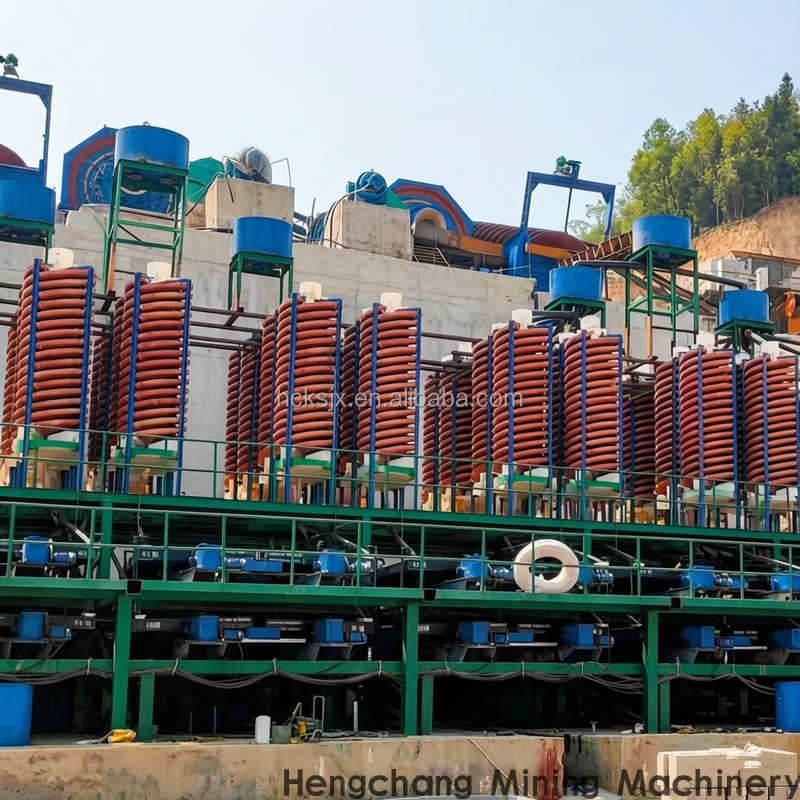
Shaking Table: The Precision Cleaner
- Capacity: 0.5–2 t/h per table—deliberately small, because it is fed only rougher concentrate, not raw ore.
- Footprint: 4–8 m² per unit; a row of tables dominates floor space.
- Feed size: 0.037–1 mm (fine sand deck); weaker on coarse +2 mm.
- Enrichment ratio: 10–50×; can lift a 5% heavy-mineral rough concentrate to 40%+ saleable grade.
- Limitations: Motor-driven (1.1–1.5 kW), high water demand, skilled tuning of stroke/slope/wash water, low single-unit throughput.
It is the standard finisher for gold, scheelite, wolframite, tantalite, and monazite cleaning—anywhere the product must hit a buyer’s specification sheet.
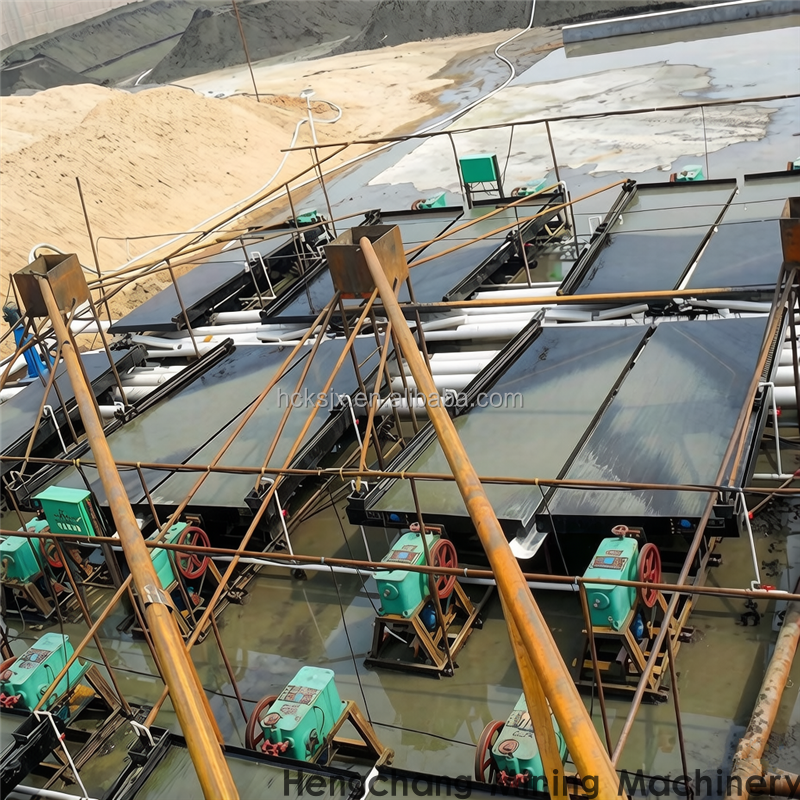
Head-to-Head
Parameter | Spiral Chute | Shaking Table |
|---|---|---|
Drive | None (gravity + centrifugal) | Motor, 1.1–1.5 kW |
Single-unit capacity | 2–10 t/h | 0.5–2 t/h |
Enrichment ratio | 3–12× | 10–50× |
Concentrate grade (1 pass) | Medium, needs cleaning | High, often saleable |
Floor space / t·h | ~0.3 m² | ~1.2 m² |
Best position in flow | Rougher / scavenger | Cleaner |
OpEx | Very low | Moderate (power, water, labor) |
How Mature Plants Use Them
The dominant global flowsheet for placer gold and coastal heavy sands is not “chute vs table” but:
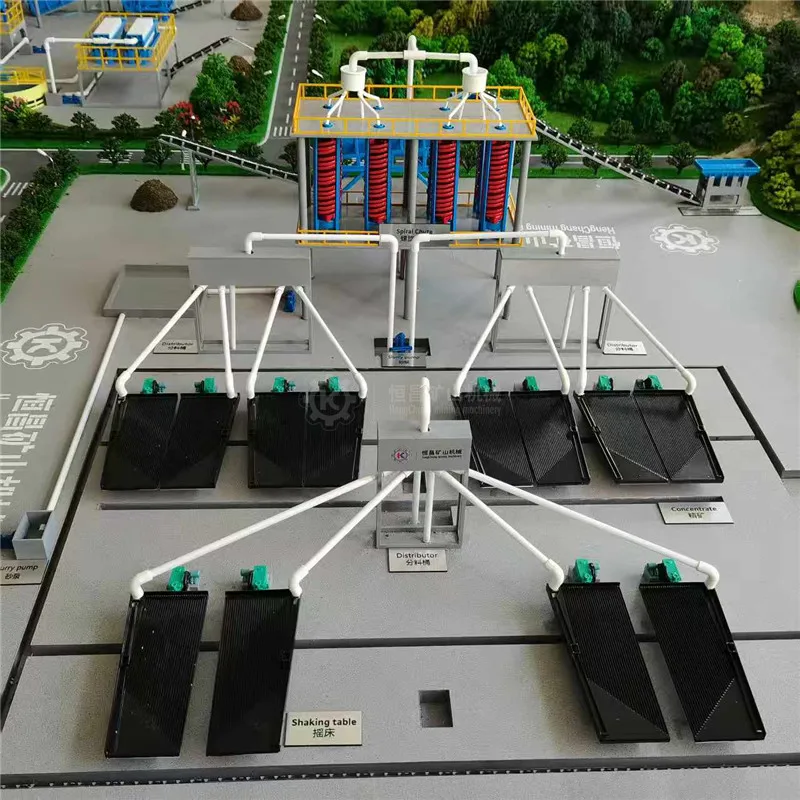
Scrubber trommel → spiral chute roughing (bulk capture, tailings reject) → shaking table cleaning (rough concentrate upgraded to final product).
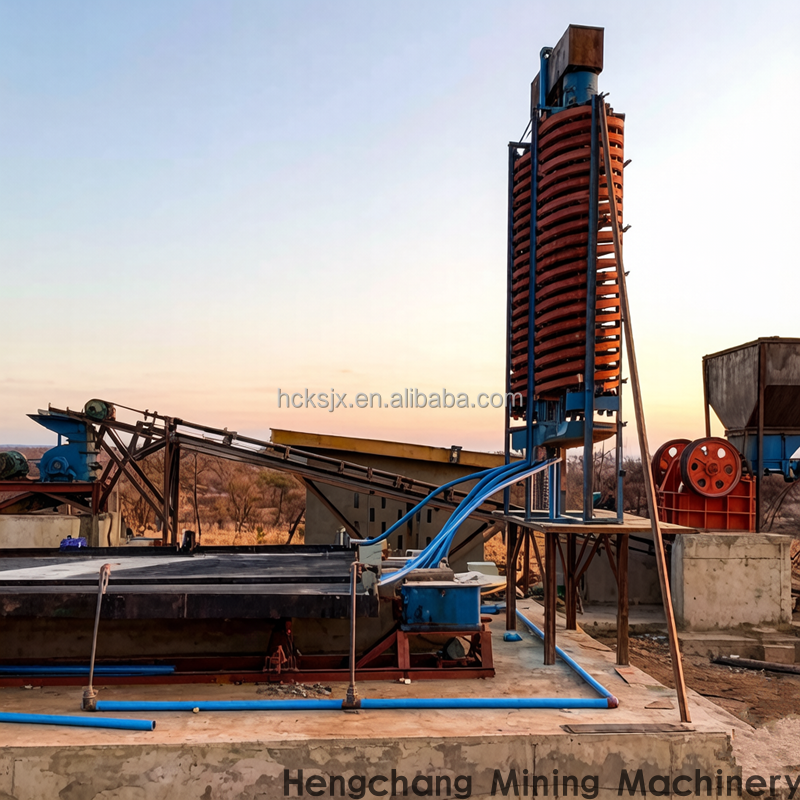
Recovery on that chain typically clears 85–92% for gold and similar for Ti/REE minerals, while capex on the gravity side stays low because tables only treat the 10–20% of mass that survives the chutes.
Previous: Ball Mill or Wet Pan Mill? How
Next: None


