Chinese


2026 4-Layer Shaking Table for Tin Recovery: Working Principle, Selection Guide, Price & Site Case Study
Hey there, fellow miners and plant operators!
If you are reading this, you are probably looking for a way to boost your tin recovery rate without breaking the bank. You’ve heard about the 4-layer shaking table, but you might be wondering: Is it really that good? How does it work? What’s the price tag? And most importantly, how does it perform on-site?
Well, you’ve come to the right place. Today, we are diving deep into the 4-Layer Shaking Table, specifically designed for tin recovery. We will talk about how it works, how to choose the right one, what it costs, and a real-world case study. Let’s get started.
? What is a 4-Layer Shaking Table?
Simply put, a 4-layer shaking table is like having four single tables stacked on top of each other. It does the same job – separating heavy minerals (like tin, tungsten, or gold) from lighter gangue – but it does it four times faster in the same footprint.
For tin recovery, this is a game-changer. Tin ore is often fine-grained and requires precise gravity separation. A single table works well, but a 4-layer table gives you massive throughput without taking up more floor space.
Key Term Alert: In the world of gravity beneficiation equipment, the 4-layer table is built for high-efficiency, low-cost operations. It’s a workhorse for medium to large-scale tin processing plants.
? Working Principle: How It Leverages Gravity
The magic behind the 4-layer shaking table is the same as a classic table – differential motion and water flow.
Step-by-step breakdown:
Feed Entry: Ore slurry (water + crushed tin ore) is fed onto the top of the table surface.Vibration Motion: The table head (driven by a motor) creates a reciprocating motion. It shakes forward fast, then pulls back slow. This motion “jumps” the heavy tin particles forward.
Water Flow: A thin film of water runs across the table. Lighter waste (silica, rock) is washed off the side. Heavy tin particles (specific gravity ~7.0) stick to the table and move to the concentrate end.
Real talk: The differential stroke is critical. If the stroke is too short, tin won’t move. Too long, and you lose fine tin. Good manufacturers (like Jiangxi Hengchang) calibrate this beautifully.
Why 4-Layer?
Each layer operates independently. The slurry feed is split evenly to all four decks. They vibrate in sync, but each deck processes its own stream. Net result: Four times the capacity, one machine, one operator.
?️ Key Structural Features You Need to Know
Let’s look under the hood. The 4-layer shaking table isn’t just a stack of tables; it’s engineered for reliability.
1. Multi-Layer Deck Design
Each deck is a fiberglass or aluminum alloy surface with a rubber or polyurethane coating.Grooves (riffles) are designed for fine tin recovery. They start deep and become shallower.
2. Independent But Synchronized
The decks are mounted on a rigid frame. A single eccentric mechanism drives all four layers.Result: Smooth operation, less wear, and consistent separation.
3. Adjustable Stroke & Speed
You can adjust stroke length (usually 10–30 mm) and speed (up to 300 RPM).For tin, we typically run medium stroke, medium frequency for coarse tin; short stroke, high frequency for fine tin (< 100 mesh).
4. Water Distribution System
Built-in water pipes feed each deck uniformly.Pro tip: Keep water pressure stable. Too much water and you lose fine tin. Too little, and middlings contaminate the concentrate.
5. Easy Tilt Adjustment
You can tilt the table from side to side (usually 0–10 degrees). This is how you fine-tune the separation line.? Jiangxi Hengchang models (e.g., 4-LS or 4-S type) come with a hardened steel table head and anti-corrosion coating – perfect for the acidic conditions in tin processing.
⛏️ Which Ores Can It Treat?
The 4-layer shaking table is not a one-trick pony. While it’s built for tin, it works for:
Ideal Materials:
Tin (Cassiterite) – primary target. Fine grain tin (20–300 mesh) works best.Tungsten (Wolframite/Scheelite) – excellent recovery.
Tantalum & Niobium – high value, great gravity response.
Gold (Placer or milled) – especially fine gold that escapes a sluice box.
Iron (Hematite/Limonite) – as pre-concentration or scavenging.
What to Avoid:
Clay-heavy ores – clay will clog the deck if not deslimed first.Ores with high sulfide content – sulfides can float and contaminate concentrate; need flotation or magnetic separation first.
Pre-Treatment Required:
Screening: Remove oversize (> 2 mm) to avoid deck damage.Desliming: Remove fine slimes (< 30 micron) with a hydrocyclone. Slimes kill efficiency.
Rough rule: Feed size for tin on a shaking table: 3 mm to 0.05 mm. Outside that range? You need jigs or spirals + slime tables.
? Advantages Over Other Equipment
Why choose a 4-layer table over a jig, spiral, or centrifugal concentrator?
| Feature | 4-Layer Shaking Table | Jig | Spiral Concentrator | Centrifugal |
|---|---|---|---|---|
| Throughput | 1.5 – 2.5 TPH per table | 5–20 TPH | 2–4 TPH per start | 0.5–1 TPH |
| Recovery for Fine Tin | Excellent (>85%) | Poor for fines | Moderate | Excellent but batch |
| Operating Cost | Low (water + power) | Medium | Very Low | High (wear parts) |
| Footprint | Small per TPH | Large | Medium | Medium |
| Operator Skill | Moderate | Low | Low | Moderate |
| Grade of Concentrate | High | Medium | Medium | High |
The Verdict:
For fine tin (< 1 mm) in high volume: 4-layer table wins.For coarse tin (> 2 mm) with high throughput: Jig is better.
For ultra-fine slime recovery: Centrifugal + shaking table combo is ideal.
My opinion: If you have a consistent feed with medium-grade tin, a 4-layer table is the most cost-effective upgrade you can make.
? Technical Parameters (Jiangxi Hengchang Model Example)
Let’s look at real numbers.
| Parameter | Specification |
|---|---|
| Model | 4S-1.95×4.5 (standard) |
| Decks | 4 layers |
| Deck Size | 1950 x 4500 mm (each) |
| Throughput | 1.5 – 4.5 TPH (depending on feed grade & density) |
| Feed Size | 0.05 – 3 mm (optimized for 0.1 – 1 mm) |
| Motor Power | 1.5 – 2.2 kW |
| Water Consumption | 0.8 – 1.5 m³/hour per table |
| Dimension | 5.0 m (L) x 1.8 m (W) x 2.5 m (H) |
| Weight | ~ 3.5 tons |
How Much Tin Can You Recover?
Feed grade: 1% Sn (10 kg/ton)Concentrate grade: 30–55% Sn
Recovery: 75–90% for +0.1 mm tin
Tailings grade: 0.05–0.2% Sn
This means from a 2 TPH feed, you can make about 15–20 kg of tin concentrate per hour in a single pass. Not bad!
? Price: How Much Does a 4-Layer Table Cost?
Okay, let’s talk money. The price depends on:
Factors:
Brand: Jiangxi Hengchang offers competitive pricing with good quality.Material: Steel frame vs. aluminum deck. Aluminum is lighter and more expensive.
Automation: Manual vs. automatic stroke adjustment.
After-sales: Warranty, spare parts, installation support.
Price Range (2026 Estimate):
Standard 4-Layer Table (Jiangxi Hengchang): $8,000 – $15,000 USD (FOB China)Premium Model (High-frequency, auto-tilt): $12,000 – $20,000 USD
Shipping & customs: Add 15–25% depending on destination.
Is It Worth It?
Let’s do quick math:
Output: If you recover 10 kg of tin concentrate per hour (at 50% grade).Tin price (2026): ~$35,000/ton for 50% grade = ~$0.70/kg.
Revenue per hour: 7 USD.
Cost: Machine price ~$10,000. Payback in 1,400 hours (about 6–8 months of single-shift operation).
Bottom line: If you have 100+ tons of feed per day, this table will pay for itself quickly.
Pro tip: Ask for a quote from Jiangxi Hengchang with “for tin recovery” in the subject. Many suppliers offer free factory testing – send them your ore sample!
? Site Case Study: A Small Tin Mine in Nigeria
Now, let’s make it real. Here’s what happened at a customer site.
The Challenge:
A small-scale miner in Jos, Nigeria, was processing alluvial tin using simple pans and a basic sluice. Recovery was low (~40%), and much fine tin was lost. They wanted to upgrade but had limited budget and space.
The Solution:
We recommended a Jiangxi Hengchang 4-Layer Shaking Table.
Process Flow:
Feed: Alluvial tin ore (~0.3% Sn, 80% passing 0.5 mm).Pre-treatment: Trommel + hydrocyclone to remove clay and oversize.
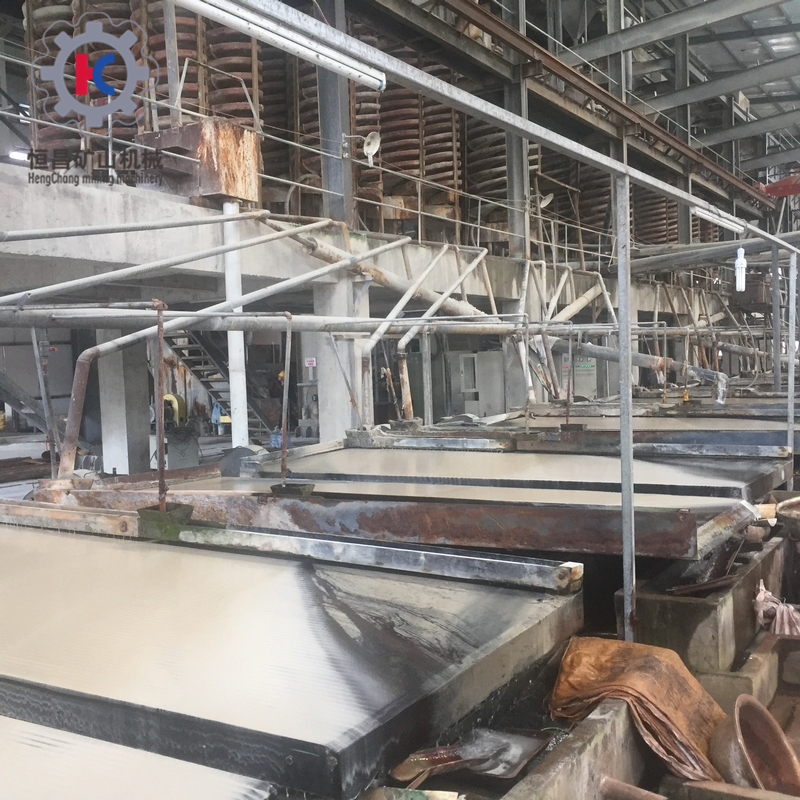
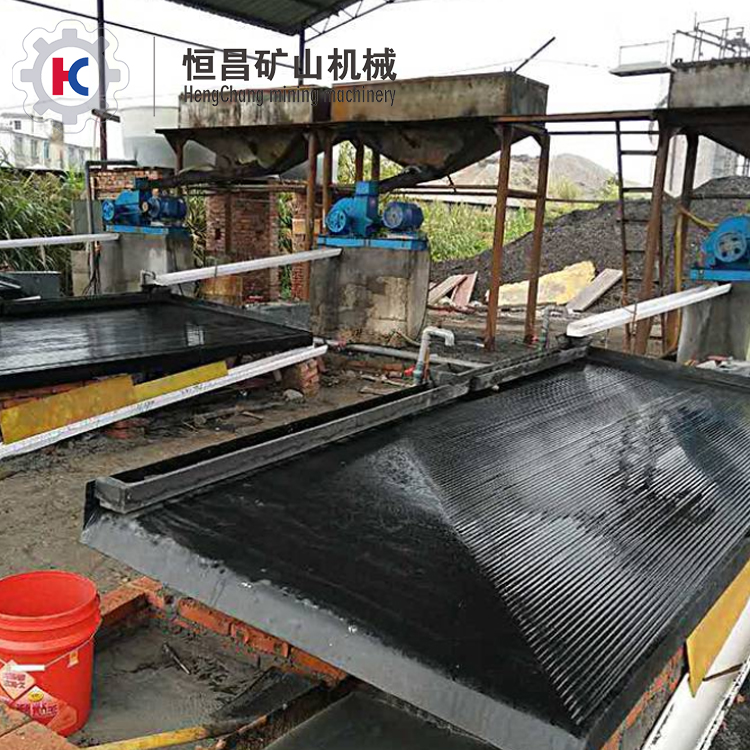
Stages: One roughing + one scavenging pass on middlings.
Results (After 6 months):
Concentrate grade: 42% Sn (from 0.3%).Recovery: 82% (up from 40%!).
Throughput: 16 tons per 8-hour shift.
Operating cost: $0.30 per ton (water + power + labor).
Customer Feedback:
“We used to lose money on fines. Now, with just one machine, our production doubled. The 4-layer table is simple to operate – even my nephew can run it after one week training. No complaints.”
Lessons Learned:
Desliming is non-negotiable. Without a hydrocyclone, the table would clog.Water quality matters. Muddy water reduced recovery by 5–10%. Install a settling pond.
Spare parts: Keep extra belt and bearings. Easy to replace.
? Daily Operation & Maintenance Tips
Want your table to last 10+ years? Follow these.
Daily Checks:
Lubrication: Grease the eccentric shaft bearings every 8 hours. Use high-temperature grease.Belt Tension: Too loose = slippage. Too tight = wear.
Water Flow: Inspect nozzles for clogging. Clean weekly.
Deck Surface: Check for cracks or peeling rubber. Repair immediately.
Weekly:
Clean riffles: Remove built-up fine sand. Use a soft brush and water.Incline Check: Ensure the tilt is even across all decks.
Bolt Tightening: Vibration loosens bolts over time.
Monthly:
Stroke Measurement: Use a dial gauge. Adjust if >15% deviation.Motor Check: Listen for noise. Check temperature.
Spare Parts Inventory: Belts, bearings, rubber sheets.
Pro Tip:
Spray nozzles: Use adjustable nozzles. Direct water to the washing zone (where heavy minerals sit). This improves concentrate purity.Golden rule: A well-maintained 4-layer table can run 5,000+ hours without major overhaul.
? Selection Guide: How to Choose the Right One
You are ready to buy. But which model?
Step 1: Feed Size Analysis
Coarse particles (0.5–3 mm): Need deep riffles. Go with standard deck.Fine particles (< 0.2 mm): Need shallow riffles. Ask for a fine sand deck.
Step 2: Throughput Requirement
< 1 TPH: Single table is enough.1–3 TPH: 4-Layer is ideal.
> 3 TPH: Consider 6-S (4-layer) or multiple tables.
Step 3: Budget & Automation
Manual adjust: Cheaper, but needs a skilled operator.Auto-tilt: Expensive but consistent. Good for remote sites.
Step 4: Supplier Reputation
Jiangxi Hengchang is a top choice. They have 20+ years in gravity equipment.Demand a test report for your ore. Free testing is a sign of confidence.
Step 5: After-Sales
Warranty: Standard 12 months.Spare parts: Check if local supplier stocks bearings and belts.
Support: Video call training included?
? Application Scenarios Summary
Where does the 4-layer shaking table shine?
Tin Processing Plants – coarse + fine recovery in one machine.Tungsten-Tin Ores – pre-concentration or final cleaning.
Artisanal Miners Scale-Up – from pans to mechanized plant.
Scavenging Tailings – recovering lost fine tin from old dumps.
Small to Medium Mines – 3–15 TPH capacity with limited space.
Not For:
High throughput (>50 TPH) – you need spirals or jigs.Ultra-fine slime (colloidal) – needs flotation.
High clay ores – you will fight clogging daily.
? Final Thoughts
The 4-layer shaking table is a proven, reliable workhorse for tin recovery. It’s not the newest technology, but it is one of the most cost-effective gravity separation tools you can buy.
For a mine doing 20–100 tons daily, this table will often pay for itself within 8–12 months. And with brands like Jiangxi Hengchang offering competitive pricing and solid warranty, the entry barrier is lower than ever.
Action Steps:
Send your ore to Jiangxi Hengchang for free testing.Compare quotes from 2–3 suppliers.
Include desliming and water supply in your plant design.
Invest in training – a trained operator can double recovery.
Need a Supplier Recommendation?
Jiangxi Hengchang Mining Equipment is the real deal. They have been in business for decades and supply 4-layer tables to tin mines in Africa, Asia, and South America. Their machines are built tough for rough field conditions.
? Contact them directly: [https://www.hc-machinery.com] or search “Jiangxi Hengchang 4-layer shaking table tin.”
Thanks for reading! If you have questions about tin gravity separation or shaking table operation, drop a comment below. I’m happy to help.
Happy mining!
P.S. If you found this guide valuable, bookmark it and share with your mining community. Knowledge is the best tool in gravity separation.