Chinese


2026 How a Multi-Deck Shaking Table Boosts Tungsten Recovery: Full Process & Case Study
If you're in the tungsten ore processing business, you know the struggle: high density, fine particle size, and the constant challenge of getting every last gram of valuable mineral out of your feed. In 2026, the multi-deck shaking table is not just a trend — it's the go-to solution for operations aiming to boost recovery rates without blowing the budget.
For tungsten miners, especially those dealing with fine-grained scheelite or wolframite, a standard single-deck table often falls short. Enter the multi-deck shaking table from Jiangxi Hengchang Mining Machinery, a powerhouse equipment that is rewriting the rules of gravity separation.
Let's break down the entire process, why it works, and share a real-world case study that shows the numbers don't lie.
What Is a Multi-Deck Shaking Table?
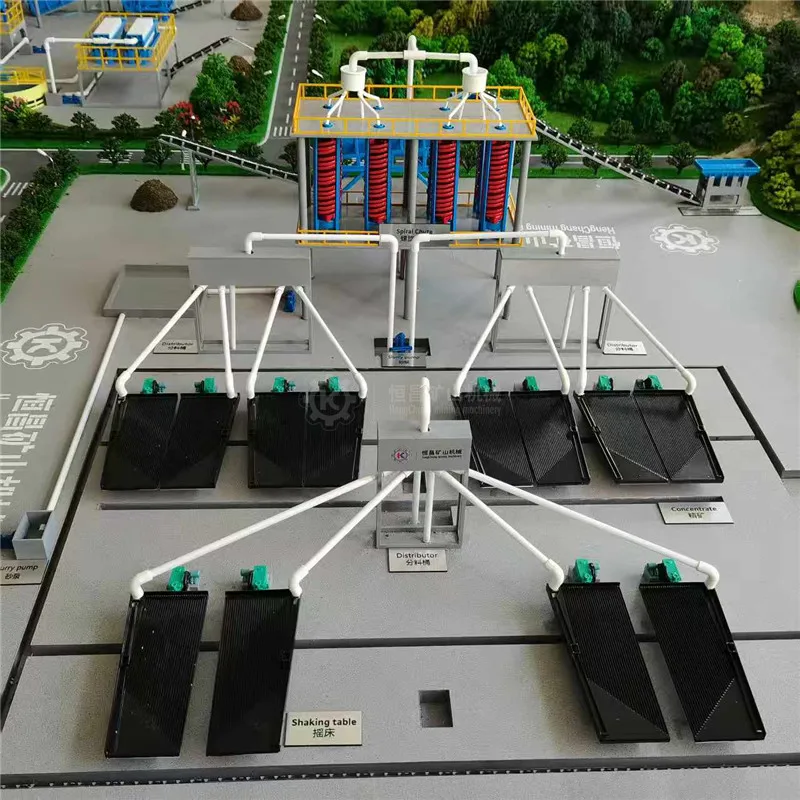
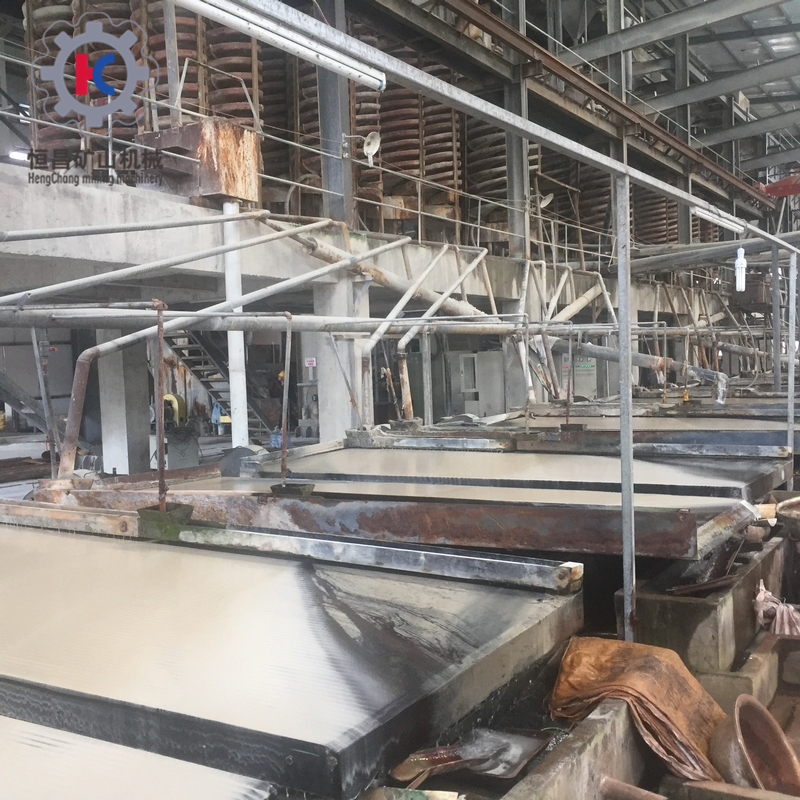
Simply put, it's a high-capacity gravity concentrator that uses water flow, vibration, and a grooved surface to separate minerals by density. Unlike the classic one-deck model, a multi-deck unit stacks two, three, or more working surfaces. This doubles or triples your throughput per square meter of floor space.
Think of it like this: One deck can process maybe 1–2 tons per hour. With a 6-deck table, you're looking at 6–12 tons per hour — same footprint, way more profit.
The Working Principle of a Multi-Deck Shaking Table
The science is simple yet effective:
Feed Entry: Slurry (solid + water) enters the feed box at one end.Vibration Action: The table shakes rapidly (typically 280–320 strokes per minute) using a head motion mechanism.
Water Flow: A thin film of water runs perpendicular to the shaking direction.
Segregation: Heavy tungsten particles, due to their high density and low settling rate in flowing water, are carried down the table toward the "concentrate" launder.
Tailing Removal: Lighter gangue (quartz, feldspar, mica) is washed off the side.
On a multi-deck setup, each deck works independently, yet the central drive system ensures all decks operate in sync. Hengchang's precision eccentric drive minimizes vibration leakage, meaning less wear, longer life, and stable performance.
Why Multi-Deck Shaking Table Boosts Tungsten Recovery
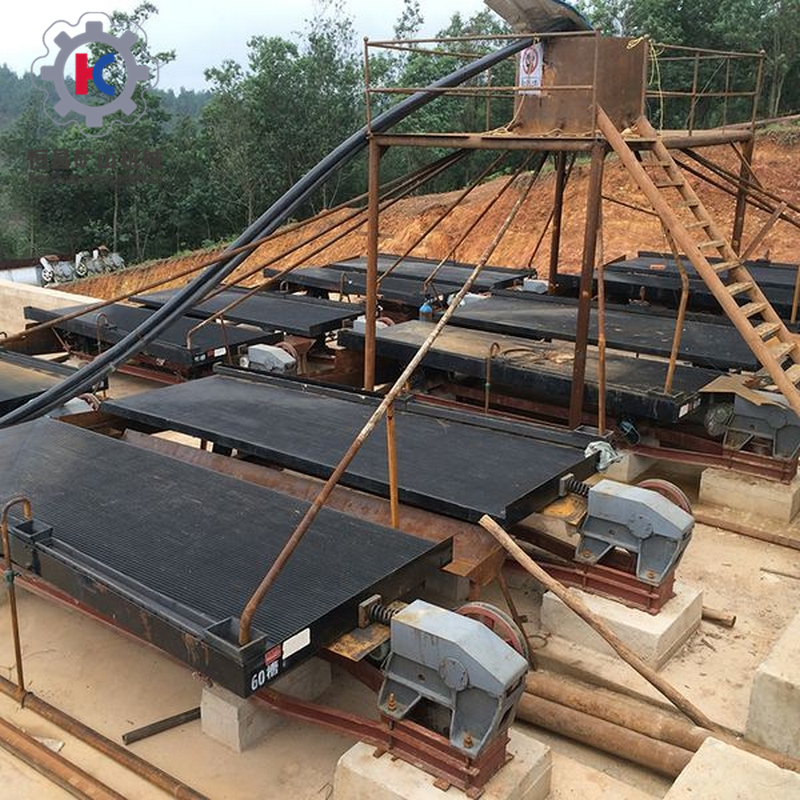
Tungsten is a classic "fine-grain problem child." Most valuable scheelite and wolframite exists in particle sizes between 40–200 mesh. Traditional jigs or spirals struggle with these fine fractions. A shaking table, with its sharp cut point and low turbulence, can recover down to 20 microns — no joke.
Key advantages for tungsten processing:
High enrichment ratio — often up to 100:1 for scheelite.Low operating cost — no chemicals, minimal power consumption (only 1.5–3 kW per deck).
Adjustable stroke and amplitude — you can dial in the perfect motion for your ore's specific density.
Simultaneous multiple grades — one table can produce concentrate, middlings, and tailings in a single pass.
Structural Features That Make a Difference
Not all shaking tables are created equal. Hengchang's multi-deck model packs several engineering upgrades that matter in the field:
Durable fiberglass bed — resistant to corrosion from acidic tungsten slurry.Rifle pattern design — optimized for tungsten's density curve.
Independent water spray system — allows fine-tuning water per deck.
Compact foundation — no need for heavy civil works; a flat concrete pad is enough.
These features mean less downtime and easier maintenance — a big plus when your operation runs 24/7.
Case Study: A Tungsten Mine in Jiangxi Province
Background: A small-to-medium scale tungsten operation in Jiangxi had been using traditional jigs + spirals for their wolframite ore. Their overall recovery hovered at 68% — a lot of high-value mineral was going to waste.
Problem: The fine-grained fraction (-200 mesh) was nearly untouched by existing equipment.
Solution: The mine replaced two spirals with a 6-deck shaking table from Jiangxi Hengchang Mining Machinery.
| Parameter | Before (Spirals) | After (6-Deck Table) |
|---|---|---|
| Feed grade | 1.2% WO3 | 1.2% WO3 |
| Concentrate grade | 18% WO3 | 38% WO3 |
| Recovery rate | 68% | 92% |
| Processing capacity | 4 t/h | 9 t/h |
| Power consumption | 18 kW | 9 kW |
Result: After three months of operation, the mine's revenue increased by 35% due to higher recovery and improved concentrate grade. The payback period on the 6-deck table was just 4 months.
Suitable Ores for a Multi-Deck Shaking Table
While this article focuses on tungsten, the multi-deck shaking table is a workhorse for many heavy minerals:
Tin (cassiterite)
Tantalum-Niobium (coltan)
Gold (placer gold, fissure gold)
Lead-Zinc (especially oxidized ores)
Iron (low-grade magnetite, hematite upgrade)
It also works well for sand processing and recovery of fine cassiterite in tailings reprocessing.
Comparison: Multi-Deck Shaking Table vs. Other Equipment
| Feature | Multi-deck shaking table | Jigs | Spirals | Flotation cells |
|---|---|---|---|---|
| Recovery for fine particles (<150 mesh) | Excellent | Poor | Good | Excellent (chemicals) |
| Operating cost | Low | Low | Medium | High (reagents) |
| Floor space per ton | Excellent | Good | Poor | Fair |
| Maintenance complexity | Low | Medium | Low | High |
| Particle size range | 20–200 mesh | 5–50 mesh | 50–200 mesh | 200–325 mesh |
For tungsten, if you're targeting the fine fraction (which often contains the highest-grade material), a multi-deck shaking table is your best bet.
Daily Operation & Maintenance Tips
To keep your multi-deck table running at peak efficiency:
Check the water distribution: Uneven water flow leads to poor separation.Inspect rifle grooves: Wear and tear is normal; replace worn bed panels every 6–12 months.
Lubrication: Grease the eccentric drive every 8 hours of operation.
Cleaning: Flush the bed with clean water after each shift to avoid buildup of fine gangue.
Most importantly, dial in your stroke and amplitude based on your feed's specific gravity. For tungsten, a 10–15 mm stroke and 280–300 strokes/min is a solid baseline. Always do a trial run with fresh ore.
Application Scenarios Summarized
A multi-deck shaking table is ideal when:
You are processing fine-grained heavy minerals (tungsten, tin, tantalum).Your current plant has limited floor space.
You want to increase recovery without adding chemicals.
You need a low-maintenance solution for remote mining sites.
If you're considering upgrading your tungsten processing line, look at the multi-deck shaking table from Jiangxi Hengchang Mining Machinery. It's designed for real-world conditions, backed by years of field experience, and delivers results that speak for themselves.
Want to know how a 6-deck table could fit your specific tungsten ore? Contact Jiangxi Hengchang Mining Machinery for a free process simulation and payback analysis.