A lode gold deposit is a primary gold deposit where native gold is locked within hard rock at depth. Extracting gold from these deposits involves mining (open-pit or underground), crushing and grinding the ore, and using processing methods like gravity separation, flotation, or cyanidation.
The key prerequisite for the high-efficiency recovery of gold from lode gold ores lies in the sufficient liberation of gold minerals from gangue minerals. Since gold predominantly occurs as fine-grained inclusions within gangue minerals such as quartz and pyrite, the primary objective of grinding operations is to break these interlocking aggregates (or inclusion associations) to fully expose the gold particles, thereby creating favorable conditions for subsequent beneficiation. It can be said that the appropriateness of grinding fineness directly determines the gold recovery rate and the overall economic benefits of the mine.
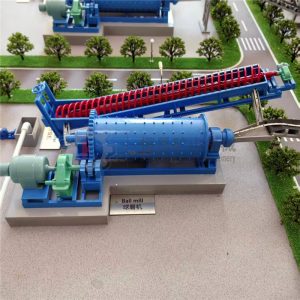
To achieve the liberation of gold in lode gold ores, it is generally necessary to grind the ore to below -200 mesh (0.074 mm). In industrial practice, lode gold beneficiation widely employs closed-circuit grinding systems consisting of overflow ball mills combined with spiral classifiers or hydrocyclones. By regulating the return sand via classification equipment, the grinding fineness is stabilized within the range of 78%–82% passing -200 mesh. This fineness range not only ensures a high degree of gold mineral liberation but also prevents slime formation caused by over-grinding, thereby significantly enhancing the performance indicators and operational stability of subsequent gravity separation or flotation processes.








 Chinese


