Copper Ore Flotation Process
Copper ore is typically separated using the flotation method. The process consists of the following stages:
1. Crushing and Grinding
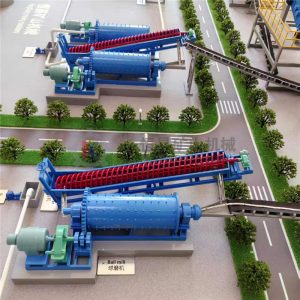
First, large blocks of copper ore enter a jaw crusher for primary crushing. The discharged material (approximately ten centimeters in size) then proceeds to a secondary crusher for further reduction. The output, crushed to around 3 centimeters, enters a ball mill for grinding. The resulting pulp then flows into a spiral classifier.
The spiral classifier separates the mixture based on the different settling velocities of particles in water, which are determined by their specific gravity. This step cleans and classifies the ore:
2. Conditioning and Flotation
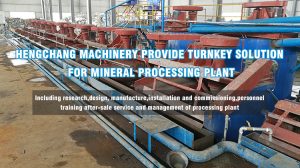
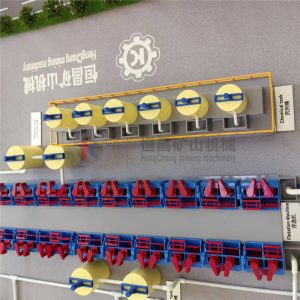
The material from the slurry pool is pumped via a slurry pump to a conditioning tank (agitator). Here, it is mixed with water and various flotation reagents. After thorough stirring, the mixture moves to the flotation machine for the flotation circuit.
The flotation circuit typically includes three key stages: roughing, scavenging, and cleaning.
-
Roughing:
This stage rapidly captures the bulk of the copper minerals to produce a rough concentrate. The tailings from this stage flow to the scavenging stage.
-
Scavenging:
This stage further recovers residual copper minerals from the roughing tailings. The scavenging concentrate is usually returned to the roughing stage or the previous operation for reprocessing.
-
Cleaning:
The rough concentrate undergoes multiple cleaning stages to improve the grade (purity) of the final copper concentrate. The tailings from the cleaning stage are typically returned to the previous operation.
Equipment and Separation Principle:
-
Equipment: Mechanical agitation flotation machines or pneumatic flotation machines are used.
-
Process: Inside the flotation cell, the pulp interacts thoroughly with reagents and air. Hydrophobic copper mineral particles attach to air bubbles and rise to form a froth layer, which is scraped off as the copper concentrate. Hydrophilic gangue minerals remain in the slurry and are discharged as tailings.








 Chinese


