Chinese


JXSC Zimbabwe Chromite Ore Processing Plant 5TPH Capacity for Small Scale Miners
Why Small Scale Miners in Zimbabwe Are Turning to JXSC
If you're a small scale miner in Zimbabwe, you know the struggle. You have a chromite ore deposit, but limited capital, water, and technical support. Big processing plants are out of reach. What you need is something compact, affordable, and effective.
That's exactly what the JXSC Zimbabwe Chromite Ore Processing Plant delivers. With a 5TPH capacity (5 tons per hour), it's designed for small scale operations that want to maximize recovery without breaking the bank.
Let's break down how this plant works, what makes it special, and why miners across Africa are choosing JXSC.
What Mines Use This Plant? Chromite and Beyond
The primary target is chromite ore. Zimbabwe has some of the richest chromite deposits in the world, especially in the Great Dyke region.
But here's a bonus: this same plant setup works for other heavy mineral ores too. You can process:
Chromite (obviously)Magnetite iron ore
Ilmenite (titanium ore)
Hematite
Manganese ore
So if you ever switch ore types, you don't need a whole new plant.
Real Case Study: JXSC 5TPH Chromite Plant in Zimbabwe
Let me tell you about a real installation. A small scale miner in Shurugwi, Zimbabwe, approached JXSC with a problem. His chromite ore was mixed with waste rock (gangue). Hand sorting was too slow and inefficient.
JXSC recommended a 5TPH modular processing plant. Here's what happened:
Before: 30-40% chromite recovery by hand sortingAfter JXSC plant: 85-92% chromite recovery
Daily production: Up to 40-50 tons of concentrate per day
Power: Runs on diesel generator (common in remote areas)
Water use: Recirculated, minimal waste
The miner paid back his investment in just 6 months.
Working Principle: Simple but Effective
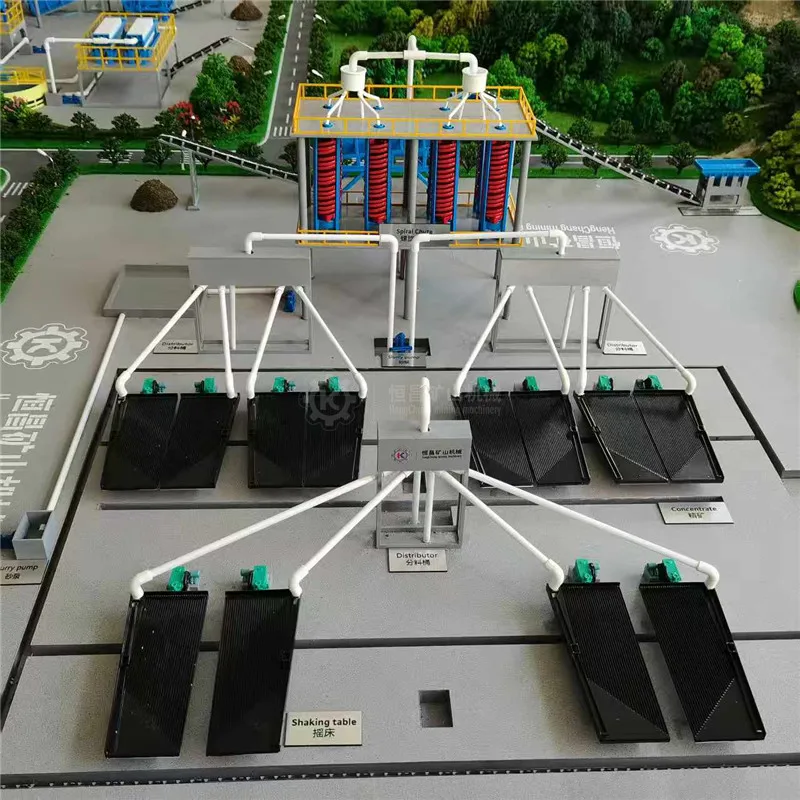
The JXSC 5TPH chromite plant uses a combination of gravity separation and magnetic separation. Here's the step-by-step process:
Step 1: Feed & Crushing

Run-of-mine ore goes into a jaw crusher. Gets crushed to 0-20mm. Simple enough.
Step 2: Washing & Screening
A trommel screen washes away clay and fines. Oversize goes back to the crusher. Undersize (0-5mm) moves to the next step.
Step 3: Gravity Concentration
This is the heart of the system. Ore slurry goes through a spiral chute system. Chromite (heavy) settles inward. Waste (light) goes outward.
Step 4: Magnetic Separation
A wet drum magnetic separator removes any magnetic impurities. Chromite has weak magnetic properties, so this step polishes the concentrate.
Step 5: Dehydration
A spiral classifier or dewatering screen removes excess water. Final product is ready for sale.
Structure Features: Why Miners Love This Design
| Feature | Benefit |
|---|---|
| Modular design | Easy to transport, assemble in 2-3 days |
| Small footprint | Fits in tight spaces, no large foundation needed |
| Low power consumption | Runs on 20-30 kW total |
| Water recirculation | No need for constant water source |
| Simple controls | One operator can run the whole plant |
The entire plant fits in a standard 20-foot container for shipping.
Processing Capacity: What 5TPH Really Means
Let's do the math. At 5 tons per hour, running 8 hours per day:
Daily feed: 40 tonsDaily concentrate: 2-4 tons (depending on ore grade)
Monthly production: 60-120 tons of chromite concentrate
For a small scale miner, that's serious money. At current chromite prices (around $150-200 per ton), that's $9,000 to $24,000 per month.
Daily Operation & Maintenance: Keep It Simple
Here's a typical daily checklist for the operator:
Morning startup (15 minutes):
Check oil levels in crusher and pumps
Start water pump, then crusher, then spiral chutes
During operation (every 30 minutes):
Check feed rate - don't overloadLook at concentrate color - dark black=good
Monitor water flow
End of shift (30 minutes):
Flush all pipes with clean waterStop in reverse order (spirals first, crusher last)
Oil moving parts
Weekly (1 hour):
Check spiral chute wearreplace worn screening panels
Clean magnetic separator drums
Comparison: JXSC 5TPH Plant vs Other Options
| Feature | JXSC 5TPH Plant | Traditional Trommel Only | Ball Mill + Spiral |
|---|---|---|---|
| Recovery rate | 85-92% | 40-60% | 60-75% |
| Power consumption | 20-30 kW | 10-15 kW | 40-60 kW |
| Water usage | Recirculated | High waste | Moderate |
| Operator skill | Low | Very low | High |
| Maintenance cost | Low | Low | High |
| Investment cost | $$$ | $ | $$$$$ |
The JXSC plant offers the best balance of recovery, cost, and simplicity for small scale miners.
Application Scenarios: Where This Plant Shines
This plant works best in these situations:
Remote mining camps - No grid power needed, runs on generatorStart-up operations - Low initial investment, fast payback
Cooperative mines - Several small miners pooling resources
Government-backed projects - Zimbabwean government supports small scale mechanization
Why JXSC Stands Out for Zimbabwe Chromite
JXSC Jiangxi Shicheng Mining Equipment has over 30 years of experience in mineral processing. For Zimbabwe specifically:
Local service team in Harare for installation and supportSpare parts warehouse in Bulawayo
Customizable - can add jigs or shaking tables for specific ore types
Training provided for local operators
Final Verdict: Is the JXSC 5TPH Plant Right for You?
If you're a small scale miner in Zimbabwe with chromite ore, this plant is a no-brainer. You get:
High recovery rates (85%+)Low operating costs
Simple maintenance
Fast return on investment
Don't get stuck with manual sorting or oversized equipment. Start with a 5TPH modular plant from JXSC, and scale up when your production grows.
Need help with selection? Contact JXSC's team for a free ore test and plant recommendation. They'll tell you exactly what setup works for your specific ore.
Keywords: chromite processing plant Zimbabwe, small scale mining equipment, 5TPH gravity separation plant, JXSC mining machinery, chromite ore recovery