Chinese


Industry-Leading Flotation Solutions Now Available for Gold Ore Processing
1. Overview
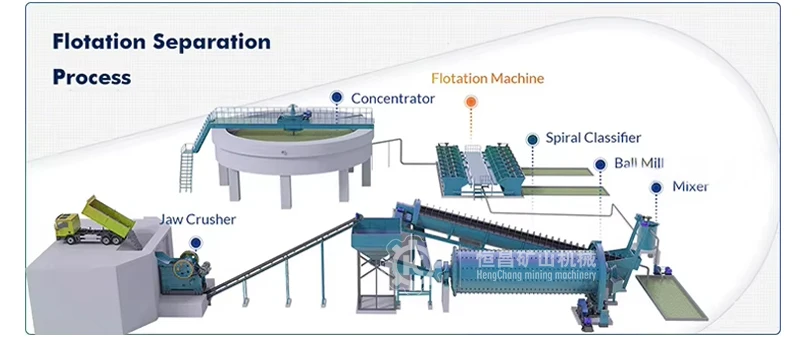
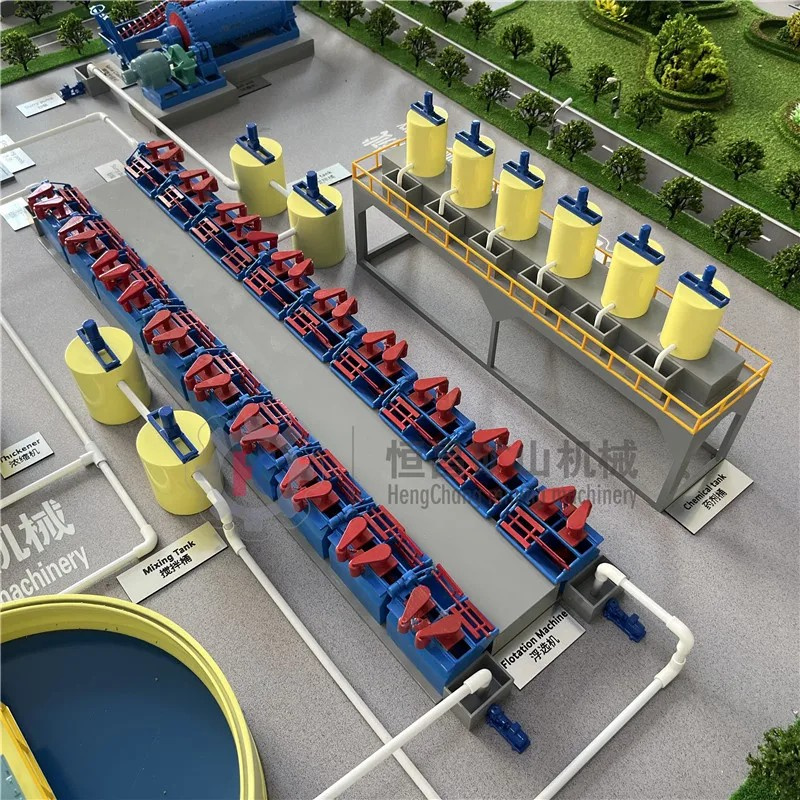
The Flotation Machine is the core equipment for the mineral froth flotation process. It is widely used in the separation of non-ferrous metals (copper, lead, zinc, gold, silver, molybdenum), ferrous metals, and non-metallic ores.
By introducing air into the slurry and generating fine bubbles, the machine selectively attaches hydrophobic mineral particles to the bubble surface. The mineralized bubbles rise to the surface to form a froth layer, which is scraped off as concentrate, while the remaining slurry is discharged as tailings.
2. Main Types
Our flotation machines are available in the following configurations to meet different process requirements:
2.1 Mechanical Agitation Flotation Machine
- Self-aspirating air design with an impeller-stator system.
- Combines pulp circulation and air dispersion in one unit.
- Suitable for roughing, scavenging, and cleaning operations.
2.2 Forced-Air Mechanical Flotation Machine
- External low-pressure blowers supply air; mechanical agitation ensures mixing.
- High air dispersion efficiency, lower power consumption per unit volume.
- Ideal for large-scale concentrators and refractory ores.
2.3 KYF / XCF Series (Optional)
- Horizontal configuration between cells without pumps.
- Stable operation, easy automation, and low maintenance cost.
- Widely applied in medium and large-scale mining projects worldwide.
3. Working Principle
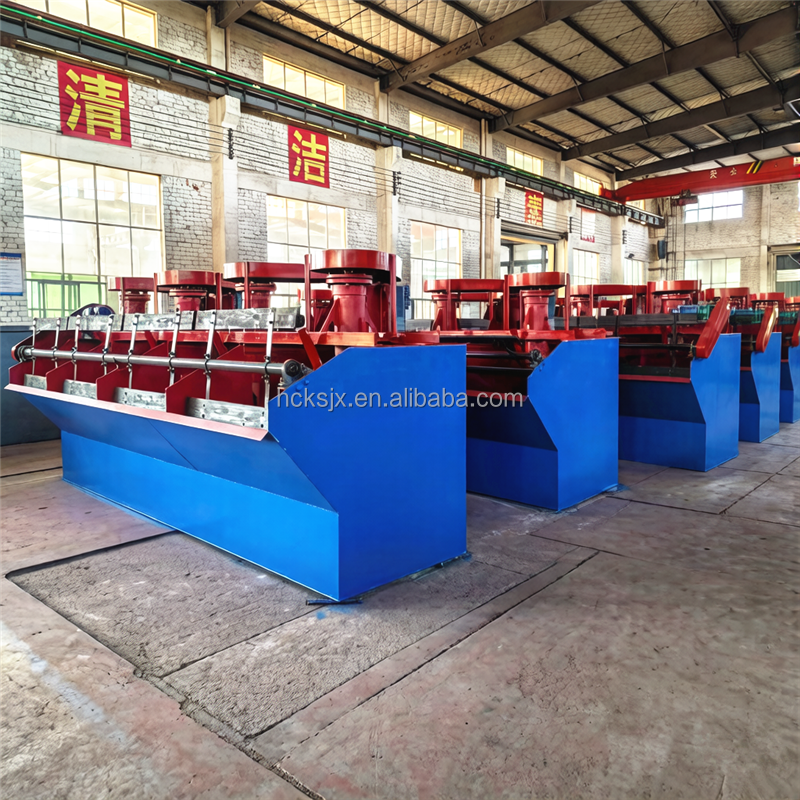
- Conditioned slurry enters the flotation cell.
- The impeller rotates at high speed, creating a vacuum that draws air into the stator.
- Air is sheared into micro-bubbles and evenly distributed throughout the pulp.
- Hydrophobic mineral particles attach to the bubbles (mineralized bubbles).
- Mineralized bubbles float to the surface, forming a froth layer.
- The froth is removed by a rotating scraper; the residual pulp flows to the next cell or is discharged as tailings.
4. Key Features & Advantages
- High Separation Efficiency: Optimized impeller-stator geometry ensures uniform bubble distribution and high recovery rates.
- Energy Saving: Advanced hydrodynamic design reduces power consumption per ton of ore processed.
- Robust Construction: Heavy-duty bearings, wear-resistant liners, and corrosion-resistant materials ensure long service life.
- Flexible Configuration: Multiple cells can be connected in series for roughing, cleaning, and scavenging circuits.
- Wide Applicability: Handles various particle sizes, pulp densities, and ore types.
5. Application Fields
Category | Typical Ores |
|---|---|
Non-Ferrous Metals | Copper, Lead, Zinc, Gold, Silver, Nickel, Molybdenum |
Ferrous Metals | Iron Ore (Reverse Flotation) |
Non-Metallic Minerals | Fluorite, Phosphorus, Graphite, Feldspar, Scheelite |
Technical Conditions:
- Pulp density: 25% – 45% solids
- Feed size: Typically -0.074mm accounts for 45% – 90% (process dependent)
6. Technical Specifications (Example Table)
Specific parameters vary by model and customization.
7. Service & Support
- Customization: Tank volume, number of cells, and lining materials (rubber-lined, stainless steel, epoxy coating) can be customized based on ore properties.
- Process Support: We provide flotation circuit design, equipment selection, and on-site commissioning services.
- Global Delivery: Standard models available from stock; custom orders supported with fast delivery schedules.