Chinese


2026 6S Shaking Table vs Gemini: Which Gold Gravity Separator Offers Better Recovery?
If you're in the gold processing game, you've probably heard the debate: 6S shaking table vs Gemini table – which one actually gives you better gold recovery? It's a question that keeps popping up in mining forums, WhatsApp groups, and even at site meetings over a cup of chai.
Let's cut through the noise. I've spent years around these machines, from small-scale setups in Africa to larger operations in South America. Today, I'll break down the real-world differences, the pros and cons, and help you decide which gravity separator fits your setup.
What's the Fuss About These Two Tables?
First, let's be clear. The 6S shaking table (often called the traditional shaking table) and the Gemini table (a modern high-frequency design) are both gravity separators. They both work on the same basic principle: density difference. Gold is heavy, lighter materials wash away.
But that's where the similarity ends. The 6S table is a workhorse – robust, proven, and forgiving. The Gemini table is a precision tool – faster, more efficient, but also more sensitive.
A Quick Reality Check: Global Use Cases
I've seen 6S shaking tables running in:
Small-scale gold mines in Ghana – running 24/7 on river goldAlluvial operations in Indonesia – handling high clay content
Hard rock mills in Zimbabwe – recovering fine gold from grinding circuits
And Gemini tables (often branded as Gemini Gold Tables or similar high-frequency models) are popular in:
Medium-scale operations in South Africa – targeting finer goldTest labs in Australia – for feasibility studies
Modern plants in Brazil – where space is tight and efficiency is king
How Do They Actually Work? (In Simple Terms)
6S Shaking Table – The Classic
Imagine a rectangular deck that shakes back and forth. You feed a slurry of crushed ore and water at the top corner. The shaking motion, combined with a "riffle" pattern on the deck, separates materials:
Heavy gold stays on the deck, moves to the "concentrate" endLight gangue washes off the side
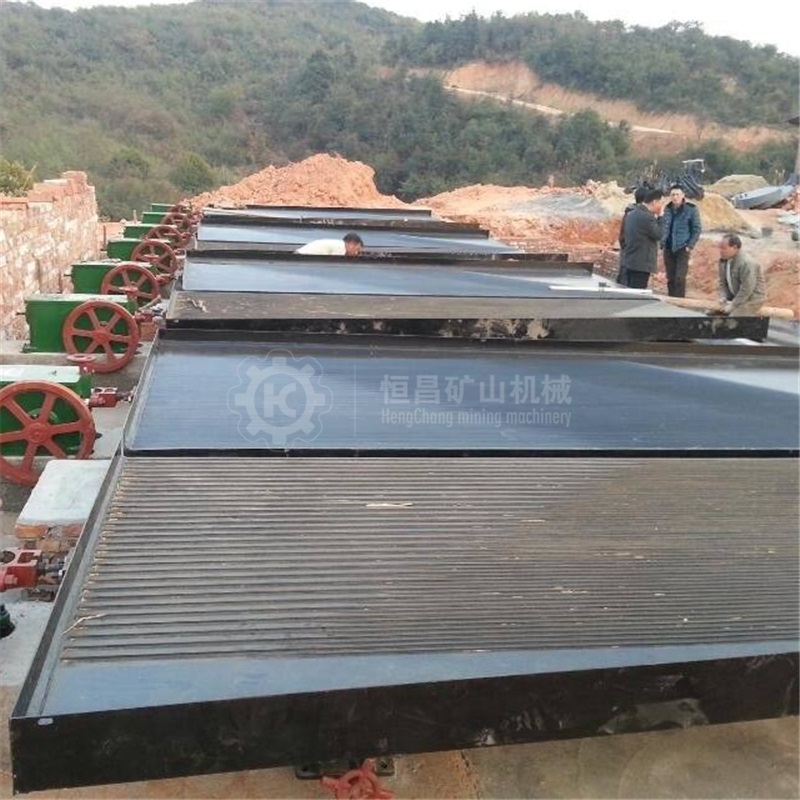
The 6S table uses a low frequency (about 15-20 cycles per minute) and a long stroke. It's like a slow, deliberate dance.
Gemini Table – The Modern One
The Gemini table is smaller, but shakes at a much higher frequency (about 60-80 cycles per minute) with a shorter stroke. The deck is often made of fiberglass or stainless steel, with no riffles in the final section.
It's like a fast, gentle vibration that "pops" fine gold particles upward while lighter material slides down.
Structure & Design – What's Different?
| Feature | 6S Shaking Table | Gemini Table |
|---|---|---|
| Deck size | 4.5m x 1.85m (standard) | Smaller, around 1.5m x 0.8m |
| Deck material | Fiberglass with rubber coating | Fiberglass or stainless steel |
| Riffles | Yes, multiple rows | Minimal or no riffles |
| Adjustment | Stroke & slope manually | Motor speed & deck angle |
Which Ores Does Each Handle Best?
6S Shaking Table is Best For:
Coarse gold (>0.5mm) – it catches larger nuggets and flakes easilyAlluvial deposits – handles sand and gravel well
Mixed particle sizes – forgiving if your feed isn't perfectly sized
High throughput operations – a standard 6S can process 1-2 tons per hour
Gemini Table is Best For:
Fine gold (<0.2mm) – it recovers particles down to 75 micronsCleaner step – after a jig or spiral, to polish the concentrate
Lab or pilot trials – small footprint, easy to test
Low tonnage – typically 0.1-0.5 tons per hour
Recovery Comparison – Let's Talk Numbers
I know you want the raw data. Here's what I've seen on real sites:
6S Shaking Table: Gold recovery typically 85-92% for particles >0.3mm. For finer gold (<0.1mm), recovery drops to 60-75%.Gemini Table: For <0.2mm gold, recovery can reach 90-95%. But for coarse gold, it's actually worse – the high frequency can bounce the bigger grains off the deck.
My take: If you're chasing coarse gold, the 6S table wins. If you need fine gold recovery, the Gemini table is the better bet.
Operation & Maintenance – The Real Talk
6S Shaking Table
Set-up: Takes 2-3 hours to adjust stroke, slope, and water flowOperation: Relatively simple – once set, it runs smoothly
Maintenance: Check deck rubber every 3-6 months. replace riffles if worn (costs about $50-100)
Durability: Can run for 10+ years with basic care
Gemini Table
Set-up: Faster – about 30-60 minutes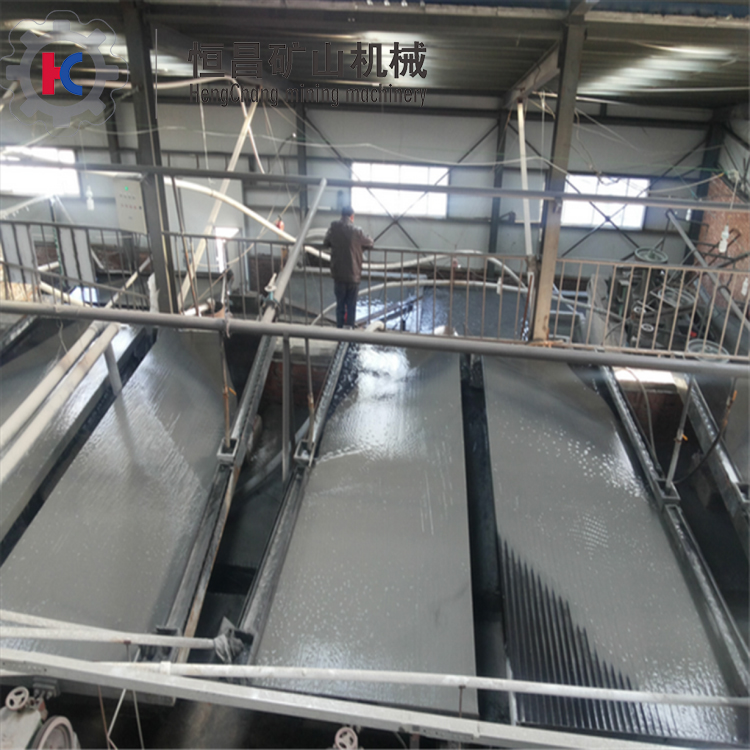
Operation: Needs more attention – feed rate and water pressure must be stable
Maintenance: Motor needs periodic check. Deck cleaning is critical (clogged riffles = poor recovery)
Durability: 5-8 years is typical before significant wear
The Cost Factor
Let's be direct:
6S Shaking Table: Around $3,000 - $5,000 for a standard model (e.g., from Jiangxi Henghong Mining Machinery)Gemini Table: Around $8,000 - $15,000 for a quality unit
But don't just look at the price tag. Consider: the Gemini table handles less tonnage. For the same throughput, you might need 3-4 Gemini tables versus 1-2 6S tables.
My Honest Recommendation
Choose the 6S Shaking Table if:
You're processing coarse gold or alluvial materialYou want a low-maintenance, long-lasting machine
Your operator is new or you have variable feed quality
You need high throughput (1-2 tons/hour)
Budget is a concern
Choose the Gemini Table if:
Your gold is fine (<0.3mm) – like from a grinding circuitYou need high purity concentrate (as a cleaner step)
You have good operator skill and consistent feed
Space is limited
You're doing test work or small-scale production
Final Word
There's no universal "best" machine. It depends on your ore, your budget, and your team.
If I had to pick one for a typical start-up? Go with the 6S shaking table. It's forgiving, easy to maintain, and will recover the bulk of your gold. If you later discover fine gold in your tailings, add a Gemini table as a secondary step.
And always remember: proper feed preparation (sizing, desliming) makes any gravity separator work better. Garbage in = garbage out, no matter which table you use.
Want to discuss your specific application? drop a comment below or reach out – I help miners choose the right equipment every day. If you're looking for a reliable 6S shaking table, check out models from [Jiangxi Henghong Mining Machinery] – they offer good value with proven performance.