Chinese


2026. Advantages and Selection Guide of Multi - layer Shaking Tables for Gold Mining
I. Introduction to the Multi - layer Shaking Table
The multi - layer shaking table is an important equipment in gold mining. It is mainly used for the separation of gold - bearing minerals from gangue.
A. Basic Structure
It usually consists of a bed surface, a frame, a transmission device, and a water supply system. The bed surface is where the minerals are placed for separation. The frame provides stable support, and the transmission device drives the bed surface to shake in a certain direction and frequency.The water supply system is crucial as it helps to create the necessary fluid environment for mineral separation.
B. Appearance and Size
These shaking tables come in different sizes depending on their production capacity requirements. Generally, they have a rectangular shape with a flat or slightly inclined bed surface.II. Working Principle
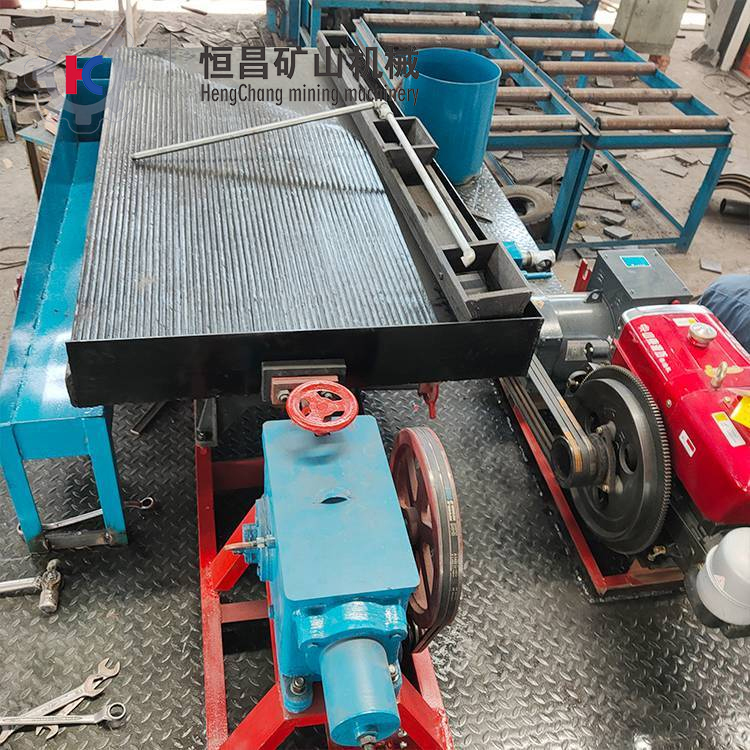
When the multi - layer shaking table is working, the mixed minerals are fed onto the uppermost layer of the bed surface. Under the action of the shaking motion and the water flow, different minerals start to separate according to their density, particle size, and shape differences.
The heavier minerals (such as gold) tend to move towards the lower end of the bed surface, while the lighter gangue moves towards the upper end. As the shaking progresses layer by layer, the separated minerals can be collected separately at different positions.
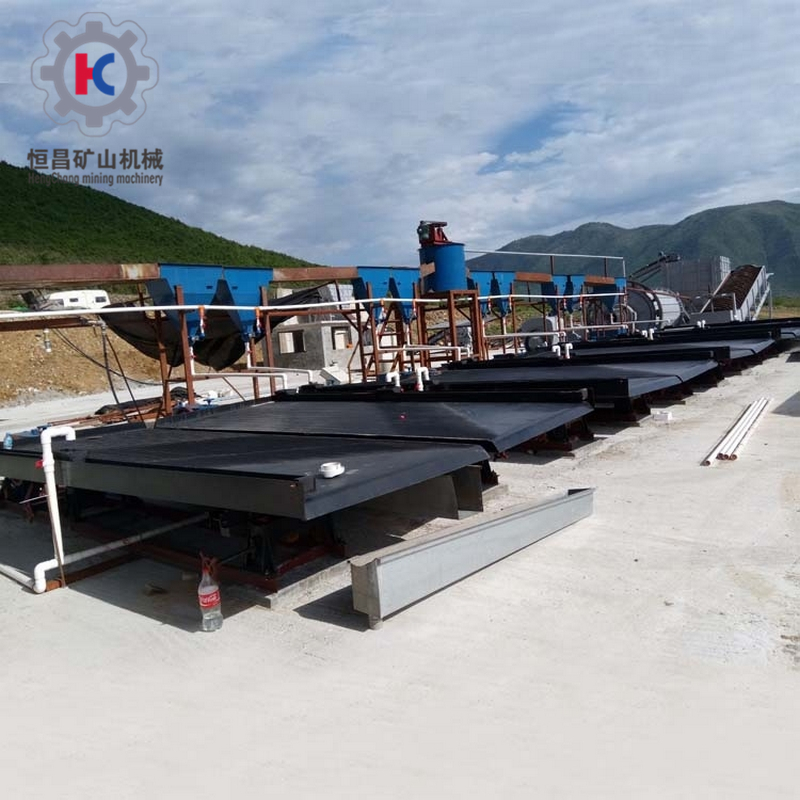
III. Structural Features
Layered Design: The multi - layer structure allows for more efficient separation. Different layers can be adjusted to different operating parameters according to the characteristics of the minerals, which improves the overall separation efficiency.Adjustable Parameters: Such as the amplitude and frequency of the shaking, which can be adjusted according to different ores and processing requirements.
IV. Application Cases at Home and Abroad
In some small - scale gold mines in Africa, multi - layer shaking tables have been widely used. Due to their relatively simple operation and low cost, they have become an important tool for local miners to extract gold.In China, many gold mines also use this equipment. For example, in some gold mines in Shandong province, through reasonable configuration and operation of multi - layer shaking tables, good separation results have been achieved, significantly improving the gold recovery rate.
V. Applicable Ores
It is mainly suitable for gold - bearing quartz veins, alluvial gold deposits, and some polymetallic gold ores. For example, in quartz vein gold ores, the gold particles are often fine and need to be separated from the quartz matrix, and the multi - layer shaking table can do this well.VI. Advantages
High Separation Efficiency: Compared with some traditional separation methods, it can more accurately separate gold from gangue.Low Cost: Both in terms of equipment purchase cost and operating cost, it has certain advantages. It does not require complex chemical reagents like some flotation methods.
Environmentally Friendly: Since it mainly uses water flow and mechanical shaking for separation, it has less pollution to the environment.
VII. Treatment Capacity Parameters
The treatment capacity of multi - layer shaking tables varies depending on factors such as the size of the equipment, the layer number, and the properties of the ore. Generally, a small - sized multi - layer shaking table can process several tons of ore per day, while a large - sized one can reach tens of tons per day.VIII. Daily Operation and Maintenance
Operation: Before starting, check whether the water supply system is normal, adjust the shaking parameters according to the ore properties, and evenly feed the ore onto the bed surface. During operation, pay attention to observe the separation situation and adjust parameters in time if necessary.Maintenance: Regularly clean the bed surface to prevent ore residue from affecting the separation effect. Check the transmission device regularly to ensure that it runs smoothly.
IX. Comparison with Other Ore Dressing Equipment
Compared with crushers, multi - layer shaking tables are mainly for separation rather than crushing. Crushers break the large ore blocks into smaller pieces, while shaking tables separate useful minerals from gangue.Compared with flotation machines, shaking tables do not require chemical reagents, and the operation is relatively simple. Flotation machines rely on the adsorption of bubbles to separate minerals, which is more complex in terms of operation and control.
X. Application Scenario Summary
Multi - layer shaking tables are ideal for small - scale gold mines, individual miners, and some gold - bearing mine areas with complex geological conditions. They can be used alone or in combination with other ore dressing equipment to form a complete gold extraction process.In conclusion, when choosing a multi - layer shaking table for gold mining, it is necessary to consider factors such as ore properties, production scale, and budget. [Jiangxi Hengchang Mining Machinery Equipment] is a good choice. Their multi - layer shaking tables have high quality, reliable performance, and good after - sales service, which can meet the needs of different customers in gold mining.