Chinese


2026 How to select a Shaking Table for Copper Ore: Key Parameters & Price Guide
Written by Jiangxi Hengchang Mining Machinery – Your Trusted Partner in Mineral Processing
Introduction: Why Your Copper Ore Needs a Shaking Table
If you’re in the copper mining business, you know that not all ore is created equal. Some copper ores are high-grade with big particles; others are fine, low-grade, or mixed with other minerals. That’s where a shaking table comes in.
Think of it as the final polish – the piece of equipment that takes your concentrate and makes it pure. In 2026, with copper prices fluctuating and operating costs rising, choosing the right shaking table is more critical than ever.
This guide is for mine owners, plant operators, and procurement managers who want a no-fluff, hands-on look at how to pick the right shaking table for copper ore. We’ll talk parameters, prices, and real-world use – all in plain English.
What is a Shaking Table? (For the Newbies)
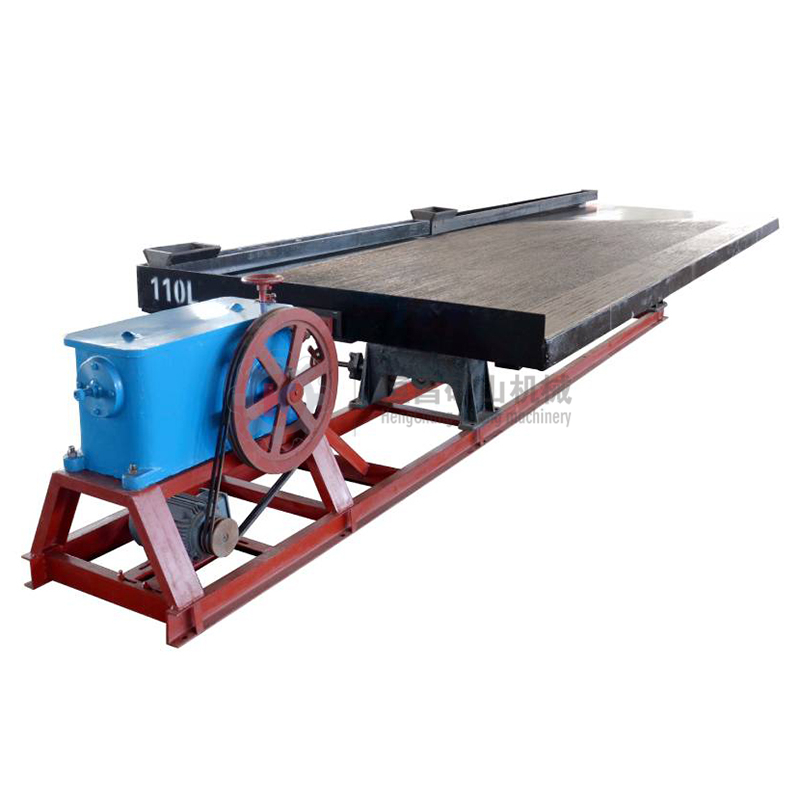
A shaking table is a gravity separation device. It looks like a flat, slightly tilted, rectangular deck covered with riffles (raised grooves). The deck vibrates – or shakes – in a unique way.
When you feed a mixture of water and copper ore onto the deck, the shaking motion, combined with water flow, separates materials by density. Heavy copper particles settle into the riffles and move towards the concentrate end; lighter waste (gangue) is washed off the side.
It’s simple physics, but it works wonders for copper ore.
Global Applications: Where Shaking Tables Shine
Shaking tables aren’t new, but recent advances in materials and design have made them more efficient.
Case Study: Central African Copperbelt (DRC & Zambia)
Here, many small to medium-sized copper operations use shaking tables after flotation or as a standalone roughing step. One plant in Lubumbashi replaced two spirals with a single Hengchang 6-S shaking table and saw copper recovery jump from 68% to 82%. The reason? Better control over fine particle separation (minus 200 mesh material).
Case Study: Arizona, USA – Small-Scale Mine
A family-owned copper mine near Tucson uses a shaking table as their final cleaning step. They process 2 tons per hour of oxide copper ore. The table removes high-iron waste, upgrading their concentrate from 15% to 22% Cu. They told us, “It’s the only machine that gives us that final clean.”
Case Study: Yunnan Province, China
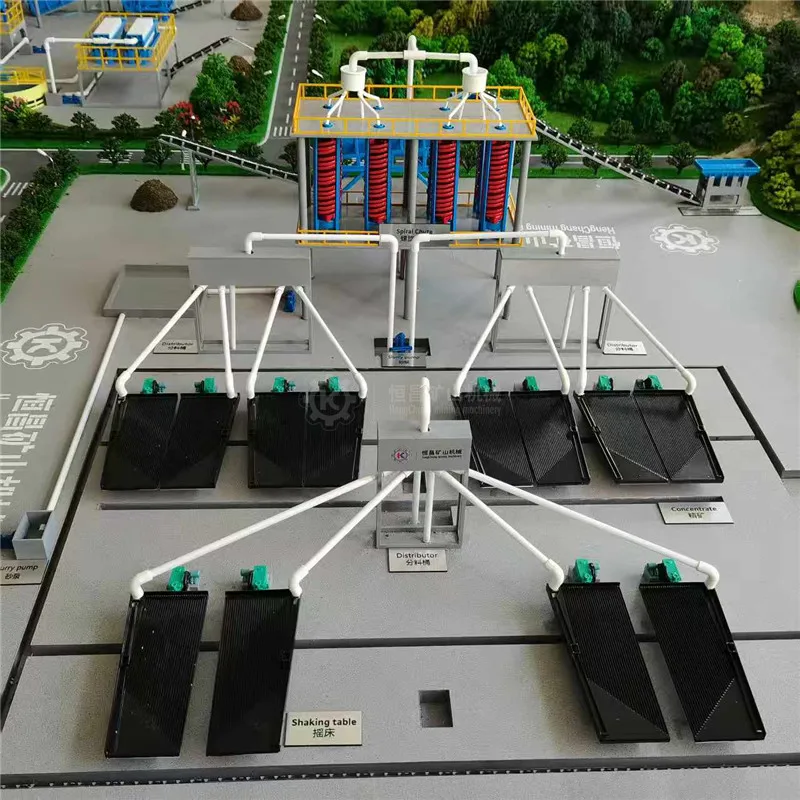
A large copper-tin plant uses Jiangxi Hengchang shaking tables in parallel – 12 units in one bay. Each processes 1.5 tons per hour. The key here is the multi-deck design saves floor space and increases throughput without losing separation accuracy.
How It Works: Breaking Down the Science (Don't Worry, No PhD Required)
Here’s the simple version:
Feed: Slurry (copper ore mixed with water) enters the feed box.Water Flow: Water flows across the deck, washing lighter material away.
Shaking Motion: The deck shakes rapidly in one direction, slowly in the other. This “sawtooth” motion pushes heavy copper particles forward.
Riffles: These small bars catch the heavy material, holding it while lighter sand is washed away.
Separation: Copper concentrate exits at the front end; tailings exit at the side.
The magic is in the adjustable parameters – stroke length, stroke frequency, deck tilt, and water flow rate. Get these right for your specific copper ore, and you’ll be pulling out high-grade concentrate.
Key Parameters to Consider (Your Buying Checklist)
When you’re shopping for a shaking table, don’t just look at the price tag. Look at these numbers:
1. Deck Size & Area
Standard sizes: 4.5m × 1.8m (single deck), 2.2m × 1.1m (small laboratory units)Tip: For copper ore, a larger deck gives you more residence time – important if your ore has a lot of middlings (mid-density particles). For high-grade feeds, a smaller deck is fine.
2. Processing Capacity
Typical: 1.0 – 2.0 tons per hour per single deck (depending on feed density and particle size)For fine copper ore (minus 200 mesh >50%): Expect 0.8 – 1.2 tph.
For coarser ore (>0.5mm): Can reach 2.5 tph.
Pro tip: Don’t oversize. A table that’s too big for your feed runs inefficiently. Also, remember that shaking tables work best in series or parallel, not as a single unit for high tonnage.
3. Stroke Frequency & Stroke Length
Frequency: 280 – 450 oscillations per minuteLength: 12 – 28 mm (adjustable)
For copper: A longer stroke (18–22 mm) at moderate frequency (320–350) works well for coarse particles. For fine copper, use shorter stroke (14–16 mm) and higher frequency (380–400).
4. Deck Tilt (Slope)
Range: 0° to 7°Copper tip: Start at 3° tilt. If tailings have too much copper, reduce tilt. If concentrate is too dirty, increase tilt.
5. Water Flow & Wash Water
Total water consumption: 0.5 – 1.0 m³ per ton of feedWash water typically 30–40% of total water
6. Material of Construction
Deck material: Fiberglass reinforced plastic (FRP) is standard. It’s lightweight, corrosion-resistant, and machineable for riffle patterns.Frame: Steel with anti-corrosion coating – standard in wet environments.
Bearings & motor: Choose IP55 rated motors for dusty, humid copper plants.
Price Guide (2026 Estimates – USD)
Prices vary by brand, size, automation level, and region. Here’s a rough ballpark:
| Model | Deck Size | Capacity | Estimated Price (USD) |
|---|---|---|---|
| Small lab table | 1.1m × 2.2m | 0.2 – 0.5 tph | $3,000 – $6,000 |
| Single deck (standard) | 1.8m × 4.5m | 1.0 – 2.0 tph | $8,000 – $15,000 |
| Double deck | 2 units above | 2.0 – 4.0 tph | $15,000 – $25,000 |
| Multi-deck (6 decks) | Various | 6 – 12 tph | $25,000 – $45,000 |
| Automatic/smart table | Standard size + sensors | 1.5 – 2.5 tph | $18,000 – $30,000 |
Note: These are 2026 estimates for Jiangxi Hengchang tables. Import taxes, shipping, and local installation costs are extra. Always request a quote for your specific ore type.
Compared to Other Equipment: Why Choose a Shaking Table?
| Equipment | Best For | Good For Copper? | Cost per tph | Recovery % |
|---|---|---|---|---|
| Shaking table | Fine particles, high precision upgrading | Excellent | Medium | 80–90% |
| Spiral concentrator | High tonnage, medium particles | Good for roughing | Low | 65–75% |
| Jig | Coarse particles, heavy minerals | OK for coarse copper | Medium | 70–80% |
| Flotation cell | Very fine particles, complex ores | Excellent but costly | High | 85–95% |
The verdict: If you have fine copper (100–400 mesh) and need to upgrade to a marketable concentrate, a shaking table is a cost-effective choice – especially for medium-scale operations.
Maintenance Tips: Keep Your Table Running Smoothly
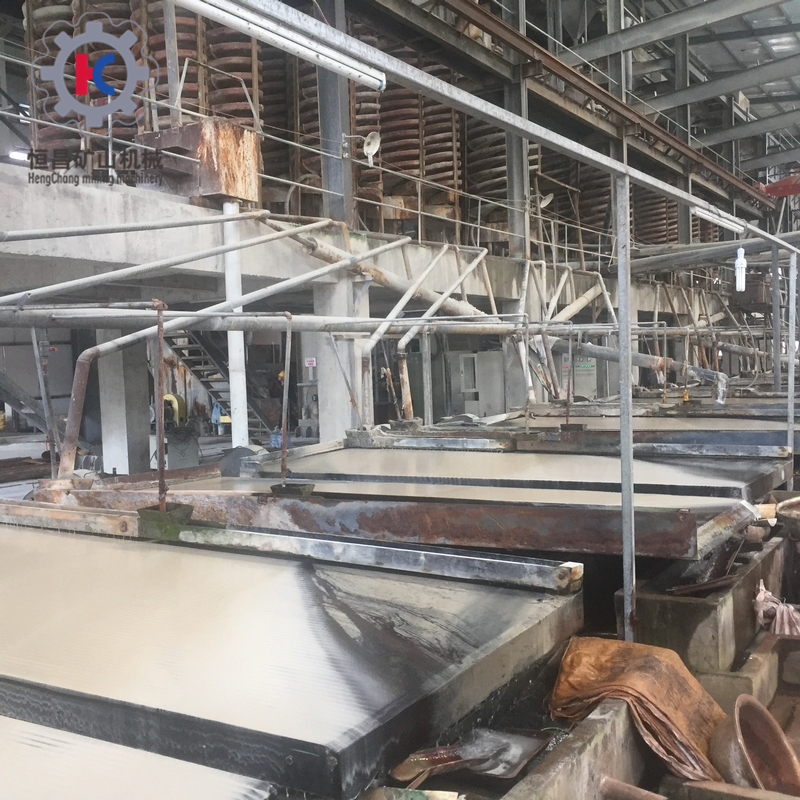
A shaking table is like a good truck – treat it right, and it works for years.
Check the rubber mounts – These absorb vibration. Worn mounts = poor shaking pattern = bad separation.Inspect riffles – Over time, debris wears them down. replace if you see uneven wear.
Lubricate bearings – Every 8 hours of operation. Use waterproof grease.
Clean wash water nozzles – Clogged nozzles cause uneven water distribution.
Monitor motor temperature – Overheating means belt tension is wrong or bearings are failing.
Adjust for feed changes – If your ore becomes finer or coarser, adjust stroke length and tilt. Don’t just leave settings as-is.
Pro tip: Keep a logbook. Record feed rate, water flow, stroke settings, and concentrate grade daily. This data will help you optimize your table over time.
Application Scenarios: Where This Machine Fits
Small to medium copper mines (1–50 tpd): Use a single or double deck table as the main gravity circuit.Copper oxide ore (malachite, azurite): The table works very well because oxide copper is heavy and easily separated from gangue.
Copper sulfide fines (–200 mesh): After flotation, use a shaking table to clean the concentrate.
Copper-gold ores: The table can concentrate both copper and gold in one step, reducing further processing costs.
Copper-molybdenum ores: Additional desliming needed; fine molybdenum can be recovered if water flow is controlled.
Not recommended for: Very high tonnage plants (over 1000 tpd) where flotation or dense media separation is more practical.
Why Choose Jiangxi Hengchang Shaking Tables?
At Jiangxi Hengchang Mining Machinery, we’ve been building shaking tables for copper and other minerals since 1994. Here’s why customers come back:
Customizable deck patterns – Riffle design optimized for your specific ore screening analysis.Durable FRP decks – Engineered to last 8+ years in continuous use.
Adjustable eccentric mechanisms – Fine-tune stroke without stopping production.
Factory direct pricing – No middlemen markups.
Global support – We ship to 60+ countries with remote diagnostics and spare parts.
Test before you buy – Send us 100 kg of your copper ore, and we’ll run a full test report showing predicted recovery and concentrate grade.
Final Thoughts: Your Shaking Table Selection Plan
Here’s your action checklist:
Send your ore for testing – Get a mineralogical analysis (particle size, density, liberation).Define your target – What concentrate grade do you need? What tailing grade is acceptable?
Choose capacity – Single deck vs. multi-deck based on your daily feed.
select stroke parameters – Based on particle size distribution.
Get a quote – Contact Jiangxi Hengchang for a custom proposal.
Budget for accessories – Feed distributor, pump, piping, and spare riffles.
Remember: The cheapest table isn’t always the best. A well-specified shaking table from a trusted manufacturer like Jiangxi Hengchang will pay for itself through higher recovery and less downtime.
Ready to upgrade your copper processing? Contact Jiangxi Hengchang today for free consultation and sample testing.
Need help with 2026 shaking table selection for copper ore? drop us your ore details, and we’ll send a tailored recommendation – no strings attached.