Placer gold deposits are a type of secondary gold deposit formed from primary gold deposits (lode gold) through long-term weathering, erosion, transportation, and deposition. Due to the high density of gold particles, they tend to settle in areas where river flow slows down, leading to enrichment and the formation of placer gold ore bodies with industrial value.
The beneficiation of placer gold primarily relies on the high density of gold, using physical or chemical methods to separate gold from light minerals such as sand and gravel. Commonly used methods include:
Gravity Separation (most commonly used)
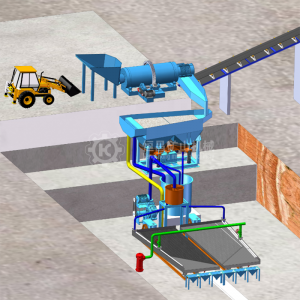
This method takes advantage of the high density of gold, using water flow, vibration, or centrifugal force to wash away lighter materials while allowing heavy minerals (such as gold, platinum, and magnetite) to settle at the bottom of the equipment. The main devices include:
-
Gold pan: Manual operation, suitable for small-scale or experimental gold mining.
-
Jigging machine: Uses pulsating water flow and gravity differences to separate coarse gold.
-
Gold sluice box: Achieves enrichment of fine-grained and flaky gold through bed vibration and water flow action.
-
Centrifugal concentrator: Enhances recovery of fine-grained gold by applying centrifugal force.
-
Shaking table: Separates concentrate products through lateral water flow and differential motion of the bed surface.
These gravity separation devices are often used in combination to improve overall recovery rates of placer gold.
Advantages: Low cost, simple operation, suitable for processing coarse gold.
Summary
The formation of placer gold deposits depends on the weathering, transportation, and sedimentary enrichment processes of primary gold ores, resulting in distinct regional and paleogeographic characteristics. Beneficiation mainly relies on gravity separation, supplemented by flotation, magnetic separation, cyanidation, and other methods. Specific processes must be determined based on ore properties, gold particle size, and environmental protection requirements. With increasingly strict environmental regulations, green, low-pollution beneficiation technologies have become a key focus for future development.








 Chinese


