


Differences between Jaw Crusher and Hammer Crusher
2026-01-08 16:13:10
1. Different Appearance and Working Principle:
Those familiar with these two types of equipment can easily distinguish them by their appearance, and their working principles are also quite different.
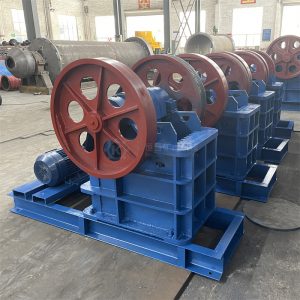
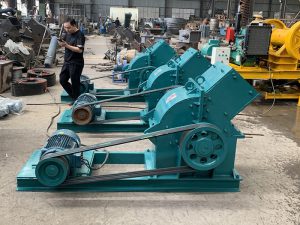
Jaw crushers operate on a reciprocating compression principle, where materials are crushed by compression within the crushing chamber formed by the moving and fixed jaws. Hammer crushers primarily rely on the impact, shearing, tearing, and mutual collision of materials by rotating hammers, as well as the counter-attack of the liners for crushing.
2. Different Materials to be Crushed:
Jaw crushers can crush various soft and hard materials with compressive strengths between 300-350 MPa, such as granite, quartz, diabase, river pebbles, and iron ore.
Hammer crushers are mainly used for crushing ores with low hardness, generally with compressive strengths below 200 MPa, such as limestone, bluestone, and coal gangue.
3. Different Discharge Adjustment Methods:
Hammer crushers adjust the discharge particle size by changing the bottom screen plate, while jaw crushers offer more adjustment options, including shim plate adjustment, wedge block adjustment, and hydraulic cylinder adjustment.
4. Different Production Line Configurations
Generally, jaw crushers produce a high content of needle-like and flaky particles in their output, requiring the use of an impact crusher for shaping. Therefore, a jaw crusher + impact crusher configuration is commonly seen.
Hammer crushers are primarily used as secondary crushers in industrial applications, producing material in a single pass without the need for a secondary crushing and shaping process. Therefore, they are often used alone in small to medium-sized production lines.
5. Different Applications in Sand and Gravel Aggregate Lines
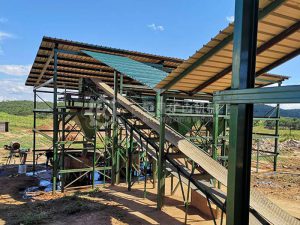
Hammer crushers are rarely used in sand and gravel aggregate production lines. Although the process is simple, the yield is low, they are prone to over-crushing, producing a lot of powdery material. Furthermore, the finished aggregate may develop micro-cracks, resulting in low compressive strength, affecting aggregate quality, sales, and price. Therefore, they are often used as auxiliary sand-making equipment.
Jaw crushers are commonly used as coarse crushing equipment in aggregate production lines, followed by impact crushers or cone crushers, and then a sand making machine for shaping.





 Chinese


