-
Ore Pretreatment
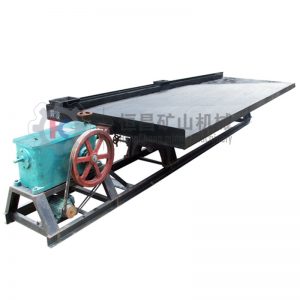
Before gold ore enters the shaking table, strict classification and desliming should be carried out. The particle size is generally controlled between 0.074–2 mm. If the mud content is high, it will increase the viscosity of the pulp, hinder the settling of gold particles, and lead to gold loss in the tailings. Pre-desliming and classification can significantly improve the recovery efficiency of gold by the shaking table.
-
Adjustment of Stroke and Frequency
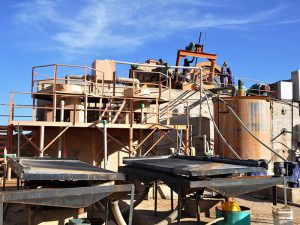
Stroke and frequency are the core parameters driving the movement of the table surface and the material. When processing coarse-grained gold ores or when the bed layer is relatively thick, a larger stroke combined with a lower frequency should be used to promote the settling of heavy minerals. Conversely, for fine-grained or slimes-containing materials, a smaller stroke and higher frequency are required to enhance loosening and stratification of fine gold particles. If the throughput is large or the gold density is high, the stroke and frequency usually need to be increased appropriately.
-
Adjustment of Table Surface Transverse Slope
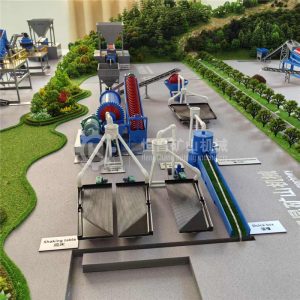
The transverse slope of the table surface affects the longitudinal movement of mineral particles and the discharge speed of tailings. For coarse gold selection, a steeper slope (e.g., 2.5°–4.5°) is preferred to facilitate rapid tailings discharge; for fine gold ores, the slope should be reduced (e.g., 1°–3°) to prevent gold particles from being washed into the tailings. The slope must be adjusted in coordination with the wash water to achieve effective enrichment of gold.
-
Water Flow Regulation
Increasing the water flow can improve the grade of the concentrate, but fine gold particles are more easily lost, potentially reducing recovery. Generally, for coarse gold or during the cleaning stage, a larger water flow is appropriate, while for fine gold during scavenging, the water flow should be appropriately reduced to balance grade and recovery.
-
Control of Pulp Density
Feeding should be continuous and stable, with an appropriate pulp density. The coarser the gold ore, the greater the feed rate that can be applied, but excessive feed will reduce recovery.








 Chinese


