


Copper Ore Beneficiation Process: Key Steps from Raw Ore to Concentrate
2025-11-20 09:46:00
A Quick Guide to Copper Ore Beneficiation Process: Key Steps from Raw Ore to Concentrate
Copper ore beneficiation is the series of processes that transform low-grade copper-bearing rock into high-grade copper concentrate suitable for smelting. Understanding these core steps helps explain how valuable metal is efficiently recovered from natural ores.
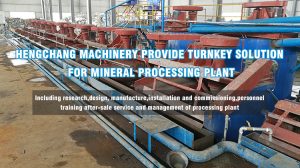
1. Crushing and Grinding
The first stage reduces large pieces of mined ore into fine particles.
• Crushing: Large rocks are broken down by jaw crushers or cone crushers into smaller chunks.
• Grinding: The crushed material enters ball mills or rod mills, where it is ground into powder with particle sizes typically below 200 mesh. This liberates copper minerals from the gangue (waste rock), making separation possible in later stages.
2. Classification
After grinding, the slurry is classified by size using hydrocyclones or screens. Oversized particles return to the mill for further grinding, ensuring optimal liberation before flotation.
3. Flotation (Main Separation Method)
Flotation exploits differences in surface properties between copper minerals and gangue.
• Conditioning: The pulp is mixed with water, reagents (collectors, frothers, modifiers) to make copper minerals hydrophobic (water-repelling).
• Froth Flotation: Air bubbles are introduced; hydrophobic copper particles attach to bubbles and rise to form a froth layer, which is skimmed off as “copper concentrate.”
• Tailing (waste) sink and are discharged separately.
4. Thickening and Filtration
The freshly floated concentrate contains excess water.
• Thickening: In thickeners, solids settle and water is removed, producing a higher-solids slurry.
• Filtration: Filters (e.g., pressure filters, vacuum disc filters) remove most remaining moisture, yielding a dry or semi-dry copper concentrate ready for smelting.
Key Points to Remember
• Liberation through crushing and grinding is essential for effective separation.
• Flotation is the dominant method for copper recovery due to its ability to selectively separate fine particles.
• Reagents and process control critically influence recovery rate and concentrate grade.
• Water management and tailing disposal are important environmental considerations.
By following these steps — crushing, grinding, classification, flotation, thickening, filtration, and drying — mines can efficiently upgrade low-grade copper ore into a high-value product for metallurgical processing.





 Chinese


