-
High recovery rate for coarse gold
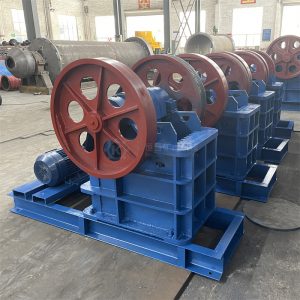
In hard rock gold ores, there are often coarse and even massive native gold particles, which have high density and fast settling speed. Gravity separation uses the difference in density to separate gold from gangue minerals such as quartz and feldspar in equipment like jiggers and shaking tables. Coarse gold is almost never lost in the tailings, a capability that flotation and cyanidation cannot fully replace.
-
Low equipment investment and simple process
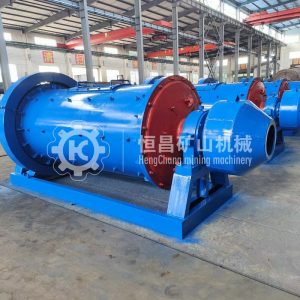
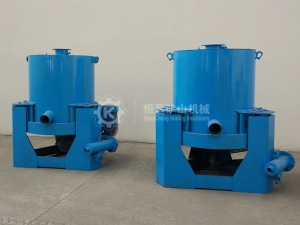
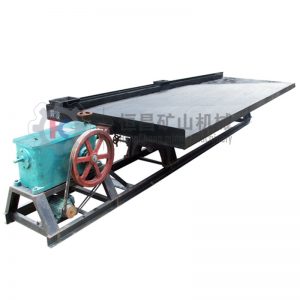
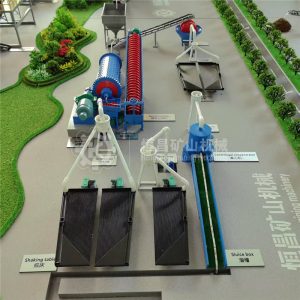
The main equipment includes jiggers, shaking tables, spiral chutes, and centrifugal concentrators, most of which are mechanically simple and easy to maintain. The process flow is short, generally only involving crushing, screening, and gravity separation, without the need for complex reagent systems or supporting environmental protection facilities. As a result, both capital investment and operating costs are significantly lower than those of flotation and cyanidation processes.
-
Low production cost and energy consumption
There is no need for large amounts of reagents (such as collectors, frothers, or cyanides), so reagent costs are close to zero. The equipment uses water as the medium and mainly relies on gravity and mechanical movement, resulting in relatively low power consumption, which helps reduce processing costs per ton of ore.
-
Environmentally friendly with minimal pollution risk
No chemical reagents are used, so there is no generation of cyanide-containing wastewater, reagent residues, or toxic gases. Wastewater is primarily composed of sediment-laden water, which can be recycled after sedimentation treatment or discharged up to standard, thus reducing environmental pressure and treatment costs.
-
Good pre-treatment effect, beneficial for subsequent processes
By first using gravity separation to recover most of the coarse gold and part of the medium-sized gold, the tailings grade is significantly reduced. This decreases the amount of ore and metal entering flotation or cyanidation, lightens the load on subsequent processes, and improves overall recovery rate and equipment utilization.








 Chinese


