


How to Save Cost When Replacing Steel Balls in a Ball Mill?
2025-12-08 16:53:39
Ball mill steel balls are consumables; proper replacement not only ensures grinding efficiency but also significantly saves costs. The core principle is not simply “replacing” them, but “scientific management.” The consumption cost of ball mill steel balls typically accounts for 15%-30% of the total electricity consumption of a mineral processing plant and 10%-20% of production costs. Therefore, scientific steel ball management is far more effective than simply “buying cheap and replacing frequently.”
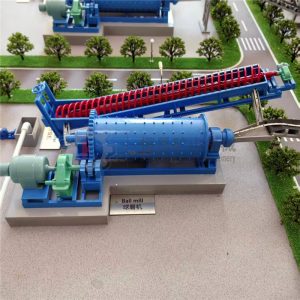
Core Techniques for Steel Ball Replacement (From Understanding to Operation)
1. Abandon the old concept of “replacing all at once.” This is the most wasteful approach. The correct approach is a combination of “regular replenishment + timely emptying.”
a) Regular replenishment: Based on the wear pattern of steel balls, only replenish missing or severely worn large-diameter steel balls during equipment operation.
b) Timely emptying: When the steel balls wear to a certain extent (usually manifested as a persistently low mill current, coarser product fineness, and decreased hourly output), a thorough emptying and replacement with new graded steel balls is necessary. This cycle can take six months, a year, or even longer, depending on the ore hardness, feed particle size, and mill load.
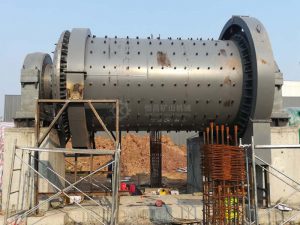
2. Mastering the Techniques of “Steel Ball Grading” and “Reasonable Replacement”
Initial Grading: When loading new balls, a reasonable gradation scheme must be followed (e.g., “large at both ends, small in the middle”) to ensure that large balls impact and crush, while small balls fill the gaps and grind fine materials. Only one size of steel ball should not be used.
Replacement Principles:
a) Replacement Size: Primarily replace the largest size steel balls missing due to wear. Large balls have strong crushing ability and are consumed the fastest. If only small balls are replaced, the impact force will decrease, and grinding efficiency will be reduced.
b) Replacement Ratio: The size of the new replacement balls should be consistent with the largest size steel ball in the original gradation. For example, if the original gradation’s largest size is Φ120mm, then the replacement balls should also be Φ120mm.
c) Replacement Amount Calculation: There are empirical formulas to follow, but a more reliable method is to comprehensively judge by monitoring mill power (current), throughput, and product particle size. A simple approach is: Replenishment Amount ≈ (Theoretical Consumption – Natural Loss). Consumption can be estimated by analyzing the steel ball purchase volume and inventory weighing over a cycle.
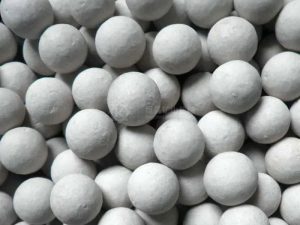
3. “Sound Identification” and Daily Monitoring
Experienced operators can judge the condition of the steel balls by sound:
Clear, rhythmic sound: Sufficient steel balls, proper gradation.
Dumbar sound, mixed with other noises: Potentially insufficient steel balls, or too many broken or deformed balls.
Abnormally loud sound, monotonous impact sound: Potentially too many large balls, or too little material, resulting in empty impacts on the mill.
4. Operational Techniques During Cleanup and Replacement
Thorough Cleaning: During cleanup, all broken, deformed, and severely worn flattened balls must be completely removed to prevent them from affecting the normal operation of new balls.
Sorting and Reusing: Small steel balls with minor wear and acceptable shape can be sorted out and used as replacement balls for the next cleanup, achieving partial recycling. Generally, it is not recommended to mix large quantities of old balls with new balls, as the chemical composition and mechanical properties of the old balls may have changed, affecting the overall grinding effect. However, if the old balls are of good quality, a small amount can be mixed in proportionally to reduce initial investment costs.





 Chinese


