Chinese


200 TPD Chromium Ore Processing Line Equipment Configuration: Cut Power Costs and Boost Recovery with the Right Crusher, Mill, and Spiral Plant
If you are setting up a 200 TPD chromium ore processing line, you are in a tricky spot. It is big enough that you need real equipment, but small enough that every extra kWh and every lost percent of recovery hits your profit hard.
We have seen small chromite plants lose money because someone copied a 500 TPD design and simply scaled it down. That rarely works. Chromium ore is heavy, abrasive, and often tricky to liberate. The right setup usually comes down to three things: a crusher that does not over-crush, a mill that grinds just enough, and a spiral plant that is properly fed.
This article breaks down a practical 200 TPD chromium ore processing line equipment configuration. We will also look at how to cut power costs, boost recovery, and what real projects in China and overseas have done. Jiangxi Hengchang Mining Machinery Equipment has supplied crushers, mills, spirals, and shaking tables for small chromite plants in China, Africa, and Southeast Asia. Here is what actually works.
What Does 200 TPD Really Mean?
200 TPD means 200 tons per day. If you run 24 hours, that is about 8.3 tons per hour. If you run 20 hours, it is closer to 10–12 tons per hour. That is a small-to-medium plant.
But the number alone does not tell you how to design the line. You need to know:
Feed size: Is it 0–300 mm or already crushed to 0–30 mm?Hardness and abrasiveness: Chromite is heavy and abrasive.
Cr2O3 grade: 25%? 35%? 42%?
Liberation size: Can you recover at 1 mm, or do you need 0.1 mm?
Slime content: Sticky ore can choke a spiral plant.
Chromite has a specific gravity of about 4.1–4.8. That is why gravity separation is usually the core method. A 200 TPD chromium ore processing line normally uses crushing, grinding, spiral roughing, and shaking table cleaning. If the ore is fine or has magnetic properties, you may add high-intensity magnetic separation.
Crushing Circuit: Do Not Over-Crush
For a 200 TPD chromite plant, two-stage crushing plus screening is often enough. A typical setup is:
Primary jaw crusher: PE400×600Secondary fine jaw crusher: PEX250×1000, or a small cone crusher for harder ore
Vibrating screen: 3YK1237
Feeding: GZD-750×2500 or electromagnetic vibrating feeder
The biggest mistake here is over-crushing. If you crush too fine before the mill, you create slimes. Slimes are the enemy of spiral chutes and shaking tables. They also increase power consumption because the mill has to work harder.
Use a pre-screen before the secondary crusher. Let the undersize bypass the crusher. This simple step can cut crushing power by 15–25% and reduce wear parts. Keep the crusher choke-fed, not starved. Choke feeding gives you a better reduction ratio and less slabby material.
For a 200 TPD line, the crushing circuit usually runs on 25–40 kW. If you add a scrubber for sticky ore, add another 7.5–15 kW. Jiangxi Hengchang Mining Machinery Equipment builds jaw crushers and fine crushers specifically for small and medium mining projects, so you are not paying for a 500 TPD machine when you only need 200 TPD.
Grinding: The Mill Is Not a Blender
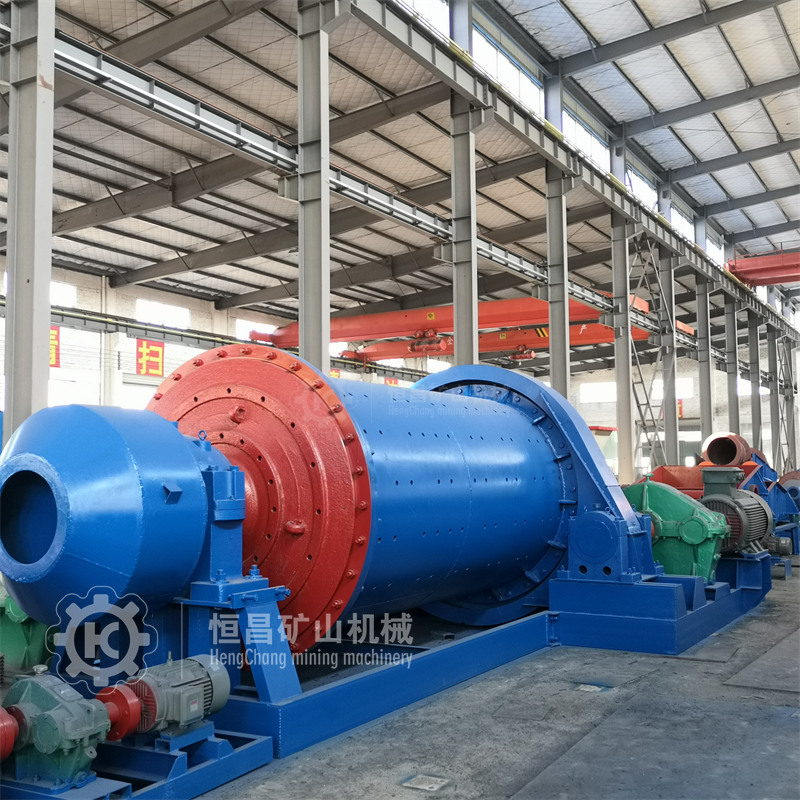
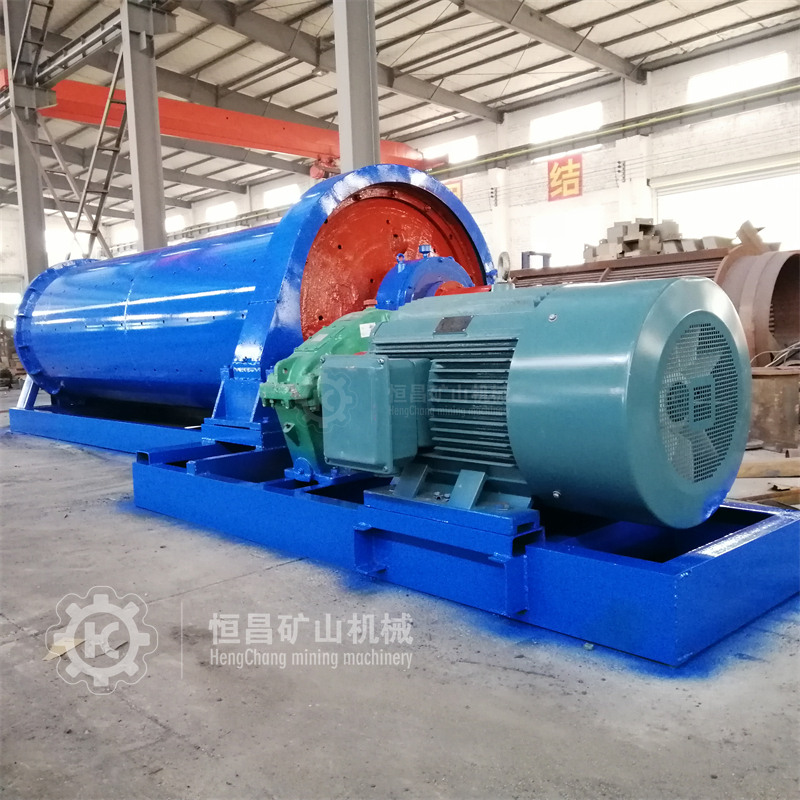
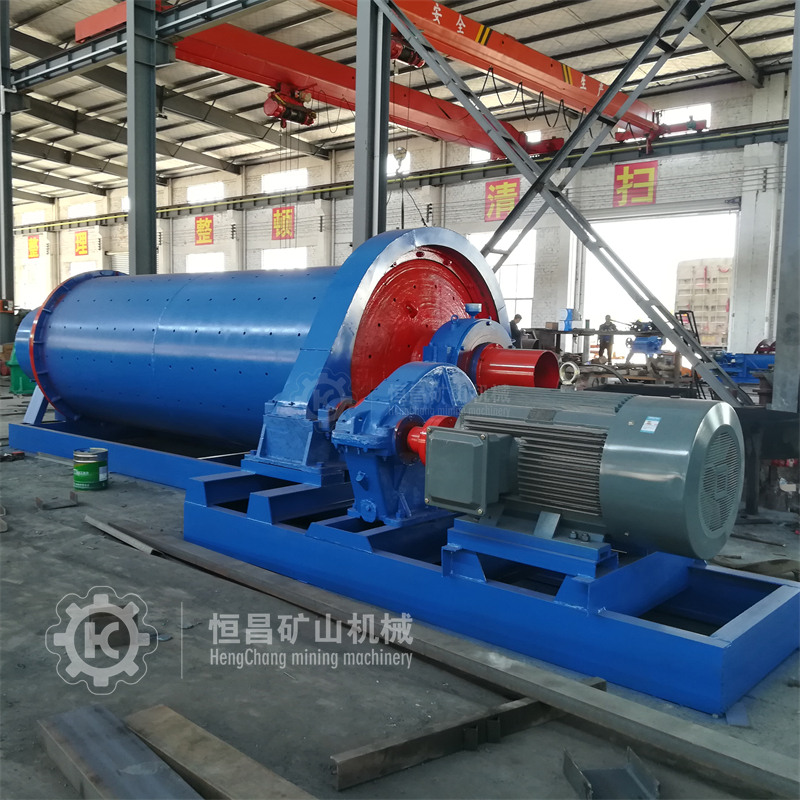
The mill is where power costs can explode. In many 200 TPD chromite plants, grinding takes 50–70% of the total power draw. So the goal is simple: liberate the chromite without turning it into dust.
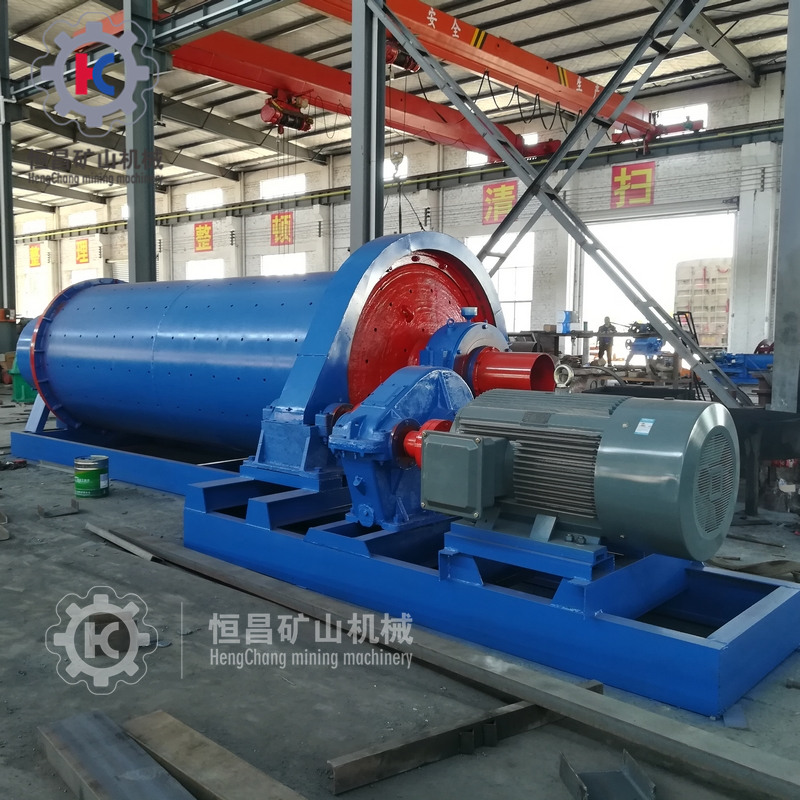
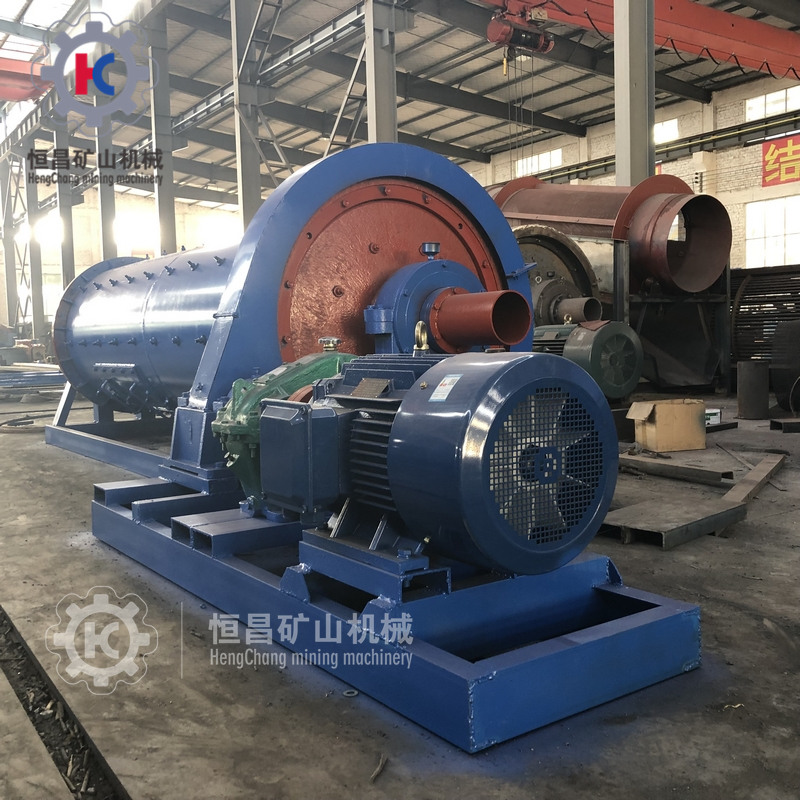
For a 200 TPD chromium ore processing line, a common configuration is:
Ball mill: 1500×3000 or 2100×3000, depending on hardness and target grind sizeSpiral classifier: FG-750 or FG-1000
VFD on the mill motor: optional but very useful
You do not always need to grind to 200 mesh. For spiral chutes, a feed size of 0.074–2 mm is often ideal. For shaking tables, you can go finer, but you still want to avoid excessive slimes. A closed-circuit grinding system with a spiral classifier helps control the size.
Use the right grinding media size. Too large, and you waste energy and break the ore too coarsely. Too small, and you cannot break the harder particles. A VFD lets you adjust mill speed based on feed conditions. That alone can save 10–15% on grinding power.
Spiral Plant: The Money Maker
The spiral plant is where you actually recover chromite. For 200 TPD, a typical gravity circuit looks like this:
Desliming cyclone or spiral classifierSpiral chutes: 5LL-900 or 5LL-1200
Shaking tables: 6-S
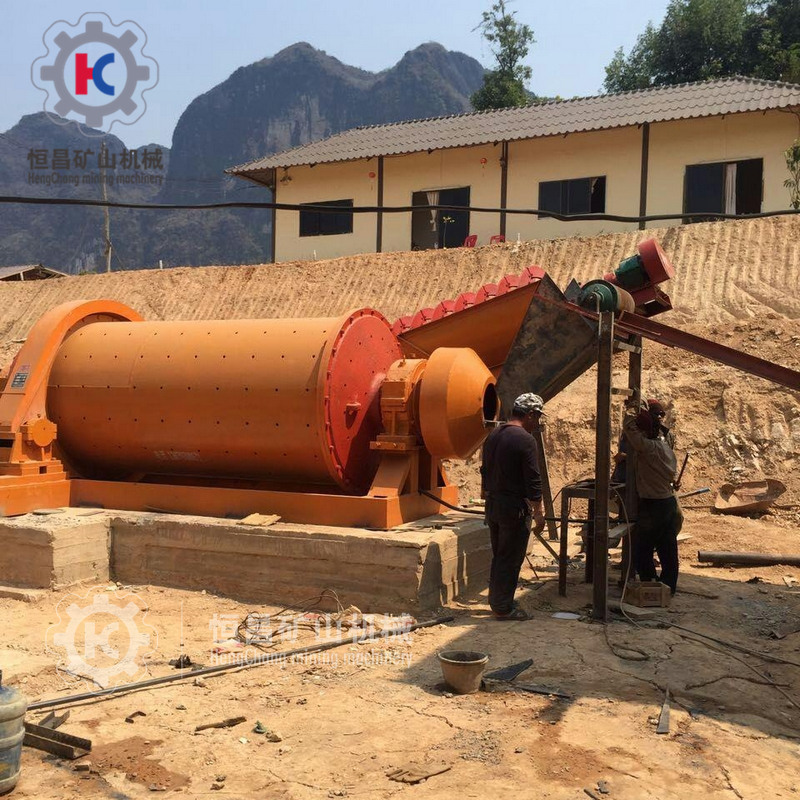
Spiral chutes handle the roughing stage. They are cheap to run, have no moving parts, and use very little power. Shaking tables handle the cleaning stage and produce a high-grade concentrate.
To boost recovery, pay attention to these details:
Feed size: Keep it in the 0.074–2 mm range. Too coarse, and heavy minerals are locked. Too fine, and you lose them in the slimes.Pulp density: 25–35% solids is a good starting point. Too thick, and the spiral cannot separate. Too thin, and you waste water and pump power.
Splitter adjustment: Small changes make a big difference. Set the splitter to send middlings back to the spiral, not to tailings.
Desliming: Remove the −0.074 mm fraction before spiraling if it is very fine. You can process it separately with a shaking table or magnetic separator.
A well-run spiral plant for 200 TPD chromite can recover 75–88% of the chromite, depending on the ore. Power consumption for the spiral and table section is usually only 10–20 kW, mostly for pumps.
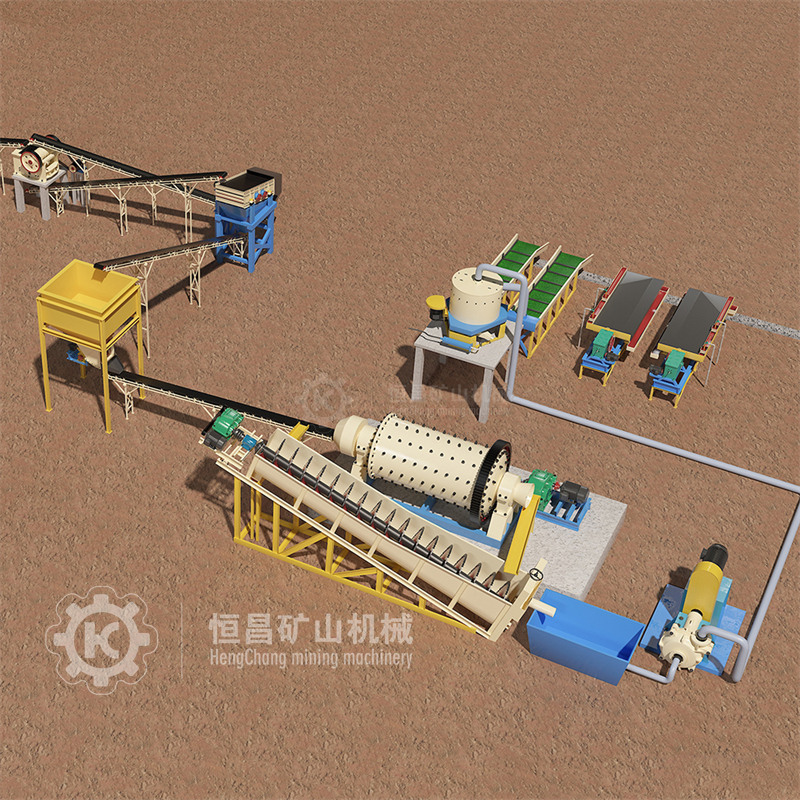
200 TPD Chromium Ore Processing Line Equipment Configuration
Here is a practical equipment list for a 200 TPD chromite plant. It assumes medium-hard ore and a target grind size of 0.5–2 mm.
| Stage | Equipment | Qty | Key Notes |
|---|---|---|---|
| Feeding | GZD-750×2500 vibrating feeder | 1 | Uniform feed to jaw crusher |
| Primary crushing | PE400×600 jaw crusher | 1 | 16–60 t/h, about 30 kW |
| Secondary crushing | PEX250×1000 fine jaw crusher | 1 | Closed circuit with screen |
| Screening | 3YK1237 vibrating screen | 1 | Pre-screen before secondary |
| Grinding | 1500×3000 ball mill | 1 | VFD optional |
| Classification | FG-750 spiral classifier | 1 | Closed circuit with mill |
| Gravity roughing | 5LL-900 spiral chutes | 8–12 | Two stages |
| Gravity cleaning | 6-S shaking tables | 2–4 | Concentrate cleaning |
| Dewatering | Thickener + filter press | 1 | Water recycling |
| Pumping | Slurry pumps | Several | Variable speed where possible |
This is a flexible flowsheet. If your ore is very fine, add a high-intensity magnetic separator after the spirals. If your ore is sticky, add a log washer or scrubber before crushing.
Real-World Cases: What Changes When You Get It Right
Case 1: Gansu, China – 200 TPD Chromite Plant
A 200 TPD chromite plant in Gansu started with a simple setup: PE250×400 jaw crusher, 900×1800 ball mill, and a jig. Recovery was stuck at 65–68%. Power consumption was around 52 kWh per ton.
After working with Jiangxi Hengchang Mining Machinery Equipment, the plant upgraded to a PE400×600 jaw crusher, PEX250×1000 fine jaw crusher, 3YK1237 screen, 1500×3000 ball mill with VFD, 12 units of 5LL-900 spiral chutes, and 2 units of 6-S shaking tables.
The result: recovery increased to 82–84%, and power consumption dropped to 36–38 kWh per ton. The plant paid back the upgrade in about 14 months.
Case 2: Zimbabwe – 200 TPD Chrome Ore Project
In Zimbabwe, a 200 TPD chrome ore plant was dealing with sticky, clay-rich feed. The original line had a single jaw crusher and a small ball mill. The spirals were constantly choking, and recovery was only around 70%.
Hengchang designed a new flow: scrubber, PE400×600 jaw crusher, cone crusher for secondary crushing, 1500×3000 ball mill, desliming cyclone, and a two-stage spiral plant with 5LL-1200 spirals and 6-S tables.
Recovery climbed to 85% on a consistent basis. Power costs per ton dropped by about 18%. The plant now produces a 42% Cr2O3 concentrate for export.
Case 3: South Africa – 200 TPD Chromite Fines
A South African operation was processing chromite fines from an old tailings dam. The material was already fine, so crushing and grinding were minimal. The challenge was slime and inconsistency.
Hengchang supplied a desliming cyclone, 5LL-900 spiral chutes, and a high-intensity magnetic separator for the ultra-fine fraction. Recovery reached 80–86%, with power consumption around 32 kWh per ton. The key was not more grinding. It was better feed preparation and proper slime handling.
How to Cut Power Costs on a 200 TPD Chromite Line
Power is one of your biggest operating costs. Here are practical ways to cut it:
Pre-screen before crushing. Let the undersize bypass the crusher.Use a VFD on the ball mill and large pumps. Speed control saves energy.
Do not over-grind. Test your ore to find the real liberation size.
Use gravity first. Spirals and tables use far less power than flotation or magnetic separation.
Maintain your equipment. Worn liners, loose belts, and bad bearings all waste power.
Size the mill correctly. A 200 TPD plant does not need a 500 TPD mill.
How to Boost Recovery Without Expensive Reagents
Chromite is usually recovered by gravity, so you do not need chemicals. But you do need discipline.
Deslime your feed. Slimes blind spirals and tables.Keep feed size consistent. Variation kills recovery.
Adjust spiral splitters. Recirculate middlings.
Use a shaking table for cleaning. It gives you a sharp concentrate.
Consider magnetic separation for fine fractions. Chromite is weakly magnetic.
Test, test, test. A small lab test can save you months of guesswork.
Why Jiangxi Hengchang Mining Machinery Equipment?
Jiangxi Hengchang Mining Machinery Equipment is not just selling one machine. They build complete 200 TPD chromium ore processing lines, from jaw crushers and ball mills to spiral chutes, shaking tables, and dewatering equipment.
What makes them different for small plants?
They focus on practical flowsheets, not oversized equipment.They can run ore tests and recommend the right grind size and spiral setup.
They support installation and commissioning, not just delivery.
They have experience in China and overseas, including Africa and Southeast Asia.
If you are planning a 200 TPD chromite plant, do not copy a large plant design. Get your ore tested. Then choose the right crusher, mill, and spiral plant for your specific ore. That is how you cut power costs and boost recovery at the same time.
For a 200 TPD chromium ore processing line equipment configuration that fits your ore and your budget, talk to Jiangxi Hengchang Mining Machinery Equipment. It could be the difference between a plant that runs and a plant that makes money.