Chinese


JXSC Ghana Alluvial Gold Processing Plant 100TPH Equipment Flow & Price Analysis
Hey there, fellow miners and plant managers! If you're diving into alluvial gold mining in Ghana, you've probably heard about the 100 tons per hour (TPH) processing plants. Today, we're breaking down the JXSC Ghana Alluvial Gold Processing Plant—the equipment flow, how it works, and what you're looking at in terms of price. No fluff, just straight talk.
Why 100TPH for Ghana's Alluvial Gold?
Ghana is rich in alluvial gold deposits, often found in riverbeds, valleys, and old terraces. A 100TPH plant is a sweet spot for many mid-scale operations. It's big enough to handle decent tonnage but not so massive that it becomes a headache to manage or finance. Think of it as the Goldilocks size—just right.
Equipment Flow: Step-by-Step Breakdown
Let's walk through the typical equipment line for a JXSC 100TPH alluvial gold plant. This is the "flow" from raw material to final gold concentrate.
1. Feeding System
First step: get the material into the plant. You'll need a hopper and vibrating feeder. The hopper catches the raw ore (dirt, gravel, clay, gold) from a loader or excavator. The feeder meters it onto the next stage.
Key piece: [江西恒昌矿山机械设备]'s heavy-duty vibrating feeder—built to handle sticky, wet alluvial material without jamming.
2. Washing & Screening
This is where we break down clay and separate out the big stuff. A rotary scrubber (trommel screen) does the job. The scrubber rotates, water is sprayed, and the high-pressure wash sloughs off clay from gold particles and gravel.
What comes out:
Oversize (+20mm or +10mm, depending on setup): goes to waste pile.Undersize (fines): flows to the next stage.
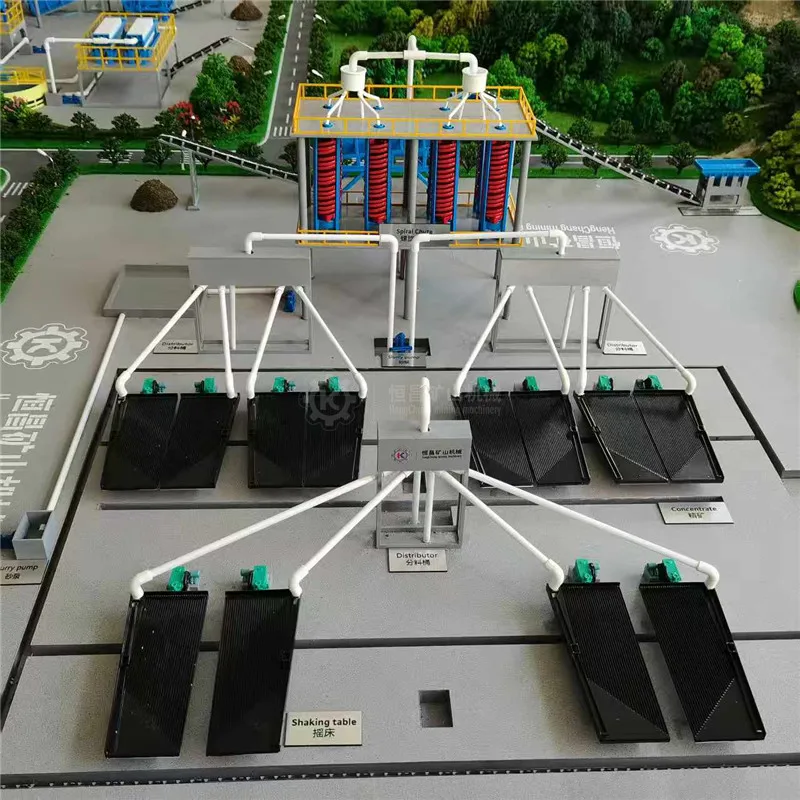
3. Primary Concentration: Jig Machine or Centrifuge?
Now it's decision time. For alluvial gold, many plants use a Jig Machine for coarse gold recovery. It's reliable, cost-effective, and handles high throughput. But some prefer a centrifugal concentrator (like a Knelson or Falcon type) for finer gold recovery.
JXSC recommendation: For 100TPH, a duplex jig (two stages) is common. It catches big nuggets and fine gold effectively.
4. Secondary Concentration: Gold Shaking Table
The concentrate from the jig goes to a gold shaking table. This is where we separate gold from heavy sands (like magnetite, ilmenite). The table's riffles and shaking action stratify materials—gold moves to the top and is collected as concentrate.
Pro tip: A 100TPH plant might need one or two shaking tables depending on gold fineness.
5. Water Recycling & Tailings Management
Don't forget water. A thickener or settling pond recycles water back into the plant. Sediment is disposed of responsibly. This is crucial for environmental compliance in Ghana.
Price Analysis: What's the Cost?
Now, let's talk numbers. Price for a JXSC 100TPH alluvial gold plant varies based on customization, but here's a rough ballpark:
| Equipment Item | Estimated Price Range (USD) |
|---|---|
| Hopper + Vibrating Feeder | $8,000 - $15,000 |
| Rotary Scrubber (Trommel) | $25,000 - $40,000 |
| Duplex Jig Machine | $18,000 - $30,000 |
| Gold Shaking Tables (1-2 units) | $10,000 - $25,000 |
| Water Pump & Piping | $5,000 - $10,000 |
| Control Panel & Conveyors | $5,000 - $12,000 |
| Total Plant (complete) | $70,000 - $130,000 |
Important: These are estimates. Actual price depends on factors like:
Materials of construction (standard steel vs. stainless steel for high wear areas)Automation level (manual vs. semi-automatic)
Shipping costs to Ghana (usually $10,000-$20,000 for a containerized plant)
Local installation and training
Note from [江西恒昌矿山机械设备]: We've shipped many plants to Ghana—Accra, Kumasi, Obuasi. Typical delivery time is 4-6 weeks after deposit.
Working Principle: Simple Science
Let's keep it grounded. Alluvial gold processing is about two things:
Liberation: Breaking apart clay and soil to free gold particles.Separation: Using density differences. Gold is dense (19.3 g/cm³), so it sinks. Sand and gravel are lighter—they wash away.
The jig works by pulsating water. Gold settles into the jig's bed, while lighter material overflows. The shaking table adds a final polish—vibration and water flow push gold to the clean-up end.
Structure Features of JXSC Equipment
JXSC gear is built for Africa's conditions:
Heavy-duty frame: Welded steel, powder-coated to resist rust.Easy maintenance parts: Bearings, screens, and hoses are standard sizes—easy to find replacements in Ghana.
Modular design: Plant fits in 2-3 shipping containers. Quick setup on-site.
Water-efficient: Jig and table use minimal water—important when water is scarce.
Which Ores Does This Plant Suit?
This is a alluvial gold specialist. It works best for:
Old terrace placers
Colluvial (hillside) deposits
Any clay-bound gold ore
Not for: Hard rock (primary) gold. That needs crushing and grinding—different ball game.
Processing Capacity Parameters
Feed size: Up to 300mm (bigger rocks go to waste)Throughput: 100 TPH (10-15 cubic meters per hour, depending on bulk density)
Gold recovery: 90-95% for +0.1mm free gold. For fine gold (sub-75 micron), 85-90%.
Power demand: 80-120 kW total (includes pump, scrubber, jig, tables)
Daily Operation & Maintenance Tips
Listen up, this is where most plants fail—poor maintenance.
Grease bearings daily: Scrubber and jig bearings take a beating. Use lithium-based grease.Check screen wear weekly: Torn trommel screen means big gold goes to waste. replace when holes get oval-shaped.
Clean jig hutch every shift: Sand accumulates. Flush it out with water.
Monitor water pressure: Low pressure → poor clay breakdown. Aim for 3-4 bar at spray nozzles.
Shaking table slope: 1-2° inclination. Too steep loses gold, too flat mixes waste.
Keep spares on hand: Screens, jig hoses, pump seals. Don't wait for failure.
Comparison with Other Equipment
| Feature | JXSC 100TPH Plant | Chinese Budget Plant | Western Brand (e.g., Gekko) |
|---|---|---|---|
| Price | $70k-$130k | $50k-$80k | $200k-$300k+ |
| Build quality | Heavy-duty, industrial | Thin steel, short lifespan | Premium, long-lasting |
| Spare parts | Readily available in Africa | Need to order from China | Expensive, long lead time |
| After-sales support | Training & manuals included | Minimal | Excellent, but costly |
| Gold recovery | 90-95% | 80-85% | 95-98% |
Bottom line: JXSC is the "value king"—good performance without breaking the bank. Budget plants are OK for temporary sites. Western brands are for permanent, high-capital operations.
Application Scenarios Summary
Where does this 100TPH plant shine?
Small to medium mining companies: Own your own deposit, not contract mining.Cooperative groups: 5-10 miners pooling resources.
Re-processing old tailings: Ghana has many historic diggings with leftover gold.
Pro tip from [江西恒昌矿山机械设备]: If your site has high clay content (common in Ghana's Brong-Ahafo region), upgrade to a high-pressure scrubber with longer retention time. It adds $5k but saves headaches.
Final Thoughts
A JXSC 100TPH alluvial gold plant is a workhorse for Ghana's gold mining scene. The flow is standard, the price is reasonable, and the recovery is solid. Don't overcomplicate it—get the basics right: good feeding, proper washing, effective jigging, and clean-up with a table.
For a free quotation or equipment layout drawing tailored to your site, reach out to [江西恒昌矿山机械设备]. We've helped over 200 clients in Ghana (and counting) set up their plants.
Stay safe, mine smart, and may your gold pan always have a yellow flash!
— Your friends at JXSC Mining