Chinese


Key Considerations in Graphite Flotation
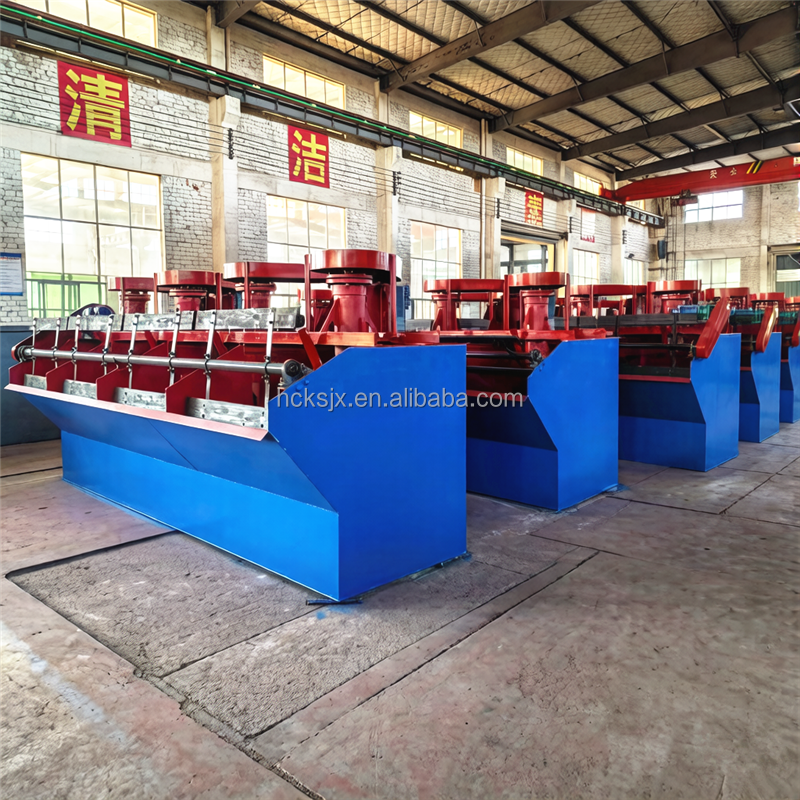
Graphite possesses excellent natural floatability and is typically processed via flotation using neutral oils as collectors. The following points should be carefully observed during the flotation process:
- Flake Graphite Ore: Characterized by graphite occurring in scaly or leaf-like structures, this ore typically has a low raw grade, generally ranging from 3% to 5% (rarely exceeding 20%–25%). However, it exhibits excellent floatability. Through flotation, the grade can be increased to over 90%. Therefore, ores with an original grade as low as 2%–3% are economically viable for mining. Flake graphite offers superior performance and is used in manufacturing high-grade carbon products.
- Amorphous Graphite Ore: Also known as cryptocrystalline graphite, this ore features very small crystals (generally less than 1 μm), a dull surface luster, and inferior industrial properties compared to flake graphite. While its raw grade is relatively high (60%–80%), its floatability is poor; flotation does not significantly increase the grade. Consequently, ores with a grade below 65% are generally not mined, while those between 65%–80% can be utilized directly after sorting. Thus, determining the feasibility of flotation depends not merely on raw grade but primarily on identifying the ore type first.
Large flake graphite is highly valued due to its scarcity and wide range of applications (e.g., +50 mesh, +80 mesh, +100 mesh). It is crucial to prevent damage to these flakes during processing. To protect them, a flowsheet involving multiple stages of grinding and multiple stages of flotation should be employed. This allows for the timely recovery of liberated graphite particles after each grinding stage. Over-grinding the ore to a fine size in a single pass will destroy the large flakes. For example, China's Nanshu Graphite Mine utilizes a flowsheet consisting of one roughing stage, one scavenging stage, four regrinding stages, and six cleaning stages. This process effectively protects the large flakes while achieving a final concentrate grade of 90%.
- Standard flake graphite requires a grade above 89%.
- Pencil-grade graphite requires 89%–98%.
- Certain electro-carbon grades require up to 99% carbon content.To achieve such high-grade concentrates, the flotation process must include a significant number of cleaning stages.