Chinese


Shaking Tables: The Classic Solution for High-Grade Gravity Separation
1. What is a Shaking Table?
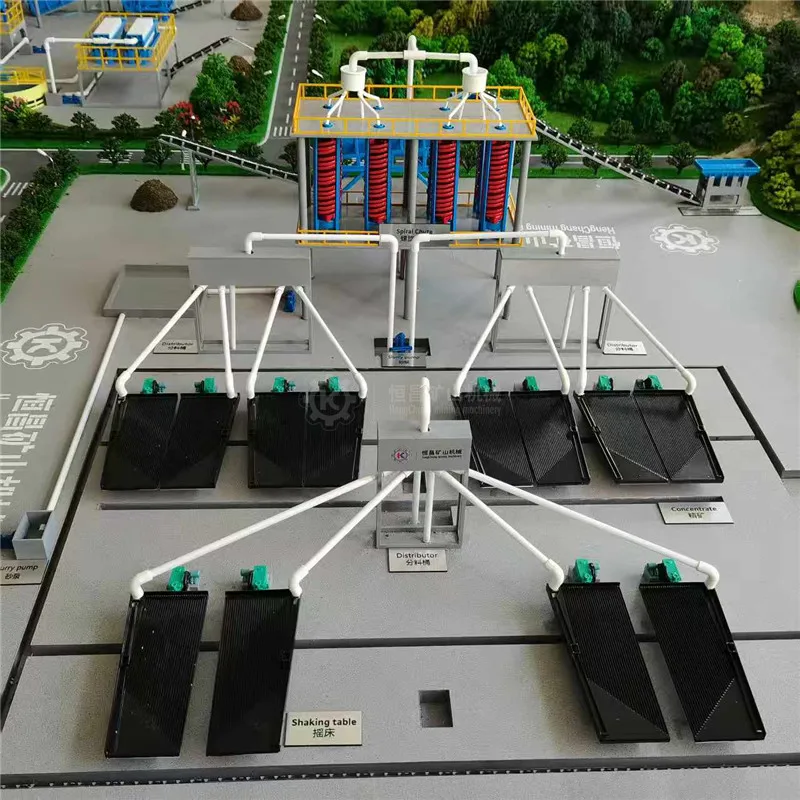
A Shaking Table, also known as a concentration table or gravity separation table, is a gravity concentration device used to separate minerals based on differences in their specific density.
During operation, the table deck executes an asymmetric reciprocating differential motion while transverse wash water is applied. Under the combined action of "reciprocating deck motion + transverse water flow + vertical stratification," mineral particles distribute themselves across the table surface in a fan-shaped pattern according to their density and particle size. Consequently, concentrates, middlings, and tailings are collected separately via different discharge launders.
2. Working Principle (Brief)
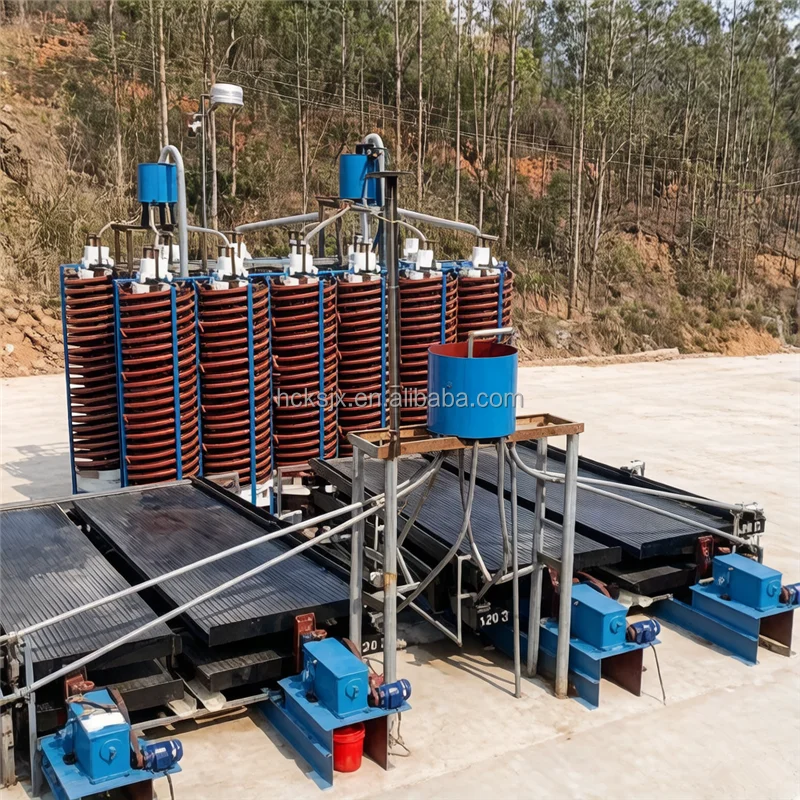
Feeding: Pulp is evenly distributed onto the upper end of the deck.
Deck Motion: The drive mechanism (eccentric linkage or cam) imparts an asymmetric reciprocating motion to the deck (slow and uniform forward, rapid and short backward).
Stratification: Heavy minerals settle into the bottom of the deck riffles (grooves), while light minerals are swept away by the cross-flow water.
Fan-shaped Zoning: Minerals of different densities form distinct fan-shaped zones along the deck surface → Separate collection of concentrate, middlings, and tailings.
3. Product Parameters
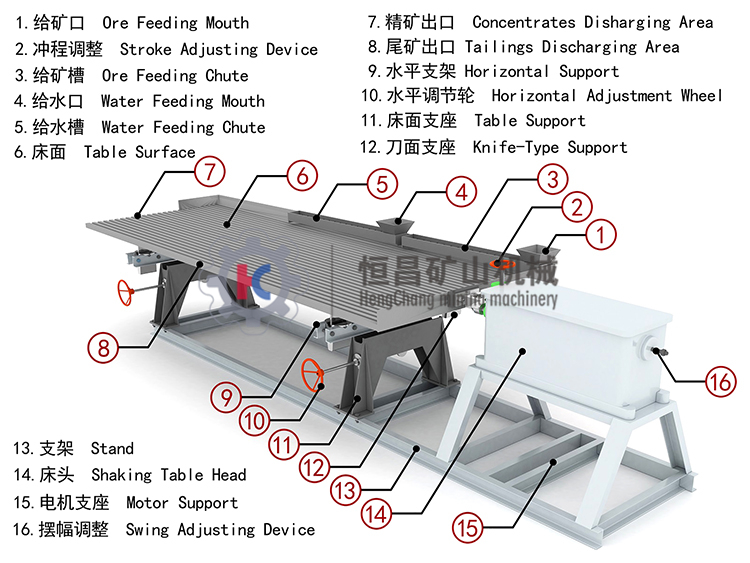
4. How to Select the Right Shaking Table?
Our clients are often confused during model selection; it is recommended to evaluate based on the following dimensions:
1️⃣ Based on Ore Characteristics
Feed Particle Size:
Coarse Sand (>0.5mm): Use a Coarse Sand Table.
Fine Sand (0.074–0.5mm): Use a Fine Sand Table.
Slime (<0.074mm): Use a Slime Table or a Yunxi Type table.
Density Contrast: Separation is easier with a larger density difference (Δρ). For fine particles with small Δρ, consider using other gravity separation equipment (Spiral Chutes / Centrifugal Concentrators) for roughing before cleaning on a shaking table.
Capacity Requirement: A single 6-S table handles approx. 0.5–1.5 t/h (depending on particle size). Calculate the number of units required for large-scale operations.
2️⃣ Based on Head Motion Type
6-S Type (Cam Lever): Highly versatile, robust, and durable → The preferred choice for most tungsten, tin, and gold processing plants.
Yunxi Type (Spring Head): Offers a wide adjustment range for stroke and frequency, providing better adaptability for slimes and micro-fine particles.
3️⃣ Based on Deck Specifications & Material
Dimensions: Common sizes include the 6S-4450, LY Series, etc.
Material: FRP (Fiberglass Reinforced Plastic) Corrugated Decks are highly recommended due to their corrosion resistance, wear resistance, lightweight nature, and high cost-effectiveness.
Groove Pattern: Ensure the three groove types (Coarse Sand / Fine Sand / Slime) match your ore particle size!
4️⃣ Based on Site Conditions & Energy Consumption
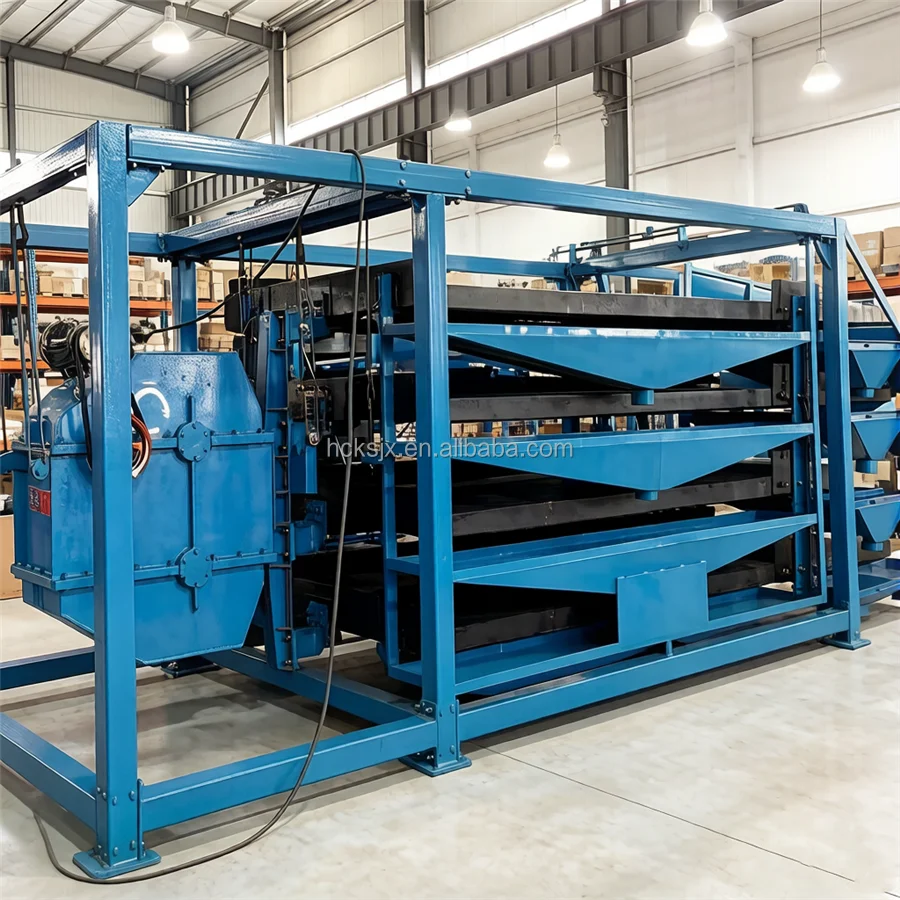
Limited Space: Consider Double-Deck Tables (two independent decks stacked vertically, halving the footprint).
Power Consumption: Motor power is typically ≤1.1 kW/unit, making it very energy-efficient.
5. Summary
In the complex world of mineral processing, precision defines profit. Our shaking tables are built to deliver exactly that. Whether you are processing Tungsten, Tin, Gold, or Chromite, our equipment offers unparalleled stratification accuracy.
We understand that every ore is unique. That’s why we offer tailored solutions—from selecting the right deck material and groove patterns to matching the ideal head motion. Unlike other equipment, shaking tables provide exceptional concentration ratios while being environmentally friendly and low-cost to run. Backed by robust engineering and a commitment to quality, Jiangxi Hengchang provides not just a machine, but a pathway to higher yields and purer concentrates.