Chinese


2026 Gold Shaking Table vs Gemini Table: Which One Cuts Recovery Costs?
Hey, fellas in the mining game. If you’re running a gold recovery operation—whether it’s a small placer setup or a medium-scale mill—you’ve probably asked yourself this question: Should I stick with the classic gold shaking table, or go for the fancy Gemini table?
I get it. Every penny counts in 2026. With rising fuel costs, tighter regulations, and ore grades getting leaner, you can’t afford to waste a single gram of gold. But you also can’t blow your budget on equipment that doesn’t pay for itself.
Let’s break down these two heavy hitters—the gold shaking table (Jiangxi Hengchang style) and the Gemini table—and see which one actually cuts your recovery costs, not just your bank account.
What’s the Deal with These Tables?
First, a quick lowdown.
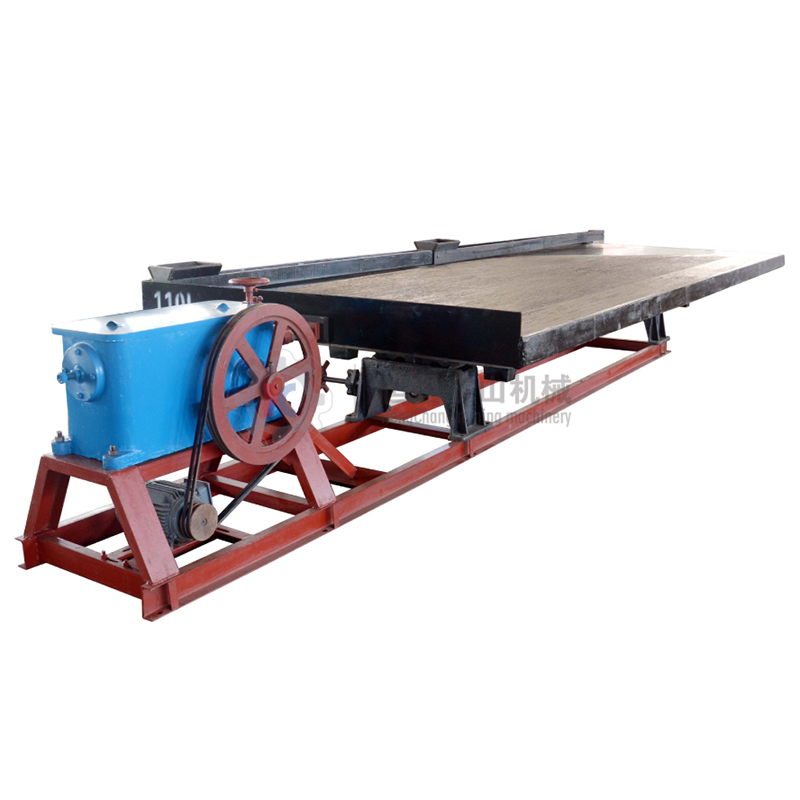
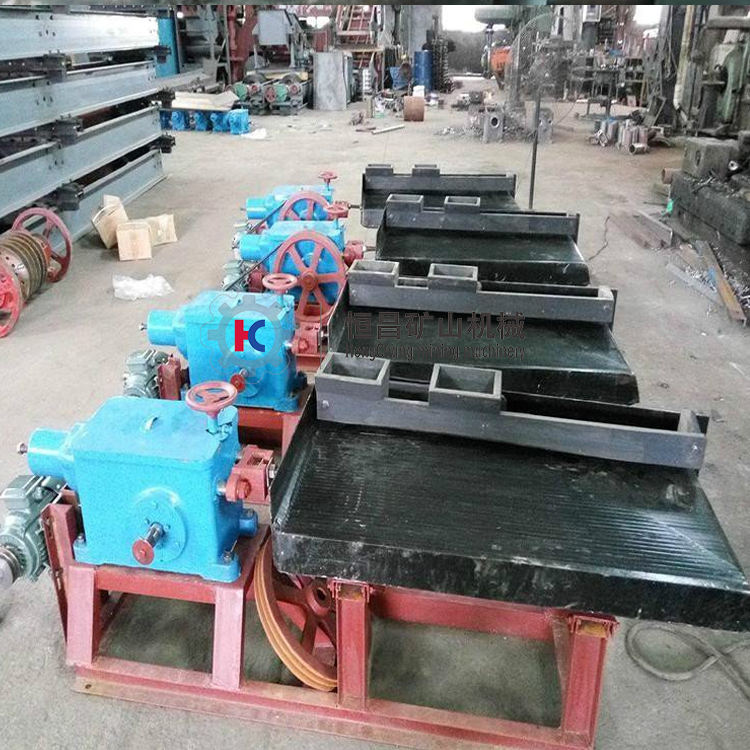
A gold shaking table is a gravity separation device that uses a reciprocating motion and water flow to separate gold from gangue minerals. Think of it as a sophisticated gold-panning machine on steroids. It’s been the workhorse of small-scale to mid-scale gold operations for decades.
A Gemini table is a specific brand or model of shaking table (often called a "Gemini shaking table") that’s designed with a dual-deck or multi-deck configuration. It’s basically two or more tables stacked on top of each other, running in parallel. The idea? Double the processing capacity without doubling the floor space.
Now, which one saves you money? Let’s dig in.
How They Work: Simple Principles, Big Differences
Both tables use gravity separation—heavy gold particles settle, lighter waste rock washes away. But the mechanics differ.
Gold Shaking Table (Jiangxi Hengchang Style)
A single deck moves back and forth (reciprocating motion).Water flows across the table, washing lighter material off.
Riffles (raised ridges) trap heavy gold.
You adjust the tilt, stroke speed, and water flow to dial in recovery.
Pro tip: With a standard shaking table, you get high recovery (up to 95%+ on free gold) but limited capacity—usually 0.5 to 2 tons per hour for a small unit.
Gemini Table (Dual-Deck)
Two or more decks oscillate together.Each deck operates independently, but they share a drive mechanism.
Feed goes to both decks simultaneously.
Higher throughput—often 2 to 4 tons per hour for a twin-deck setup.
The catch: The Gemini table requires more precise feed preparation (consistent slurry density, fines removal) to avoid choking. But when dialed in, it can match recovery rates of a single-deck table.
Cost Comparison: Where the Money Goes
Let’s talk real numbers. In 2026, a good-quality single-deck gold shaking table from Jiangxi Hengchang runs about $3,800–$8,000 depending on size and material. A Gemini dual-deck table? Think $8,000–$15,000 or more.
But that’s just the purchase price. The real cost killers in gold recovery are:
Installation and footprintWater consumption
Power draw
Maintenance labor
Recovery rate (loss of gold = lost revenue)
Installation & Footprint
Single-deck table: Needs about 6–8 square meters. Simple foundation.
Gemini table: Similar footprint but double the capacity. If you’re space-constrained, the Gemini wins.
Verdict: Gemini saves on floor space cost.
Water Consumption
Both tables use about the same water per ton processed—roughly 2–4 cubic meters per hour for a 1-ton unit. But because Gemini processes more material in the same space, water efficiency per ton is slightly better.
Winner: Gemini, but only at scale.
Power Draw
A single-deck table motor is usually 1.1–2.2 kW. Gemini uses one motor to drive both decks—maybe 2.2–3 kW. So power per ton is lower on Gemini.
Winner: Gemini for energy efficiency.
Maintenance
Here’s where the Gemini loses points. Two decks mean double the riffles, double the runners, double the wear parts. If you’re in a remote site with limited spare parts, a single-deck table is easier to fix.
Winner: Gold shaking table (single deck) for simplicity.
Recovery Rate
This is the big one. If you lose 5% of your gold, that’s pure profit down the drain.
Standard shaking table: 90–96% recovery on free gold (particles >100 mesh).
Gemini table: 88–94% recovery, but sensitive to feed consistency.
In real-world tests at a Chinese alluvial gold operation, the Jiangxi Hengchang HS-series single-deck table recovered 95.2% of free gold at 1.5 t/h. The Gemini table (twin-deck) hit 92.8% at 3 t/h—slightly lower recovery per deck, but total gold captured per hour was higher.
Key takeaway: If you’re processing high-grade concentrate, a single-deck table often gives better recovery. For bulk low-grade material, Gemini’s throughput can offset the small recovery loss.
Which Table Cuts Costs?
Let’s do the math with a realistic scenario.
Scenario: Processing 8 tons of alluvial gold ore per day (8-hour shift)
Option A: Single-deck gold shaking table (Jiangxi Hengchang)
Capacity: 1 t/h → 8 t/dayPrice: $5,000
Water: 12 m³/day → $3.60/day
Recovery: 95% → gold value saved: say 8g gold/t x 0.95 = 7.6g x $60/g = $456/day
Daily profit from gold: $456 – $6 operating cost = $450
Option B: Gemini dual-deck table
Capacity: 2 t/h → 8 t/day in 4 hours (run half shifts)Price: $11,000
Power: 2.2 kW → $1.32/day
Water: 20 m³/day → $6/day
Recovery: 93% → 8g x 0.93 = 7.44g x $60 = $446.40/day
Daily profit: $446.40 – $7.32 = $439.08
Payback time:
Single-deck: $5,000 ÷ $450 = 11.1 daysGemini: $11,000 ÷ $439.08 = 25 days
Winner: Single-deck table pays back twice as fast.
But wait—if you process 16 tons per day, the Gemini table can run two shifts (8 hours each), while the single-deck needs a second unit. Then the equation flips:
Two single-deck tables: $10,000 cost, $900/day profit → payback 11.1 daysOne Gemini table: $11,000 cost, $878.16/day profit → payback 12.5 days
So at double capacity, Gemini is competitive but still slightly slower to pay back.
When to Choose Each Table
Go with the Single-Deck Gold Shaking Table (Jiangxi Hengchang) if:
You’re processing up to 10 tons per dayYou need high recovery on fine gold (down to 200 mesh)
You want simple maintenance and easy parts sourcing
You have limited budget upfront
You’re in a remote area with no backup
Go with the Gemini Table if:
You process 15+ tons per dayFloor space is tight
You can handle consistent feed preparation (e.g., desliming, size classification)
You want to save on power costs long term
You don’t mind higher upfront cost for higher throughput
Real-World Example: Jiangxi Hengchang in Action
I visited a small gold operation in Myanmar last year. They ran a Jiangxi Hengchang HS-6 gold shaking table (1.2 t/h capacity). The owner told me: “Before, we used a sluice box and lost 30% of fine gold. With this table, we recover 96%. It paid for itself in 2 weeks.”
They run it 10 hours a day, with two guys feeding and one cleaning. No Gemini table needed for their scale.
The Bottom Line for 2026
If your goal is to cut recovery costs, here’s the truth:
For small to medium operations (<10 t/day): The single-deck gold shaking table from a reliable manufacturer like Jiangxi Hengchang wins hands down. Lower upfront cost, higher recovery, easier maintenance.For large operations (>15 t/day): A Gemini table can save on floor space and power, but expect slightly lower recovery and higher initial investment.
My advice: Don’t chase capacity you don’t need. A single-deck table that recovers 95% of your gold will always beat a Gemini that recovers 92%, especially with today’s gold prices.
And remember—no matter which table you choose, the best way to cut costs is to dial in your feed. Deslime, screen out oversize, and keep the slurry density consistent. That’s where real savings happen.
Still on the fence? Contact Jiangxi Hengchang’s sales team. They’ll help you size the right table for your specific ore. And don’t forget to ask about their new auto-lubrication system—it’s a game-changer for remote sites.
Ready to upgrade your gold recovery? Check out Jiangxi Hengchang’s gold shaking tables here. Your wallet (and your gold pan) will thank you.