Chinese


2026 Fiberglass Shaking Table for Gold Recovery: How to select, Price & Maximize Yield
If you’re in the gold recovery game, you know the struggle: getting that fine gold out of the black sand or hard rock concentrate is no easy task. You’ve tried a spiral chute, maybe a jig, but you’re still losing those tiny flakes. That’s where the fiberglass shaking table comes in—a workhorse that can bump your recovery rate from 70% to 95% or higher. But not all tables are made equal. In 2026, with rising gold prices and tougher environmental rules, choosing the right shaking table is the difference between profit and loss.
At Jiangxi Hengchang Mining Machinery Manufacturing Co., Ltd. , we’ve been building these tables for over 20 years. Our factory in Ganzhou, China, ships thousands of units to mines in Africa, South America, and Southeast Asia every year. This guide will walk you through how to select, price, and squeeze every ounce of yield out of your fiberglass shaking table.
What Is a Fiberglass Shaking Table?
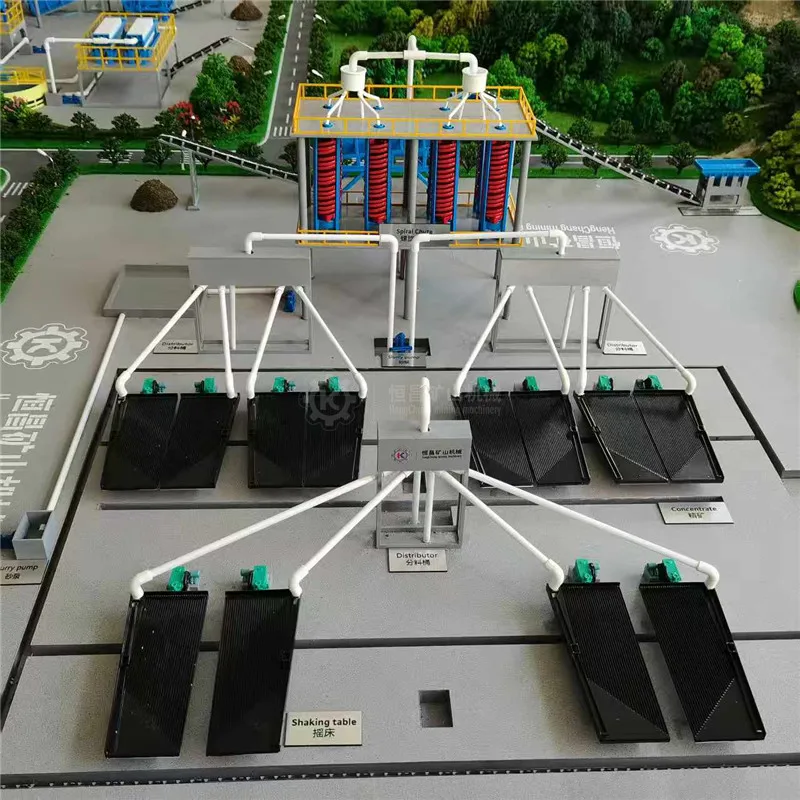
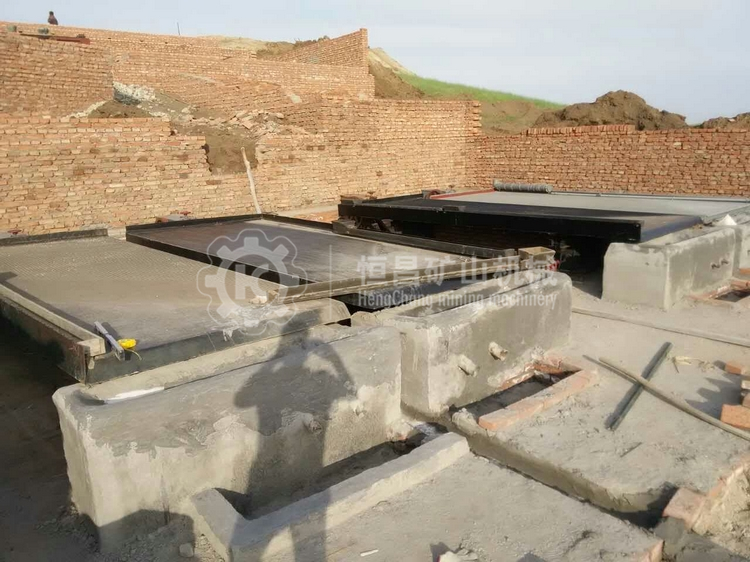
Think of it as a rectangle fiberglass deck that shakes back and forth. You feed a slurry of water and ore onto the deck, and as it vibrates, the heavier gold particles drift to one side while lighter waste rock slides off the other.
The “fiberglass” part matters. Unlike old wooden or metal decks, fiberglass is light, waterproof, and non-reactive—perfect for wet processing. You don’t get rust or rot. Plus, the surface can be machined with specific riffle patterns to catch even ultra-fine gold down to 74 microns (200 mesh).
How Does It Work? Simple Physics
Imagine a rainy gutter. Heavy stuff (gold) stays near the bottom, while leaves (waste) get washed away. On a shaking table:
Shaking motion: Longitudinal strokes push heavy particles toward the concentrate end.Water flow: Cross-current washes lighter particles off the deck.
Surface grooves: Riffles trap heavy minerals and release lighter ones.
The result? A clean, high-grade concentrate you can smelt or further process.
Why Fiberglass? 3 Key Advantages
Weight: A standard 6-S shaking table weighs only 200-300 kg. That’s 40% lighter than steel tables, making transport and installation a breeze.Corrosion: No rust. Even with acidic water or saltwater, fiberglass holds up for 10+ years.
Cost: A fiberglass deck costs $800-$1,200 less than an equivalent aluminum or steel deck, and replacement is DIY-friendly.
Choosing the Right Fiberglass Shaking Table
Not all tables fit all jobs. Here’s a quick checklist:
| Parameter | Small-Scale Test | Medium Production | Industrial Production |
|---|---|---|---|
| Deck Size | 1100 x 500 mm | 2100 x 1050 mm | 4500 x 1850 mm |
| Feed Rate | 0.5-1 t/h | 1-3 t/h | 3-10 t/h |
| Motor Power | 0.37 kW | 1.1 kW | 2.2 kW |
| Price Range | $800-1,500 | $2,500-4,000 | $5,000-9,000 |
For gold recovery specifically, consider the 6-S series (formerly known as the “Gemini” style). It has a unique elliptical motion that handles fine gold well. If you’re processing coarser material (e.g., flotation concentrate), the “S” series with straight-line motion may be better.
Pro tip from Jiangxi Hengchang: For most alluvial gold operations, a midsize 2100 x 1050 mm table is the sweet spot. It’s portable but can process 2-3 tons per hour, enough for a small to medium mine.
How to Maximize Yield
No magic—just physics and maintenance.
1. Feed Preparation
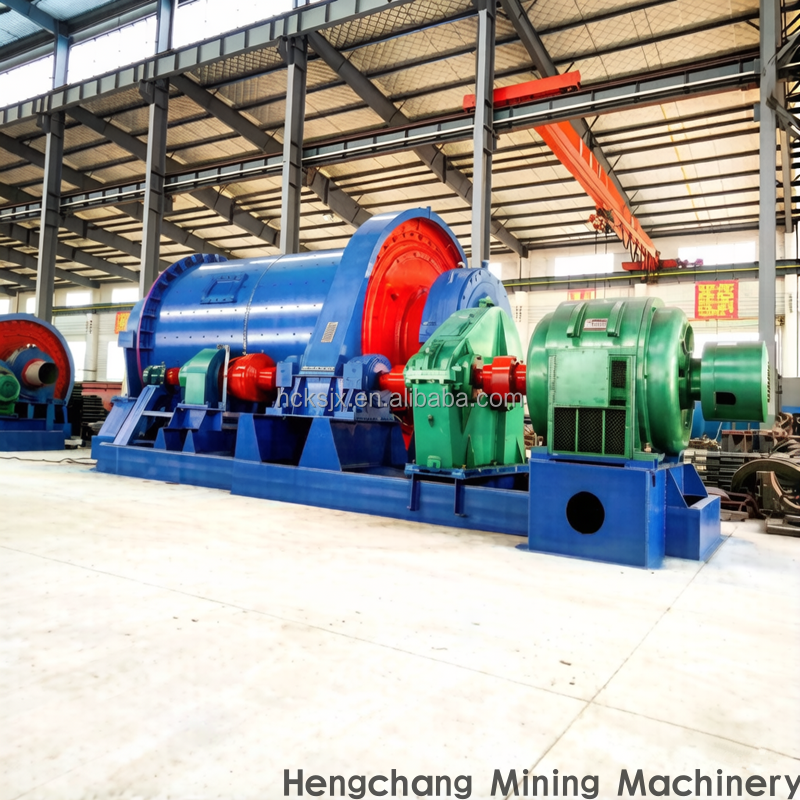
Size matters: Ideally, feed should be <2 mm. Bigger than that? Use a ball mill or hammer crusher first.Slurry density: Keep it at 20-30% solids. Too thin? Gold floats away. Too thick? Riffles clog.
Desliming: Remove -400 mesh (37 micron) sludge before feeding. That clay makes the water slippery, killing separation efficiency.
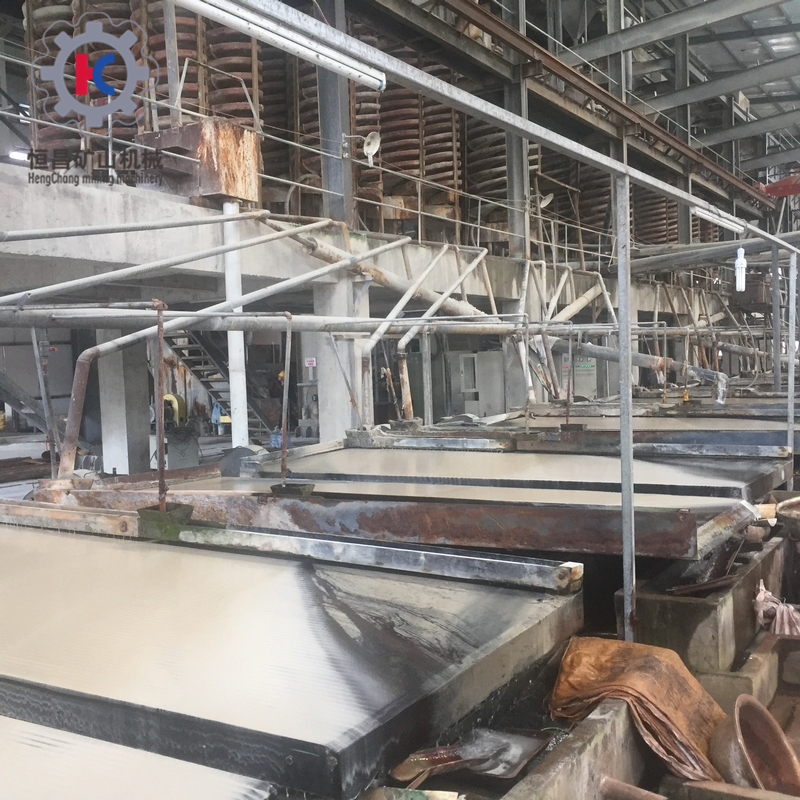
2. Tuning the Table
Frequency: Around 280-320 strokes per minute. Too fast? Water splashes. Too slow? Material piles up.
Water flow: 5-10 L/min per 100 kg/h feed. Adjust until you see a clean band of concentrate (dark black) and clean tailings.
3. Routine Maintenance
Check the drive belt: If it’s loose, the stroke won’t be consistent. replace every 3-6 months.Clean riffles: After every 8 hours, scrape out any stuck iron filings with a plastic scraper. Metal tools damage the fiberglass.
Lubrication: Grease bearings every 100 hours. A seized bearing is a $50 part that kills a $5,000 table.
Case study from a client in Ghana: They processed 5 tons of tailings daily with a 6-S table, recovering 95% of free gold. Before the table, they were using sluices, losing 30-40% of fine gold. After switching, they paid off the table in 2 months.
Price Factors in 2026
| Factor | Price Variation |
|---|---|
| Deck material | Fiberglass: $800-1,200; Polyurethane: +$500; Aluminum: +$2,000 |
| Motor type | Single-phase: cheap; Three-phase + inverter: +$300 |
| Automation | Manual: standard; PLC-controlled: +$1,500 |
| Brand | Generic vs. Jiangxi Hengchang: +10% for quality assurance |
| Shipping | FOB China: $300-800; Door-to-door: $1,500-3,000 |
Real prices from Jiangxi Hengchang (2026 Q1):
1100 x 500 mm: $980 FOB2100 x 1050 mm: $3,200 FOB
4500 x 1850 mm: $6,800 FOB
Bundled packages (table + spare deck + motor) save you another 15%.
Fiberglass vs. Other Gold Recovery Equipment
| Equipment | Best For | Recovery % | Complexity | Cost |
|---|---|---|---|---|
| Shaking table | Fine gold, test work | 85-98% | Medium | $1k-9k |
| Jig | Coarser gold, high throughput | 60-80% | Low | $5k-20k |
| Spiral chute | Low-grade bulk | 40-60% | Very low | $2k-10k |
| Centrifuge | Fine gold, high volume | 90-98% | High | $10k-50k |
The takeaway: If you’re serious about maximizing gold recovery and don’t need massive throughput, a shaking table is your best bang for the buck. It’s like a microscope—it lets you see exactly what you’re recovering.
Real-World Applications
Alluvial gold miners: Process black sand concentrates to get >95% pure gold.Hard rock gold mills: Use as final cleanup after gravity circuits (e.g., sluice + table).
Test labs: Government agencies use small tables to grade ore value before investment.
Small-scale artisanal mines: With no mercury, the shaking table is the safest upgrade you can make.
From our Jiangxi Hengchang clients: “We’ve been using our 6-S table for 3 years with zero major issues. It’s the only way we can get 99% pure gold from our ore.”
Final Tips for Buyers
Don’t buy on price alone: Cheap tables have uneven riffles and weak motors. Look at the motor brand (e.g., Y2 series) and deck thickness (>8 mm).Ask for a test run: Jiangxi Hengchang offers small-scale test tables. Send us your ore sample, and we’ll verify recovery before you buy.
Spare parts: Always buy one extra deck. Shipping time from China can be 15-30 days, and downtime kills yields.
Conclusion
The fiberglass shaking table is a mature, proven technology—but in 2026, it’s more accessible and affordable than ever. Whether you’re a small miner in Ghana or an industrial plant in Brazil, choosing the right model from a reliable manufacturer like Jiangxi Hengchang is the key to turning black sand into gold bars.
Remember: It’s not just a table—it’s a yield multiplier. A $3,000 investment can boost your gold recovery by 20-30%, paying for itself in weeks. So pick the right table, tune it properly, and watch your profit margins climb.
Still have questions? Contact Jiangxi Hengchang’s team for a free consultation on your specific ore type and throughput needs. We don’t just sell tables—we sell solutions.