Chinese


Shaking Tables in Mineral Processing: A Time-Tested Gravity Separator Under the Green Mining Lens
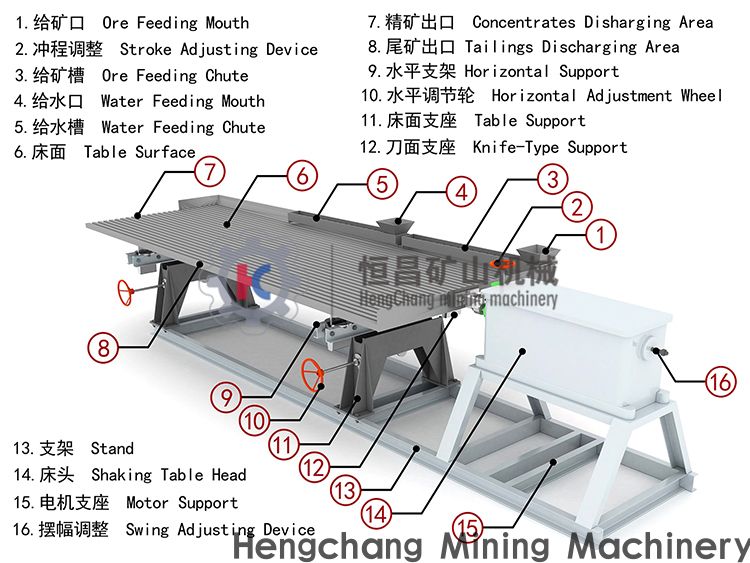
In the mineral processing industry, there are many types and forms of mineral processing equipment. The 6S shaking table, also known as a mineral processing shaking table, mainly separates materials based on their specific gravity differences through the reciprocating motion of the table surface. The advantages and disadvantages of mineral processing shaking tables are summarized below:
How a Shaking Table Works
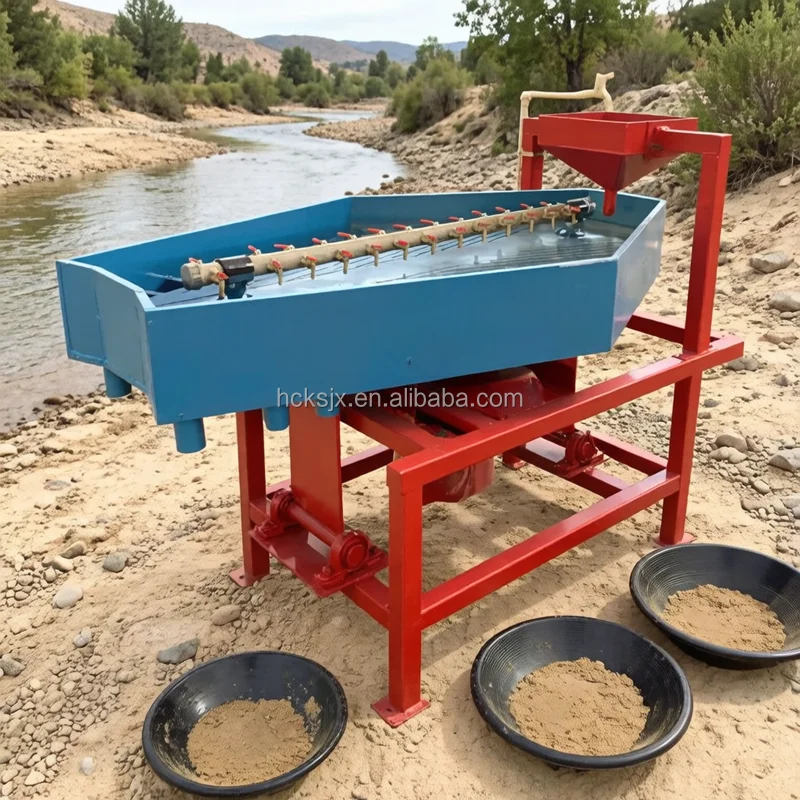
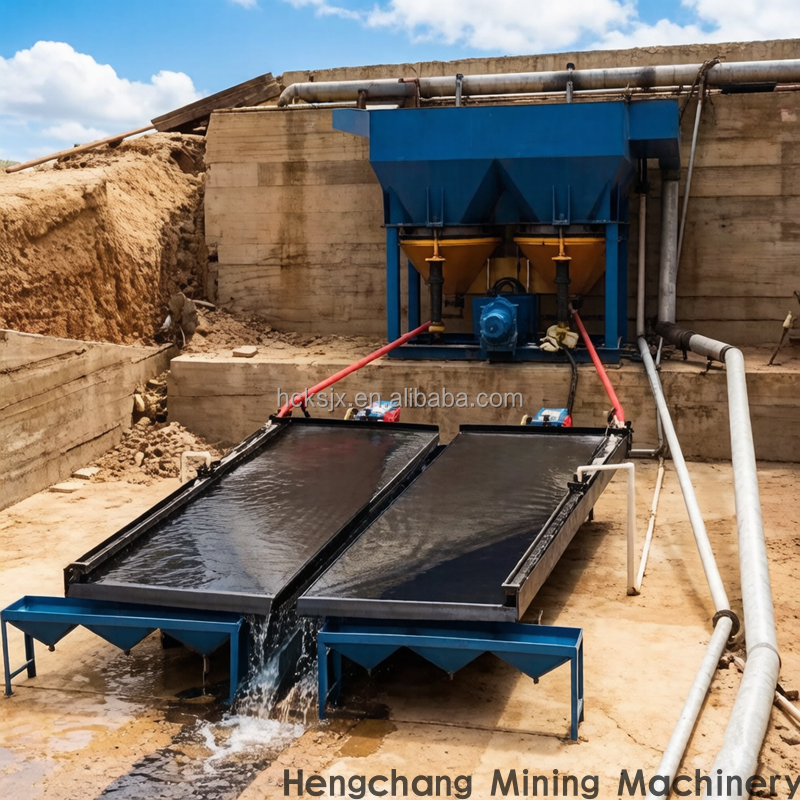
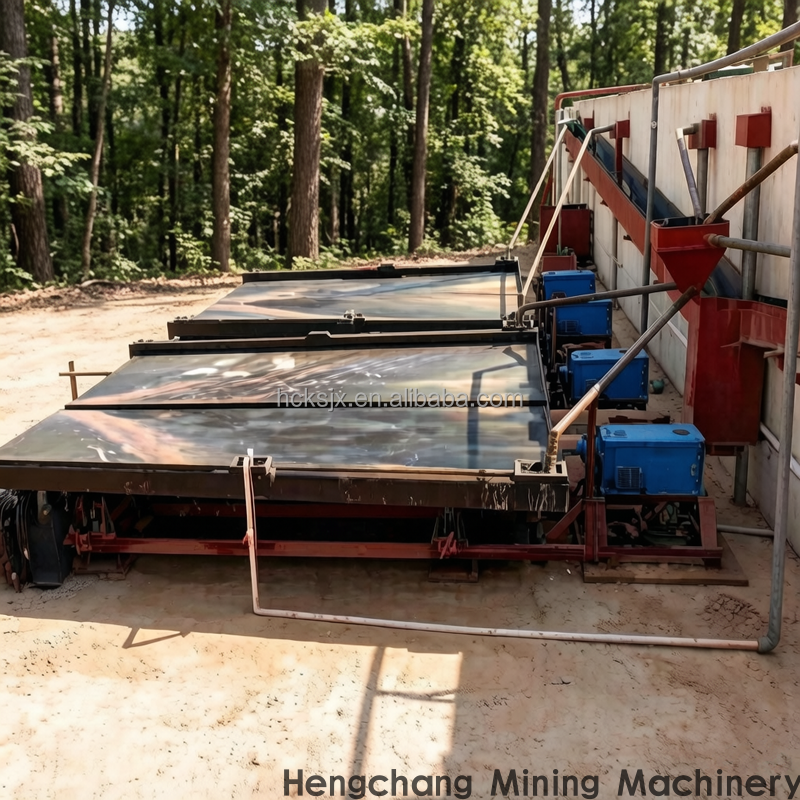
A shaking table is a slightly inclined deck fitted with longitudinal riffles. A ground-ore slurry is fed at one corner, while a thin film of wash water flows across the surface. An eccentric drive produces an asymmetric reciprocating motion—slow forward, rapid return—causing heavy particles to settle into the riffles and travel toward the concentrate launder, while lighter gangue is washed laterally into the tailings stream.
Typical feed size sits between 0.037 mm and 2 mm, with enrichment ratios.
Advantages of Shaking Tables
- Chemical-free separation. Only water and motion are used. No collectors, no cyanide, no frothers—making tailings easier to manage and compliance cheaper.
- Exceptional enrichment. Can upgrade low-grade rough concentrate directly to smelt-grade product in one pass, especially for gold, cassiterite, wolframite, and tantalum-niobium.
- Visual process control. Operators can see the mineral bands on the deck and adjust stroke, slope, and wash water on the fly—no enclosed black box.
- Wide mineral applicability. Handles precious metals, rare metals, chrome, zircon, and even e-waste plastic-metal splits.
- Low power draw. A standard 6-S deck runs on ~1.1 kW; compact Gemini-type tables run on 0.55–0.75 kW.
- Durable and modular. FRP decks resist corrosion and wear; coarse/fine/slime decks are swappable for different duties.
Disadvantages and Operational Limits
- Low single-unit capacity. A standard 4500×1850 mm table processes only 0.3–2 t/h. Large plants need rows of parallel units.
- Large footprint. One machine needs 8–10 m² including feed/discharge space. Multi-table layouts dominate the floor plan.
- Water dependency. Continuous wash water is mandatory; arid regions must invest in recycling sumps.
- Fine-slime losses. Below ~0.03 mm (325 mesh), recovery drops unless preceded by a centrifuge or used as a final cleaner on pre-concentrated feed.
- Operator skill matters. Stroke frequency, deck tilt, and water rate must be tuned per ore type; poor tuning hurts grade and recovery.
- Heavy and laborious to move. Traditional single decks weigh 1.2–1.5 t; field relocation is non-trivial without cranes.