Chinese


JXSC Zimbabwe 50TPH Alluvial Gold Processing Plant Flow Design and Equipment List
Why 50TPH? A Sweet Spot for Small-to-Medium Miners
If you're working an alluvial gold deposit in Zimbabwe, you know the drill: too small a plant, and you're leaving money in the ground. Too big, and you're stuck with a monster you can't feed. The 50TPH (tons per hour) capacity is the sweet spot. It's manageable for a small team, affordable on fuel and water, but still pumps out serious daily production.
Let's break down a real-world flow design from JXSC Mine Machinery – built specifically for Zimbabwe's typical river gravel and weathered alluvial deposits.
The Core Challenge: Gold in Sticky Clays & Cobbles
Zimbabwe's alluvial gold isn't just loose sand. You often deal with:
Sticky, plastic-like clay that wraps around fine gold.Cobbles and boulders up to 200mm+.
High slime content that floats fine gold out.
A standard "screen and sluice" setup will lose 30-50% of your gold. So, JXSC's design tackles these issues head-on.
Step-by-Step Flow Design (The "Zimbabwe Special")
Stage 1: Feed Preparation & Primary Screening
Equipment: Vibrating Grizzly Feeder + Trommel Scrubber
First, a dump truck feeds into a hopper. Below it, a vibrating grizzly feeder does two jobs:
Scalps off -200mm rock (directly into a reject pile).Feeds the -200mm material into the trommel scrubber.
Why a trommel scrubber, not just a screen? Because the high-pressure water jets inside the trommel break down clay balls. Without this step, clay balls plug your sluices instantly.
Stage 2: Washing & Screening (The Heart of the Plant)
Equipment: JXSC Heavy Duty Trommel Scrubber (Model: 1530 or similar)
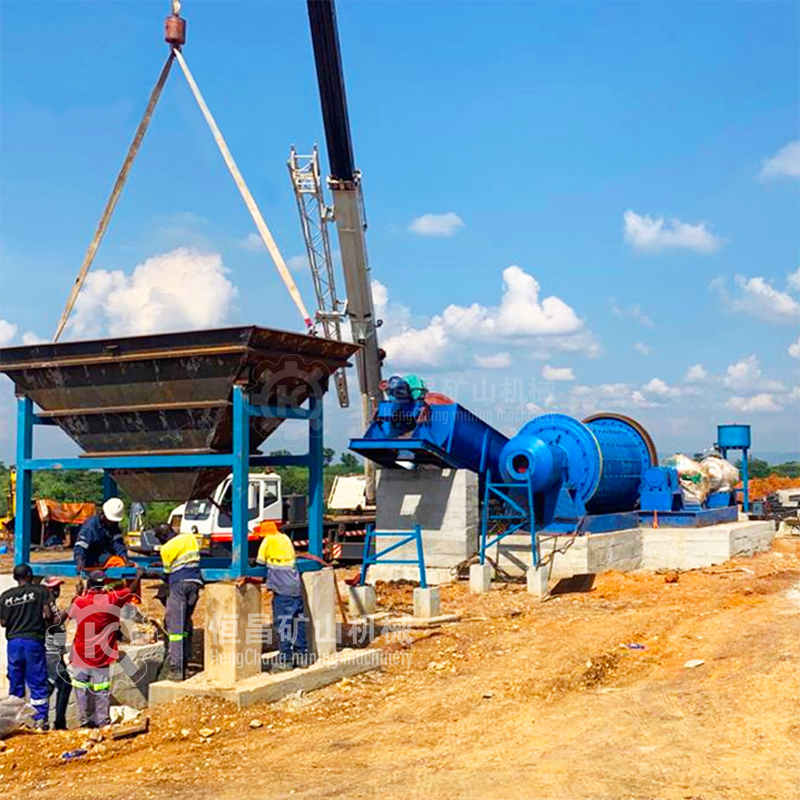
This is where the real action happens. The trommel rotates at 8-12 RPM. Inside, there are two zones:
Washing zone: Lifter bars and high-pressure spray bars smash clay against itself.Screening zone: The last section of the trommel has 6-10mm round holes.
Outputs:
Oversize (+10mm): Clean gravel and pebbles. Discharged via a chute to waste.Undersize (-10mm): Sand, water, and liberated gold. Slurried to the next stage.
Stage 3: Concentration (Getting that Yellow Metal)
Equipment: JXSC Gold Centrifuge (Knelson-type) + Shaking Table
You have two choices here. For most Zimbabwe operations, we recommend a two-stage circuit:
Primary Concentrator: JXSC STL-60 Gold Centrifuge
It grabs free gold out of the -10mm slurry at 95%+ recovery.You run tailings to slime pits or a small jig.
Concentrate (super heavy gold) goes to a bucket.
Secondary Cleaner: JXSC 6-S Shaking Table
Your centrifuge concentrate is often 50-70% gold.The shaking table cleans it to 90-95% purity in one pass.
Ideal for picking up fine gold (down to 0.1mm) that the centrifuge missed.
Stage 4: Slimes Management
Equipment: Dewatering Screen or Thickener
In Zimbabwe, water is precious. We add a dewatering screen to recover water from the final tailings. The clean water goes back to your pump. This cuts fresh water consumption by 60-80%.
Complete Equipment List for a 50TPH JXSC Alluvial Gold Plant
| Equipment | Model | Qty | Size/Power | Purpose |
|---|---|---|---|---|
| Vibrating Grizzly Feeder | GZT-0936 | 1 | 0.75kW | Primary scalping + feeding |
| Trommel Scrubber | JXSC-1530 | 1 | 15kW | Clay breaking + screening |
| Gold Centrifuge | STL-60 (Knelson type) | 1 | 7.5kW | Primary gold recovery |
| Wet Shaking Table | 6-S (4500x1850mm) | 1 | 1.1kW | Cleaner concentrate |
| Slurry Pump | 2/1.5 inch | 2 | 3kW each | Transporting slurry |
| Water Pump | 4 inch diesel/electric | 1 | 5.5kW | Main water supply |
| Dewatering Screen | ZD-1030 | 1 | 2.2kW | Water recovery |
| Control Panel | - | 1 | - | Centralized electrical |
Total Motor Power: ~35kW (electric) or 50HP diesel generator. Manpower: 3-4 operators + 1 supervisor.
How Does It Perform on Zimbabwe Ore?
Let's get realistic numbers:
Feed: 50 tons per hour of average Zimbabwe river gravel (20-30% clay, 10% cobbles). Recovery: Typically 85-92% of all gold grades. Fine gold (-0.2mm) drops to 75-80%, but that's industry standard. Gold Grade: Works best at 0.3g/t to 3g/t. Gold Purity: Final concentrate from the shaking table is 90-95% gold (ready for smelting). Water Consumption: About 80-100 m³/hour with recirculation; 200 m³/hour without.
Comparison: Why JXSC's Design Beats "Traditional" Zimbabwe Sluices
| Feature | Traditional Sluice Box | JXSC 50TPH Plant |
|---|---|---|
| Clay Handling | Clogs every 30 min | Trommel scrubber breaks it down |
| Fine Gold Recovery | 50-60% max | 85-90% with centrifuge + table |
| Daily Production (at 1g/t feed) | 2-5g gold lost per hour | <1g lost per hour |
| Operator Skill | Needs constant mat cleaning | Semi-automated; minimal manual handling |
| Portability | Stationary steel box | Modular design; fits in 2x 40ft containers |
Bottom line: The JXSC plant recovers 40-50% more gold than a traditional single-sluice setup.
Maintenance Tips for Zimbabwe Conditions
Grease bearings daily. Dust kills bearings fast.
Check screen wear. The trommel screen cloth lasts ~6 months. Keep spares.
Flush centrifuge every 2-4 hours. Don't let heavy gold pack the cone.
Water is key. Always check spray bars are not blocked.
Diesel alternator? Keep 2 spare fuel filters. Zimbabwe's diesel can be dirty.
Application Summary: Where Does This Plant Excel?
Zimbabwe: Great dyke alluvial, Mazowe valley rivers, Mutare mountain streams.Other African Countries: Similar deposits in Mali, Ghana, Tanzania, DRC, Zambia.
Ideal Ores: River sand/gravel, weathered colluvial, terrace deposits, and some soft saprolite gold.
Not Ideal: Hard rock quartz veins (needs crushing) or massive sulphide ores (needs flotation).
Final Practical Tips for Buyers
Before ordering your JXSC 50TPH plant:
Send a 50kg sample to JXSC's lab. They'll run test work to confirm recovery.Check your local power. If you're off-grid, go diesel, not electric.
Plan your water source. A river or recycle pond is ideal. Don't run dry.
Train your team. Most Zimbabwe miners can run it in a week.
Want a quote or custom design? Contact JXSC Mine Machinery. They'll tailor the flow to your specific deposit – not just sell you a standard machine.
Remember: In alluvial gold, recovery is everything. A better flow design turns a marginal deposit into a profitable mine.