Chinese


Flotation in Mineral Processing: Advantages, Efficiency, Limitations
Discover the key advantages of the flotation process in mineral processing, including high separation efficiency and the ability to treat fine-grained ores down to 5–10 microns. This guide also covers critical limitations such as high energy consumption, reagent toxicity, and complex dewatering requirements. Essential reading for mining engineers and metallurgists.
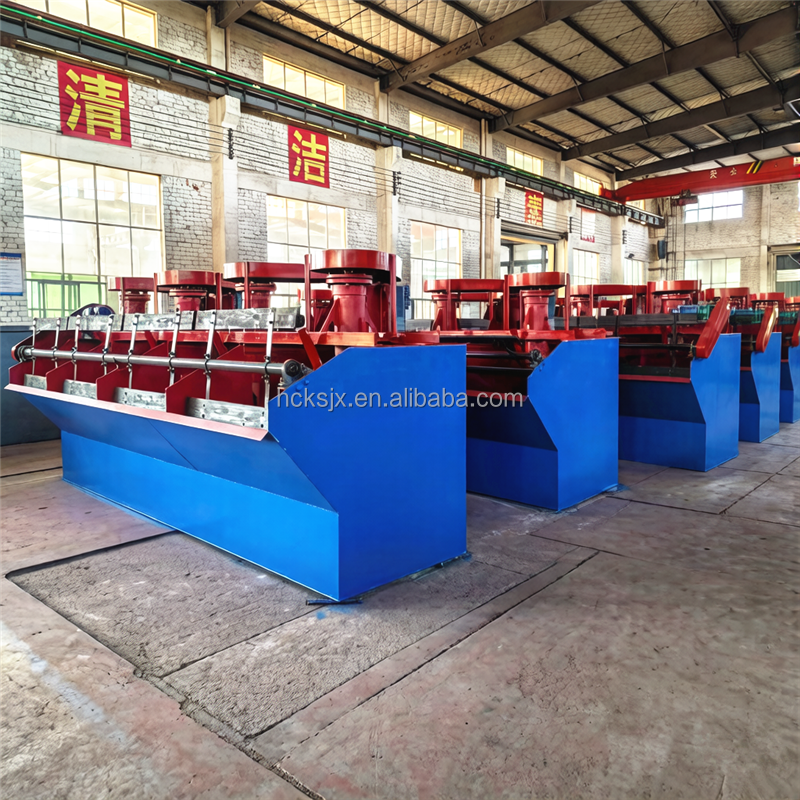
Flotation – Advantages
- Wide applicability and strong adaptability.
- High separation efficiency and high concentration ratio.
- Beneficial for the comprehensive utilization of mineral resources. It is effective for fine-grained dissemination and has broad applications; particularly advantageous for processing finely disseminated ores.
Key manifestations of high flotation efficiency:
- Suitable for low-grade ores with high concentration ratios, significantly expanding the scope of available mineral resources by converting previously uneconomical deposits into valuable industrial reserves.
- Highly effective for ores with micro-fine grain dissemination, solving the challenge of recovering valuable minerals from very fine particles. The lower limit of particle size for flotation is currently around 10 µm, and for some heavy minerals with high specific gravity, it can reach as low as 5 µm.
Flotation – Disadvantages
- Ores must be ground to a fine size, resulting in high power consumption.
- Certain flotation reagents are toxic and pose environmental pollution risks.
- Numerous process factors influence flotation performance, demanding high levels of operational skill and precise control technology.
- Flotation products exhibit low dewatering efficiency, and associated auxiliary processes tend to be relatively complex.