Chinese


Advantages and Disadvantages of the Mineral Processing Shaking Table
The shaking table is a highly efficient gravity separation device designed for the concentration of fine-grained ores.
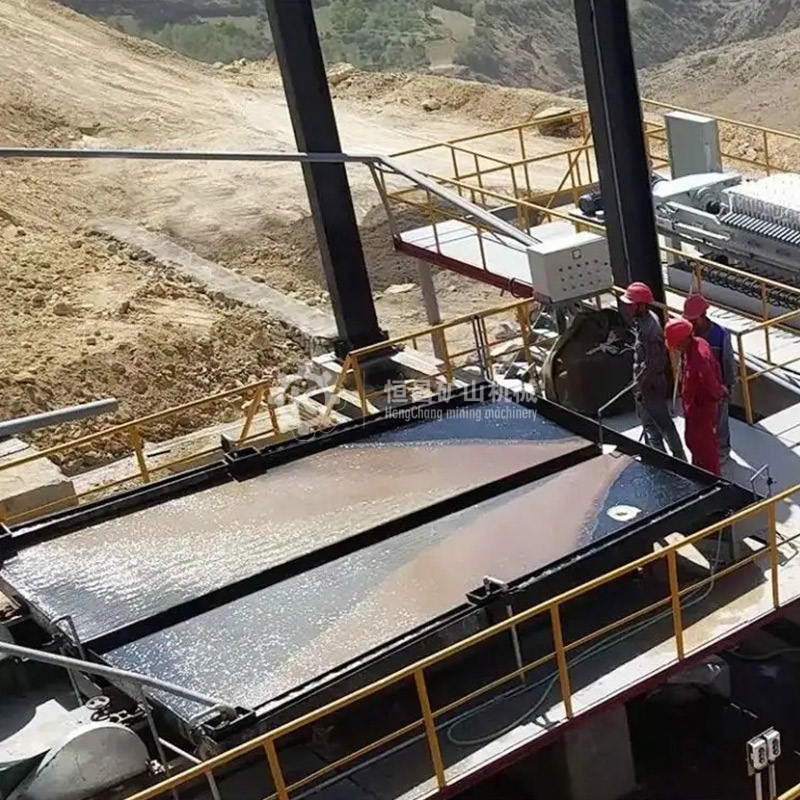
The shaking table is a highly efficient gravity separation device designed for the concentration of fine-grained ores. It is extensively utilized in the beneficiation of tungsten, tin, tantalum, niobium, and other rare/precious metal ores. Additionally, it serves as a reliable solution for iron and manganese ore processing. In recent years, applications have expanded to include the recovery of iron minerals from magnetic separation tailings and the sorting of non-metallic minerals such as mica.
Advantages of Shaking Table Separation
- Exceptional Concentration Ratio: The enrichment ratio (the ratio of concentrate grade to feed grade) is significantly higher than that of many other mineral processing methods, reaching up to over 100 times.
- High-Efficiency Output: Qualified concentrate and final tailings can be obtained in a single pass.
- Visual Process Control: Minerals form distinct fan-shaped bands across the deck surface, allowing operators to easily observe and adjust the separation process.
- Multi-Product Capability: Products can be divided by splitters to collect multiple grades of concentrates simultaneously according to specific requirements.
- Eco-Friendly & Low Consumption: The process requires no chemical reagents and has minimal power consumption.
Limitations
While highly effective, users should note the following characteristics:
- Large Footprint: Requires a relatively large installation area.
- Water Demand: Consumes a significant amount of water during operation.
- Lower Unit Capacity: The processing capacity per unit deck area is lower compared to some other heavy separation equipment.