Chinese


JXSC Nigeria Monazite Processing Plant 5TPH Capacity Beneficiation Flow & Cost
Hey there, fellow miners and plant operators. If you’re reading this, you’re probably looking at monazite—a valuable rare earth mineral that’s gaining serious traction across Africa. Nigeria, in particular, has rich monazite deposits in states like Plateau, Kaduna, and Nasarawa. But turning that heavy black sand into marketable concentrate? That’s where the right equipment, process, and budget come in.
Today, I’m breaking down a real-world case study: a 5-ton-per-hour (TPH) monazite processing plant from JXSC Mine Machinery, a brand we’ve seen working reliably in Nigeria, Ghana, and other African countries. I’ll walk you through the beneficiation flow, the equipment, the estimated cost, and the everyday maintenance tips that keep your plant running. No fluff—just practical, hands-on knowledge for mine owners, project managers, and technicians.
Why Monazite? And Why Nigeria?
Monazite is a phosphate mineral containing rare earth elements (REEs) like cerium, lanthanum, and neodymium—critical for magnets, batteries, and electronics. In Nigeria, monazite often occurs as placer deposits in river sands or as a byproduct of alluvial tin or columbite mining.
The challenge? Monazite is heavy (specific gravity 4.9–5.5) but often mixed with lighter quartz, clay, and other heavy minerals like ilmenite, rutile, or zircon. That’s where a well-designed beneficiation flow comes in.
The JXSC 5TPH Monazite Plant: What’s in the Box?
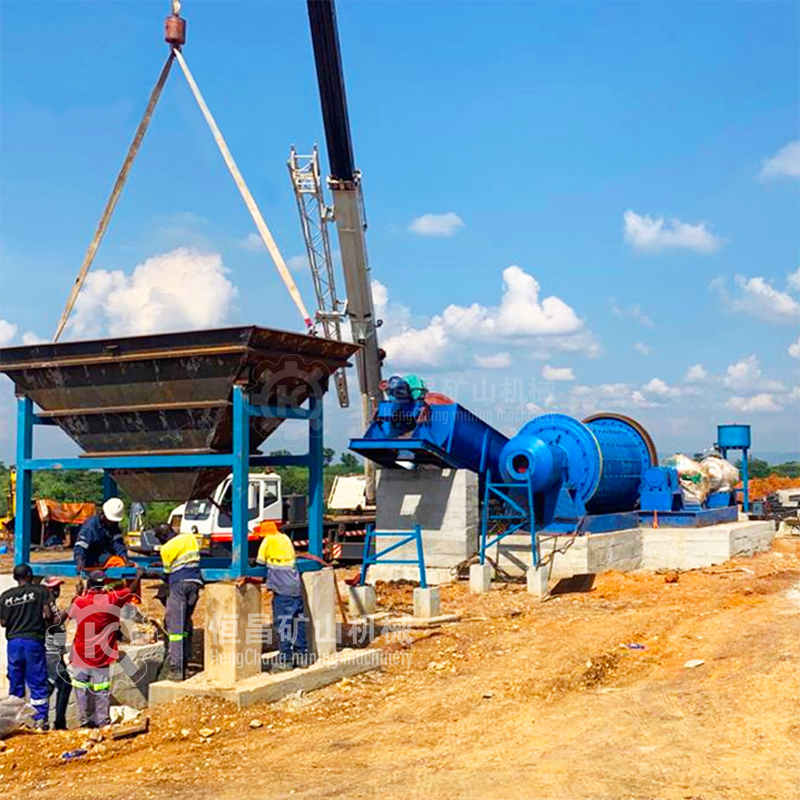
Let’s be real: a 5TPH plant isn’t a massive industrial operation. It’s a small-to-medium scale setup—perfect for a start-up mine or a cooperative processing center in rural Nigeria. The plant is modular, skid-mounted, and designed for easy transport and setup.
Core Equipment List (JXSC Typical Configuration)
| Equipment | Model (Example) | Function |
|---|---|---|
| Hopper + Feeder | Grizzly + Vibrating Feeder | Remove oversize (+20mm) stones |
| Scrubber | Trommel Scrubber | Break clay lumps, wash sand |
| Jig Machine | JT2-2 or JT3-1 | Gravity separation for heavy minerals |
| Spiral Concentrator | 5LL-900 or 5LL-1200 | Fine heavy mineral recovery |
| Shaking Table | 6-S 1.2x2.4m | Final clean-up of monazite concentrate |
| Magnetic Separator | Dry or Wet Drum | Remove iron-bearing minerals (e.g., ilmenite) |
| Concentrate Bags or Tanks | N/A | Storage for final product |
Note: Monazite is non-magnetic, so magnetic separation helps remove contaminants. Electrostatic separation may be added for a higher grade (but adds cost).
Beneficiation Flow: Step-by-Step (The Simple Version)
Here’s how the ore moves from shovel to bag:
Step 1: Feeding & Washing
Raw ore (alluvial sand or decomposed granite) goes into the hopper. A vibrating feeder sends it to the trommel scrubber. Water jet breaks clay and washes off fine mud. Oversize (+20mm) is discarded.
Step 2: Classification
The washed slurry passes through a vibrating screen (3–5mm). The oversize is either returned to scrubber or discarded. The undersize (the valuable material) flows to the next stage.
Step 3: Gravity Pre-concentration
Here’s the heart of the plant: a jig machine. JXSC’s jigs use water pulsation to separate heavy monazite from lighter quartz. The heavy fraction (concentrate) sinks to the bottom; the light fraction washes out as tailings.
Step 4: Spiral Concentration
The jig concentrate goes to spiral concentrators. Spirals are simple, low-cost, and great for fine particles (30–100 mesh). You get a second heavy mineral concentrate and a middling that can be recirculated.
Step 5: Final Clean-up on Shaking Table
The spiral concentrate goes to a shaking table. This is where you get your monazite concentrate (often 50–80% grade, depending on feed). The table’s riffles separate by specific gravity—monazite collects at the top, minor heavy minerals at the bottom.
Step 6: Magnetic Separation (Optional but Recommended)
Run the table concentrate through a dry magnetic separator. This removes ilmenite, magnetite, or garnet (magnetic minerals). Monazite remains non-magnetic, so it passes through as final product.
Step 7: Drying & Bagging
That’s it. Your monazite concentrate is now ready for sale.
Estimated Cost (Rough Numbers for Nigerian Market)
Let’s be honest: costs vary wildly based on location, electricity availability, and whether you buy new or used. But here’s a ballpark for a new JXSC 5TPH plant (FOB China + shipping + local setup):
| Item | Estimated Cost (USD) |
|---|---|
| Main Equipment (JXSC) | $15,000 – $25,000 |
| Shipping to Lagos/Apapa | $3,000 – $5,000 |
| Local transport + customs clearance | $2,000 – $4,000 |
| Water pump, pipes, tanks | $1,000 – $2,000 |
| Generator (if no grid power) | $2,000 – $4,000 |
| Site preparation + labor | $1,000 – $3,000 |
| Total Estimated Investment | $24,000 – $43,000 |
Operating Cost (per day):
Power: 10–15 kW – about $50–100/day (diesel generator)Water: 20–30 m³/day – mostly free if near a river
Labor: 4–6 operators – $4–8 per person per day
Maintenance: ~2% of equipment cost monthly
Daily Maintenance Tips (From Experienced Technicians)
Check the jig screen daily – Monazite is abrasive. replace when holes are plugged or stretched.Lubricate spiral bearings weekly – Water and sand kill bearings. Use marine grease.
Clean shaking table riffles – Every shift. Clay and fine sand clog the riffles.
JXSC vs. Other Brands: The Honest Comparison
| Aspect | JXSC (Our Recommendation) | Local Fabricators | Other Chinese Brands (e.g., Jiangxi Shicheng) |
|---|---|---|---|
| Quality Control | Good – high-grade steel, tested | Variable – may use thinner steel | Similar – depends on model |
| Spare Parts | Available in Nigeria (distributor) | Hard to find | Limited |
| After-Sales Support | WhatsApp + video support | Usually none | Phone support only |
| Price | Mid-range | Cheaper (but risk) | Mid-to-high |
| Lead Time | 30–45 days FOB China | 7–14 days local | 30–60 days |
Our take: JXSC offers a solid balance between cost, reliability, and support. For a first-time mine owner in Nigeria, I’d go with a known brand. Don’t gamble with cheap local knockoffs—they break within 6 months.
Application Scenarios in Africa (Beyond Nigeria)
This 5TPH flow isn’t just for monazite. It works for:
Ghana: Alluvial gold (replace jig with sluice box or centrifugal)Sierra Leone: Rutile and ilmenite
Cameroon: Bauxite and iron ore
Mozambique: Zircon and monazite (similar flow)
DRC: Cassiterite (tin) and coltan
Just adjust the screen sizes, gravity settings, and magnetic steps.
Final Thoughts: Is This Plant Right for You?
If you have:
A confirmed monazite resource (at least 1,000 tons of ore)
Basic mechanic skills onsite
A budget of ~$30,000
Then a JXSC 5TPH monazite processing plant is a smart, low-risk entry into rare earth mining. You’ll produce saleable concentrate (usually 55–65% REE) and generate profit margins of 30–50% depending on market prices.
One last thing: Don’t skip the ore testing. Send a 50kg sample to JXSC or a local lab. It’ll save you months of guesswork.
Got questions about your specific ore? drop a comment below—our team has worked in Nigeria, Ghana, and beyond. We’re here to help.
Happy mining, and may your concentrate bags be heavy!
Quick Summary for Google SEO:
Keywords: monazite processing plant, 5TPH beneficiation flow, JXSC Nigeria, rare earth minerals Africa, alluvial monazite gravity separationTarget readers: Small-scale mine owners, plant operators, mineral processors
Call to action: Comment or contact for free equipment quotation or ore testing advice